
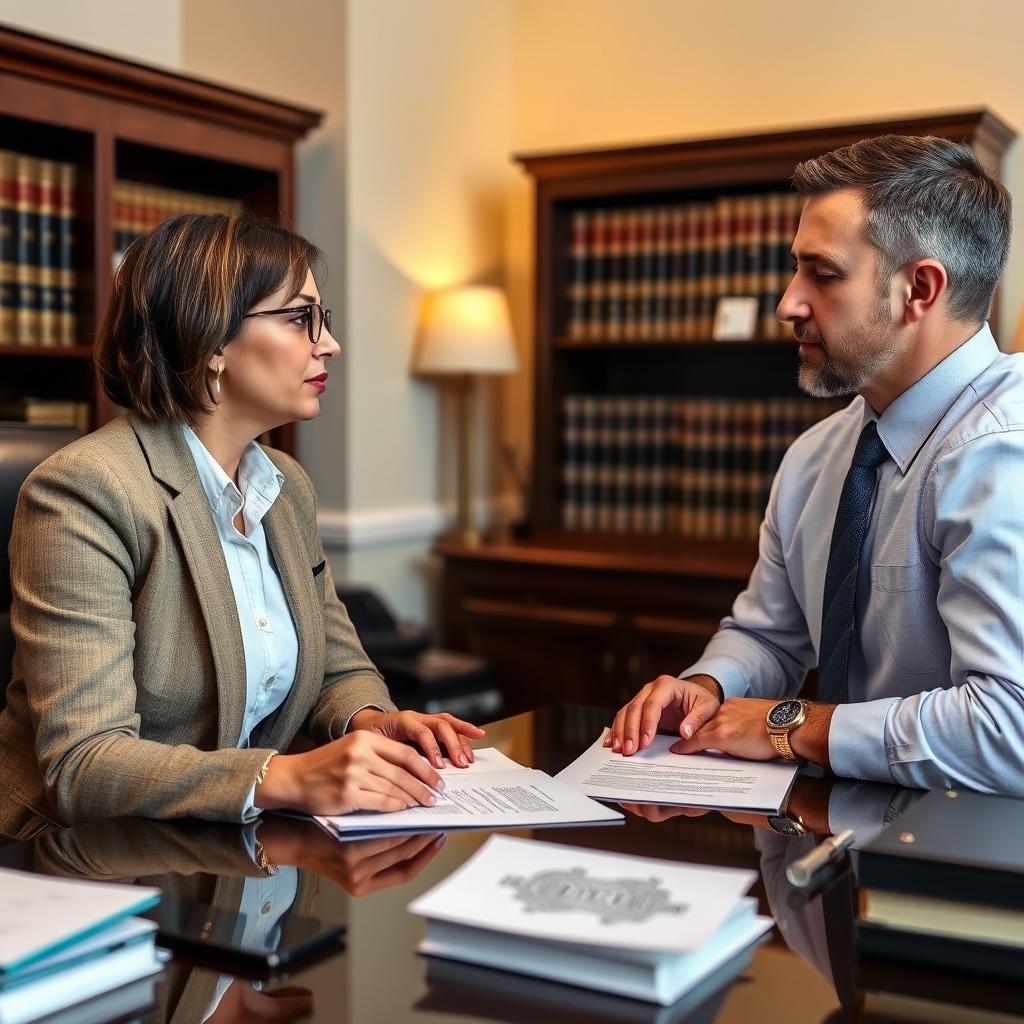
Felony Conviction Divorce Lawyer Chesterfield County, VA
When a spouse has been convicted of a felony and sentenced to more than one year of confinement, Virginia law provides a specific ground for absolute divorce under Va. Code § 20‑91(3). This page is written for the spouse who seeks to end the marriage on the basis of the other spouse’s felony conviction and imprisonment. The case is filed in the Chesterfield County Circuit Court, located at 9500 Courthouse Road, Chesterfield, Virginia 23832, because the circuit court has exclusive original jurisdiction over all divorce actions in the Commonwealth. Mr. Sris, Owner and Founder of Law Offices Of SRIS, P.C., and his Of Counsel represent individuals in felony‑conviction‑based divorce cases throughout Chesterfield County, including Midlothian, Chester, Bon Air, Brandermill, Moseley, and the Colonial Heights area. To request a consultation, call (888) 437‑7747. Law Offices Of SRIS, P.C. – Advocacy Without Borders.
What Felony Conviction Divorce Means in Chesterfield County
Under Va. Code § 20‑91(3), a divorce from the bond of matrimony may be granted when one spouse has been convicted of a felony, sentenced to confinement for more than one year, and is actually incarcerated following the conviction. The statute does not require a lengthy separation period or proof of fault beyond the conviction itself; the conviction and sentence operate as the ground. However, the party seeking the divorce must still meet Virginia’s residency requirement: at least one spouse must be and have been an actual bona fide resident and domiciliary of Virginia for six months immediately before filing the Complaint, per Va. Code § 20‑97.
In Chesterfield County, the Circuit Court handles the divorce and any associated issues of equitable distribution, spousal support, and, when relevant, custody and child support that are embedded within a divorce action. The Chesterfield County Juvenile and Domestic Relations District Court may separately address custody, visitation, and child support if the parties are not simultaneously divorcing. Because a felony‑conviction divorce can involve complex property division—especially when the incarcerated spouse holds retirement accounts, real estate, or business interests—the classification and valuation of marital property under Va. Code § 20‑107.3 become critical. Virginia is an equitable distribution state, not a community property state, so the court divides marital property fairly but not necessarily equally, weighing eleven statutory factors.
Chesterfield County General District Court is currently presided over by Hon. Matthew Donald Nelson. Court hours: Mon‑Fri 8:00AM‑4:00PM. Counsel appearing on family law matters should plan filings accordingly.
How Mr. Sris and His Of Counsel Handle Felony Conviction Divorce Cases
Mr. Sris and his Of Counsel bring over 120 years of combined legal experience, backed by 4,739+ documented firm-wide results, to family law matters in Virginia. Results may vary. In a felony‑conviction divorce, the legal team concentrates on the unique procedural and evidentiary steps required by the statute. The petitioner must prove the conviction by providing certified court records, and the pleading must clearly state that the defendant has been sentenced to confinement for more than one year. If the convicted spouse is incarcerated, service of process may need to be accomplished on the incarcerated individual, often through the facility’s procedures, which can require additional coordination.
Beyond proving the ground, a felony‑conviction divorce frequently implicates equitable distribution. Mr. Sris and his Of Counsel work to identify, classify, and value marital property, including assets that may be held solely in the name of the incarcerated spouse. Where a qualified domestic relations order is necessary to divide retirement benefits, the team draws on extensive experience with Va. Code § 20‑107.3(g), a subsection that was the subject of 2019 House Bill 635, before which Mr. Sris testified in support of the bill. Spousal support may also be addressed in the divorce decree, with the court considering the factors enumerated in Va. Code § 20‑107.1. The approach is always shaped by the particular facts of the case, from the date of conviction to the parties’ financial circumstances.
Throughout the proceeding, the firm maintains consistent communication with the client about the status of the case, the anticipated timeline (which varies depending on the court’s calendar and any contested issues), and the strategic considerations necessary to work toward a favorable resolution. Consultation is by appointment, and the team is available to guide clients through the steps from initial filing to final decree.
About Mr. Sris and His Of Counsel Team
Mr. Sris, Owner and Founder of Law Offices Of SRIS, P.C., is a former prosecutor who concentrates in family law, criminal defense, and immigration matters. He is admitted to practice in Virginia, Maryland, the District of Columbia, New Jersey, and New York. Mr. Sris testified before the Virginia House Courts of Justice Committee in support of 2019 HB 635 (chief patron Del. David Bulova). His Of Counsel are experienced attorneys who contribute to the firm’s multi‑state ability to handle family law cases, including divorce grounded on a spouse’s felony conviction, across the firm’s five jurisdictions. Together, the legal team draws on over 120 years of combined legal experience, backed by 4,739+ documented firm-wide results. Results may vary. in any individual matter.
Frequently Asked Questions
1. What is a felony conviction divorce in Virginia?
A felony conviction divorce is an absolute divorce granted when one spouse has been convicted of a felony, sentenced to more than one year of incarceration, and is actually confined. This fault‑based ground is set out in Va. Code § 20‑91(3). Unlike no‑fault divorce, it does not require a separation period, which can shorten the timeline for the spouse seeking the divorce. The petitioner must present certified conviction records and proof of confinement. The case proceeds in the circuit court of the locality where either party resides. A property settlement agreement may still resolve ancillary issues.
2. Can I get a divorce in Chesterfield County if my spouse is serving a felony sentence?
Yes, you may file for divorce in Chesterfield County Circuit Court on the ground of felony conviction, provided the convicted spouse meets the statutory criteria and at least one spouse meets Virginia’s six‑month residency requirement. The court will need evidence of the conviction and the sentence; typically, certified copies of the sentencing order and proof of incarceration suffice. The filing is a Complaint for Divorce, not a “Complaint.” You do not need the incarcerated spouse’s consent to file, and the ground can be asserted even if the convicted spouse opposes the divorce.
3. Does a felony conviction divorce affect property division?
Yes, the divorce itself establishes the right to dissolve the marriage, but property division is governed separately by Virginia’s equitable distribution statute, Va. Code § 20‑107.3. The conviction and incarceration are facts the court may consider under the equitable‑distribution factors, such as the circumstances and factors contributing to the dissolution of the marriage, but they do not automatically strip the convicted spouse of all marital property rights. Marital property includes assets acquired during the marriage regardless of which spouse holds title, and retirement accounts, real estate, and business interests may need to be valued and divided. A qualified domestic relations order may be necessary to divide certain retirement plans.
4. How long does a felony conviction divorce take in Chesterfield County?
The timeline varies by case complexity and the court’s docket. An uncontested divorce on the felony‑conviction ground, where all property and support issues are resolved by a signed separation agreement, may be finalized in a few months. Contested matters or those involving complex financial holdings may take longer because discovery, valuations, and potentially a trial are required. The court schedules hearings on its own calendar, so the timeframe cannot be predicted with precision. For case‑specific guidance, reach Law Offices Of SRIS, P.C. at (888) 437‑7747.
5. Do I need to prove fault beyond the conviction itself?
No, the conviction and sentence themselves constitute the fault ground under Va. Code § 20‑91(3); you do not need to prove additional marital misconduct such as adultery or cruelty. The statute only requires that the spouse has been convicted of a felony, sentenced to confinement for more than one year, and is actually incarcerated. However, proving the ground still requires submitting certified court documents that establish the conviction and the sentence. If the conviction is reversed on appeal before the divorce is finalized, the ground may be affected.
6. What if the convicted spouse was sentenced in another state?
A felony conviction from another jurisdiction may still be used as a ground for divorce in Virginia, provided the conviction qualifies as a felony under that jurisdiction’s law and the sentence imposed exceeds one year of confinement. The Virginia court will generally recognize out‑of‑state convictions for this purpose, but you must provide certified records from the sentencing court. The residency requirement of Va. Code § 20‑97 must still be met independently. Because cross‑jurisdictional issues can arise, consultation with a Virginia family law attorney is recommended.
7. Will a felony conviction divorce impact child custody?
The divorce ground itself does not dictate custody, but the conviction and incarceration are relevant to the trusted‑interests analysis under Va. Code § 20‑124.3. The court considers ten statutory factors, including the physical and mental condition of each parent and any history of family abuse, which may be implicated by the conviction. If the convicted parent is incarcerated, the court is likely to award physical custody to the other parent, though legal custody and visitation arrangements may still be addressed. If a custody dispute is part of the divorce, the circuit court will resolve it; otherwise, a separate custody petition may be filed in the Juvenile and Domestic Relations District Court. India is not a signatory to the 1980 Hague Convention on Civil Aspects of International Child Abduction.
8. How do I start a felony conviction divorce in Chesterfield County?
Begin by consulting an attorney who can review the facts of your situation, advise on the viability of the ground, and prepare the necessary Complaint for Divorce. You will need certified copies of the conviction and sentencing records, as well as information about your residency and the parties’ assets. The Complaint is filed with the Chesterfield County Circuit Court. After filing, service of process must be completed on the defendant, which may require special handling if the defendant is incarcerated. For a full discussion of your options, contact Law Offices Of SRIS, P.C. at (888) 437‑7747.
Henrico County Family Law | Hanover County Family Law | Fairfax County Family Law | Fairfax City Family Law | Falls Church Family Law
Outbound primary‑source authority: Virginia Code § 20‑91 (divorce grounds) | Chesterfield County Circuit Court | Virginia State Corporation Commission
Attorney advertising. Prior results do not guarantee a similar outcome. Results may vary. Case results depend on a variety of factors unique to each case. Law Offices Of SRIS, P.C. serves clients in Virginia, Maryland, the District of Columbia, New Jersey, and New York. Our Richmond location, at 7400 Beaufont Springs Drive, Suite 300, Room 395, Richmond, VA 23225, represents clients in Chesterfield County by appointment. Call (888) 437‑7747 to schedule.