
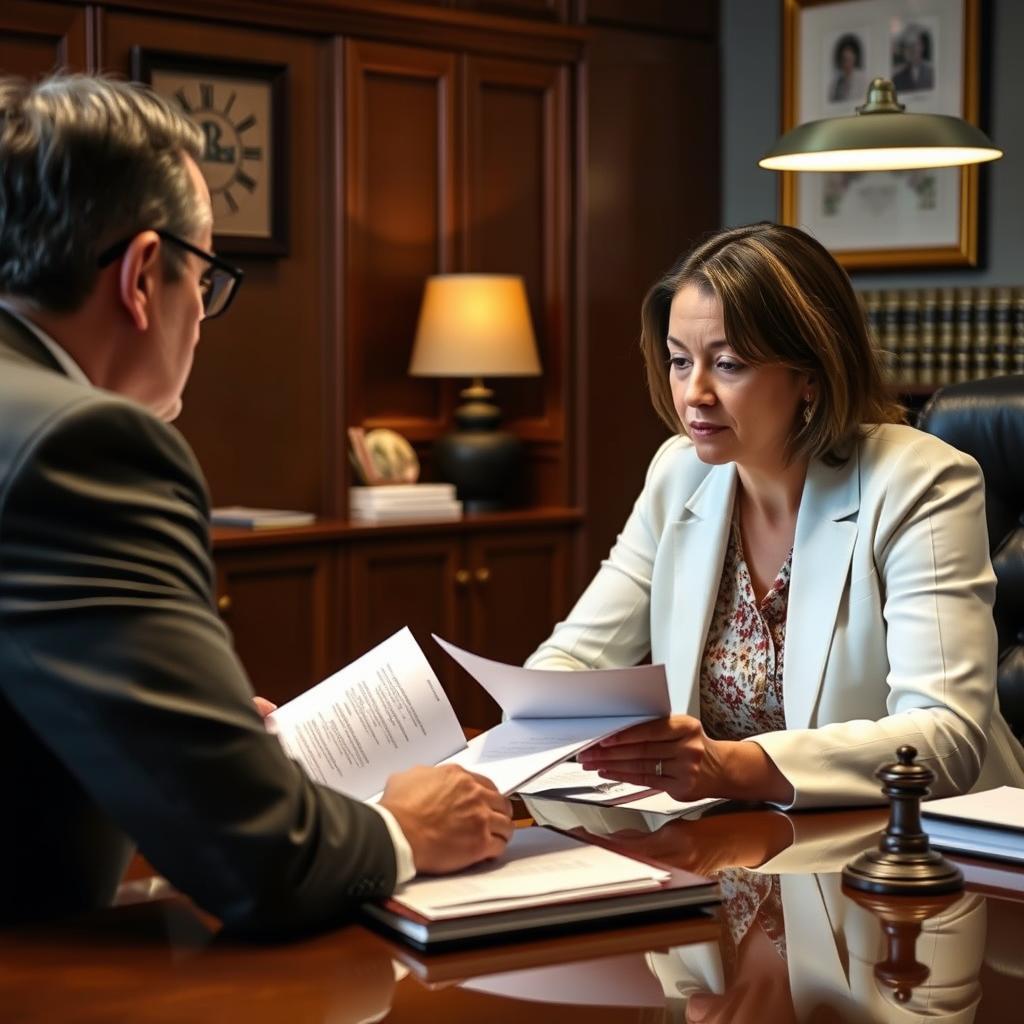
Alimony Modification Lawyer Prince George County, VA
Spousal support orders are not always permanent. Life changes—a job loss, a change in health, or a shift in the other party’s financial circumstances—can make an existing alimony arrangement unworkable. When that happens in Prince George County, Virginia, the party seeking relief must file a motion to modify with the court that entered the original order. Under Va. Code § 20‑107.1, the Circuit Court for divorce‑based support or the Juvenile & Domestic Relations District Court for standalone support may adjust spousal maintenance based on a material change in circumstances. Mr. Sris and the firm’s Of Counsel attorneys appear regularly in the Prince George County courts at 6601 Courts Drive. They bring extensive combined experience to alimony modification proceedings, working to present the current financial picture clearly and persuasively. For a confidential discussion of your situation, reach Law Offices Of SRIS, P.C. at (888) 437‑7747. Law Offices Of SRIS, P.C. – Advocacy Without Borders.
What Alimony Modification Means in Prince George County
A post‑divorce modification is not a second trial; it focuses on changes that have occurred since the last support order. The moving party must show that a material change—one that is substantial, involuntary, and not temporary—has affected either the payor’s ability to pay or the recipient’s need for support. In Prince George County, whether the case is before the Circuit Court or the Juvenile & Domestic Relations District Court, the judge looks at the same 13 statutory factors listed in Va. Code § 20‑107.1. Those factors include the earning capacity, obligations, and resources of each party; the duration of the marriage; the age and health of the parties; and any contributions to the well‑being of the family. Because Virginia is an equitable distribution state, property division is already final, but support can be revisited when the facts truly shift.
The local courts require clear financial documentation to support any request. Pay stubs, tax returns, medical records, and proof of changed housing costs are often central to the court’s analysis. Prince George County Circuit Court handles modifications tied to a divorce decree, while standalone support orders or those entered by the Juvenile & Domestic Relations District Court are modified in that court. Practitioners familiar with the Eleventh Judicial District understand that the judges look for concrete evidence rather than vague assertions. The filing fee for a motion to modify in the Circuit Court applies, with sheriff service of process adding about $12; private process servers and other costs may apply. Because the procedural requirements are technical, having counsel who understands the local docket helps ensure that the motion is properly pleaded and supported.
How Mr. Sris and the Firm’s Of Counsel Attorneys Handle Alimony Modification Cases
Every modification begins with a careful review of the existing support order and the events that have transpired since it was entered. Mr. Sris and the firm’s Of Counsel attorneys gather the complete financial picture—current income documentation, expense records, and any evidence of job loss, disability, or change in the recipient’s circumstances. They identify whether the change is material and involuntary, a threshold that must be met before the court will consider adjusting the award. Once the factual basis is established, they prepare and file the motion, ensuring that it complies with the procedural rules of the appropriate Prince George County court.
Because alimony modification often involves emotionally charged disputes, the firm works to keep the process as efficient and businesslike as possible. In many cases, the parties can reach an agreed modification through negotiation, avoiding a contested hearing. When a resolution is not possible, the firm is prepared to present the evidence before the judge, cross‑examine witnesses, and argue the statutory factors. Throughout, Mr. Sris and the firm’s Of Counsel attorneys keep the client informed of developments and provide realistic assessments of likely outcomes. They do not promise a specific result, but they draw on decades of combined experience in Virginia family law to pursue a fair adjustment under Va. Code § 20‑107.1.
About Mr. Sris and the Firm’s Of Counsel Attorneys
Mr. Sris, Owner and Founder of Law Offices Of SRIS, P.C., has practiced family law since 1997, when he founded the firm after serving as a prosecutor. That earlier courtroom experience informs his approach to modification proceedings—he understands how to present financial evidence persuasively and how to cross‑examine opposing testimony effectively. Mr. Sris testified before the Virginia House Courts of Justice Committee in support of 2019 HB 635 (chief patron Del. David Bulova), a bill that revised the equitable‑distribution statute, and he remains actively involved in complex family law matters throughout the Commonwealth. He is admitted in Virginia, Maryland, the District of Columbia, New Jersey, and New York.
The firm’s Of Counsel attorneys contribute additional depth to the practice. Each brings a distinct background—some have decades of litigation experience, others have served in law enforcement or public service—and all concentrate their work on family law and related areas. Together, Mr. Sris and the firm’s Of Counsel attorneys provide clients in Prince George County with a thorough, team‑based approach. They appear regularly at 6601 Courts Drive and understand the expectations of the local bench. Whether the matter is a straightforward agreed modification or a contested hearing over complex financial records, the firm’s resources are brought to bear on the client’s behalf.
Frequently Asked Questions
How does a person request an alimony modification in Prince George County?
A party files a motion to modify with the court that entered the original support order, showing a material change in circumstances. The motion must be supported by financial documentation such as current pay stubs, tax returns, and evidence of the changed condition—for example, a layoff notice or medical records. In Prince George County, the Circuit Court handles modifications tied to a divorce decree; the Juvenile & Domestic Relations District Court handles standalone support modifications. The filing fee in the Circuit Court applies, plus service costs. The court will schedule a hearing after proper notice is given to the other party. For guidance on your specific situation, reach Law Offices Of SRIS, P.C. at (888) 437‑7747.
What counts as a material change in circumstances under Virginia law?
A material change is a substantial, involuntary, and non‑temporary shift in the payor’s ability to pay or the recipient’s need for support. Common examples include job loss, a significant decrease in income, disability, a change in the recipient’s employment, remarriage of the recipient, or a substantial change in the cost of living. Under Va. Code § 20‑107.1, the court considers the 13 statutory factors, not just the stated change, so the entire financial picture matters. The change must have occurred after the last support order and cannot be a voluntary reduction in earnings designed to avoid payment. For a consultation, reach Mr. Sris and the firm’s Of Counsel attorneys at (888) 437‑7747.
Can alimony be reduced retroactively in Prince George County?
In Virginia, the court generally cannot modify spousal support retroactively to a date before the motion was filed. If a payor’s circumstances change and they stop paying or pay less without court approval, they risk being found in contempt. The proper course is to file a motion to modify as soon as reasonably possible after the change occurs. Once the motion is on file, the court may make the modification effective as of the date the motion was filed, but not earlier. Unpaid support accrues as arrears. To discuss the details of your matter, contact Law Offices Of SRIS, P.C. at (888) 437‑7747.
What if the other party refuses to comply with the existing alimony order?
If a party fails to pay court‑ordered support, the recipient may seek enforcement through a show‑cause or contempt proceeding. The Prince George County courts have the authority to order judgment for arrears, impose fines, require payment plans, or, in egregious cases, incarcerate a willful contemnor. An enforcement action is separate from a modification action, though sometimes the two are filed together when a payor claims inability to pay and the recipient seeks to collect arrears. The court will examine the payor’s financial ability and the reasons for non‑compliance. For guidance, reach Law Offices Of SRIS, P.C. at (888) 437‑7747.
How long does an alimony modification case take in Prince George County?
The timeline depends on the court’s docket, the complexity of the financial issues, and whether the parties reach an agreement. If both sides consent to the modification and submit an agreed order, the matter can be resolved relatively quickly—often in a matter of weeks after filing. Contested modifications that require a full evidentiary hearing will take longer, as the court must schedule the hearing, the parties may need to exchange discovery, and expert testimony (such as from a forensic accountant) may be necessary. The court sets hearings on its own calendar; counsel keeps the client apprised of scheduling. For a consultation, reach Mr. Sris and the firm’s Of Counsel attorneys at (888) 437‑7747.
Do I need an attorney to modify alimony in Prince George County?
You are not legally required to hire an attorney, but the procedural and evidentiary demands of a modification proceeding make legal representation advisable. The moving party must plead and prove a material change, present financial documentation in admissible form, and address any defenses raised by the other side. Mistakes in pleading or proof can delay the resolution or result in denial of the motion. Mr. Sris and the firm’s Of Counsel attorneys understand the filing requirements and evidentiary standards of the Prince George County courts, and they work to present the client’s case efficiently. For a confidential discussion, call (888) 437‑7747.
Additional Virginia primary sources (opens in new tab):
Va. Code § 20‑107.1 — Spousal support factors |
Prince George County Circuit Court |
Virginia’s Judicial System
Attorney advertising. Prior results do not guarantee a similar outcome. Case results depend on a variety of factors unique to each case. Results may vary. Law Offices Of SRIS, P.C. Practices in Virginia, Maryland, the District of Columbia, New Jersey, and New York. (888) 437‑7747. The firm’s Richmond location is at 7400 Beaufont Springs Drive, Suite 300, Room 395, Richmond, VA 23225; by appointment only.