
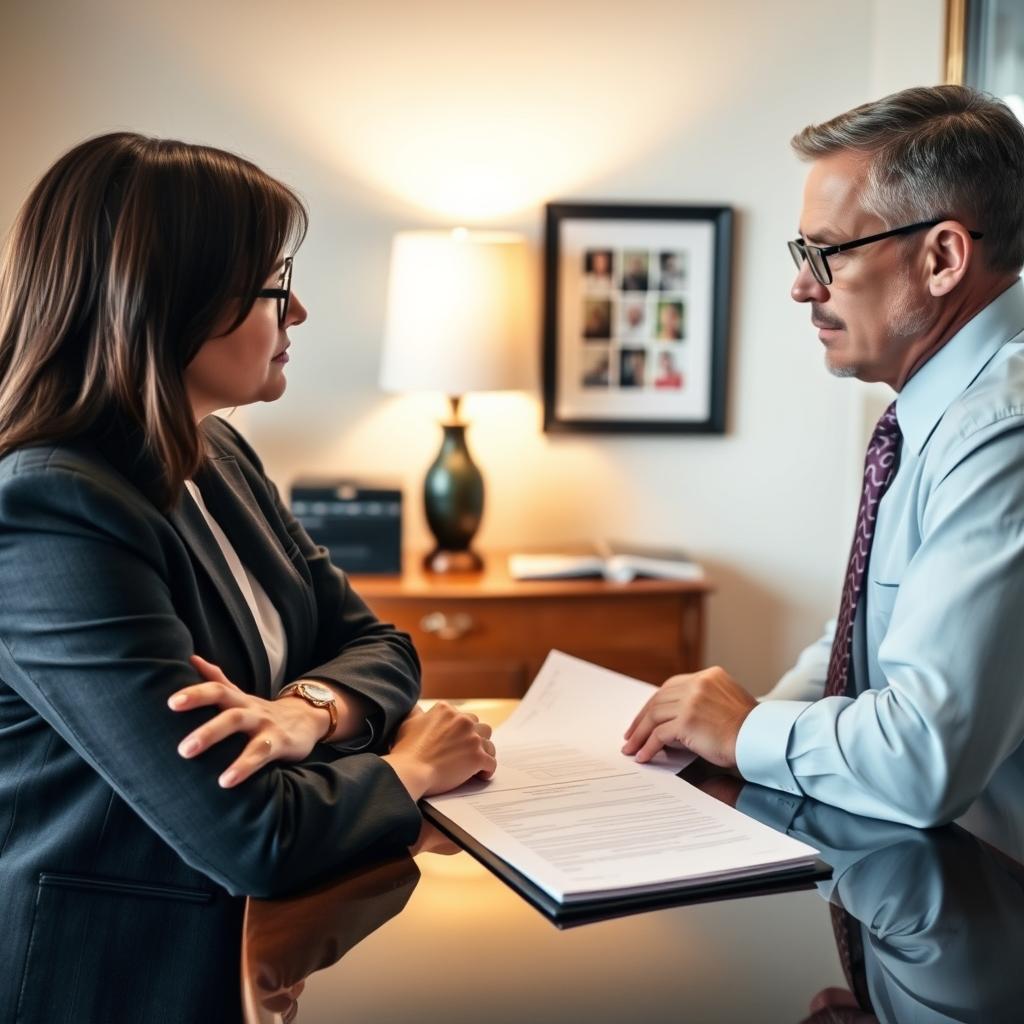
Alimony Modification Lawyer Louisa County, VA
When a divorce decree or separate maintenance order requires one spouse to pay alimony—spousal support—those obligations are not always permanent. A substantial change in circumstances can warrant a modification, either to increase, reduce, or terminate the payments. If you are seeking a change to an existing alimony arrangement or are the recipient of a modification petition in Louisa County, Virginia, the attorneys at Law Offices Of SRIS, P.C. can help. The firm represents clients throughout the Sixteenth Judicial District, including appearances at the Louisa County Juvenile & Domestic Relations District Court for standalone support matters and the Louisa County Circuit Court when the modification is part of a divorce proceeding. To discuss your situation, reach Mr. Sris and the firm’s Of Counsel attorneys at (888) 437-7747. Law Offices Of SRIS, P.C. – Advocacy Without Borders.
What Alimony Modification Means in Louisa County
Virginia law allows a court to modify an award of spousal support when a party demonstrates a material change in circumstances that was not reasonably foreseen at the time of the original order. The statute governing these modifications is Va. Code § 20-107.1, which sets out the factors a judge must weigh: the earning capacity and financial resources of each party, the duration of the marriage, the standard of living established during the marriage, the age and health of each spouse, and the contributions each party made to the family’s well-being, among others. A modification may be appropriate if, for example, the paying spouse experiences a significant and involuntary reduction in income, or if the recipient’s financial need increases due to a serious medical condition.
In Louisa County, a modification petition may be filed either in the Louisa County Juvenile & Domestic Relations District Court—if spousal support was established in a context outside of a divorce—or in the Louisa County Circuit Court, which has exclusive jurisdiction over divorce-related equitable distribution and spousal support. The courthouse at 100 West Main Street in the town of Louisa is the central venue for family law matters across the county, including communities such as Mineral and Zion Crossroads. Because Louisa County is a single-judge circuit, familiarity with the court’s scheduling practices and procedural expectations can be an advantage. Our Richmond location serves clients throughout central Virginia, and our attorneys appear regularly in the Louisa County courts.
How Mr. Sris and the Firm’s Of Counsel Attorneys Handle Alimony Modification Cases
A spousal support modification typically begins with a thorough review of the original order and the financial circumstances that have changed since its entry. The firm works to document the change in income, employment status, health, or cohabitation that forms the basis for the request. When representing the party seeking to modify support, our attorneys assemble pay stubs, tax returns, medical records, and any evidence that the other spouse’s financial situation has improved. When defending against a petition to reduce or terminate support, the team examines whether the alleged change is truly material and involuntary, and whether it was foreseeable at the time of the original award.
The matter then proceeds with a motion to modify filed in the appropriate Louisa County court. Our attorneys prepare the legal memorandum, organize the financial exhibits, and, if necessary, present the case at an evidentiary hearing. Because the judge must apply the thirteen statutory factors under Va. Code § 20-107.1, the presentation of evidence is organized around those factors. The court may also consider whether a modification should be temporary or permanent. Throughout the process, the firm keeps clients informed about the likely timeline—which varies depending on the court’s calendar and the complexity of the financial issues—and discusses possible negotiated resolutions as an alternative to a contested hearing.
About Mr. Sris and the Firm’s Of Counsel Attorneys
Mr. Sris, Owner and Founder of Law Offices Of SRIS, P.C., has practiced law since 1997 and is admitted to the bars of Virginia, Maryland, the District of Columbia, New Jersey, and New York. A former prosecutor, he brings a courtroom-tested perspective to family law disputes. Mr. Sris testified before the Virginia House Courts of Justice Committee in support of 2019 HB 635 (chief patron Del. David Bulova), a bill that revised the equitable distribution statute, Va. Code § 20-107.3. His familiarity with Virginia family law—and the legislative process that shapes it—informs the firm’s approach to spousal support modifications.
Mr. Sris is supported by the firm’s Of Counsel attorneys, who contract directly with the firm and bring extensive combined legal experience. Together, they handle the full range of financial issues that can arise after a divorce, including petitions to increase, decrease, or terminate alimony. The firm’s family law practice spans central and northern Virginia, with a Richmond location that regularly serves Louisa County clients. Results may vary.
Frequently Asked Questions
What is a “material change in circumstances” for alimony modification in Virginia?
A material change in circumstances is a substantial, involuntary, and unforeseeable change in the financial condition of either party that justifies altering the existing spousal support order. Examples include a significant and involuntary loss of employment, a serious medical condition that affects earning capacity, or a substantial increase in the payer’s income that was not contemplated when the original award was entered. A voluntary reduction in income, such as quitting a job, generally does not qualify. The court will examine whether the change is both material—meaning it makes a real difference in the parties’ financial posture—and whether it was not reasonably foreseeable at the time of the original order. The analysis is governed by Va. Code § 20-107.1.
Can I get alimony increased if my ex-spouse’s income has gone up?
Yes, a substantial increase in the paying spouse’s income may support a petition to increase spousal support, provided the increase constitutes a material change not foreseen at the time of the original order. However, a simple promotion or cost-of-living adjustment usually does not meet the standard unless the original order was predicated on a much lower income or the increase dramatically changes the financial picture. The court will weigh the increase against the recipient’s ongoing need and the payer’s overall financial circumstances. When seeking an increase, it is essential to present clear financial documentation showing the higher income and demonstrating that the earlier award is no longer adequate to meet the recipient’s demonstrated need under the statutory factors.
Can alimony payments be terminated in Virginia?
Spousal support may be terminated if the court finds that the recipient no longer needs support, for example because of remarriage, cohabitation in a relationship analogous to marriage, or a substantial improvement in the recipient’s financial condition. Under Virginia law, a support obligation also ends automatically upon the death of either party or the remarriage of the recipient, unless the separation agreement provides otherwise. Cohabitation in a situation where the recipient receives regular financial support from a new partner can also support a termination motion. The burden of proof is on the party seeking termination to show that the recipient’s circumstances have materially changed in a way that justifies ending the payments. The court will examine the nature of the new relationship and its financial impact on the recipient.
How long does the alimony modification process take in Louisa County?
The timeline for a spousal support modification in Louisa County varies depending on the court’s calendar, the complexity of the financial issues, and whether the parties reach a settlement. An uncontested modification by agreement can be resolved relatively quickly once the agreement is filed with the court. A contested matter, however, may require multiple hearings and discovery on financial issues, which can extend the process. Because the Louisa County Circuit Court handles all divorce-related modifications, and the Juvenile & Domestic Relations Court handles standalone support matters, the court’s docket and the availability of the single judge influence scheduling. An experienced family law attorney can help move the matter forward efficiently by ensuring the petition is properly prepared and supported.
Do I need a lawyer to modify alimony in Louisa County, VA?
You are not required to have a lawyer to file a petition to modify spousal support in Louisa County, but legal representation can be helpful because of the procedural and evidentiary requirements. A modification petition must demonstrate a material change in circumstances with credible financial evidence. An attorney can help identify the relevant statutory factors, gather tax returns and income documentation, and present the case to the court in a way that meets the legal standard. Self-represented litigants sometimes struggle with the burden of proof and the formal rules of evidence. Mr. Sris and the firm’s Of Counsel attorneys have experience with spousal support modifications in Virginia and can evaluate your situation at a consultation.
What happens if my ex-spouse stops paying alimony in Louisa County?
If your ex-spouse unilaterally stops making court-ordered spousal support payments, you can file an enforcement action—often called a rule to show cause—in the Louisa County court that issued the order. The court can compel compliance, hold the non-paying party in contempt, and impose sanctions including fines or, in some cases, jail time. Before taking enforcement action, it is important to document every missed payment carefully. The court may also award attorney fees to the prevailing party. When a payer claims an inability to pay, the court will examine the reasons for non-payment. If the payer seeks a formal modification, that issue can be addressed alongside the enforcement proceeding. For guidance on enforcement options, speak with a family law attorney as soon as possible.
Family Law Services in Neighboring Communities:
Family Law Lawyer Fairfax County, VA |
Family Law Lawyer Prince William County, VA |
Family Law Lawyer Manassas, VA |
Family Law Lawyer Fairfax City, VA
Attorney advertising. Prior results do not guarantee a similar outcome.
Case results depend on a variety of factors unique to each case.
Results may vary.