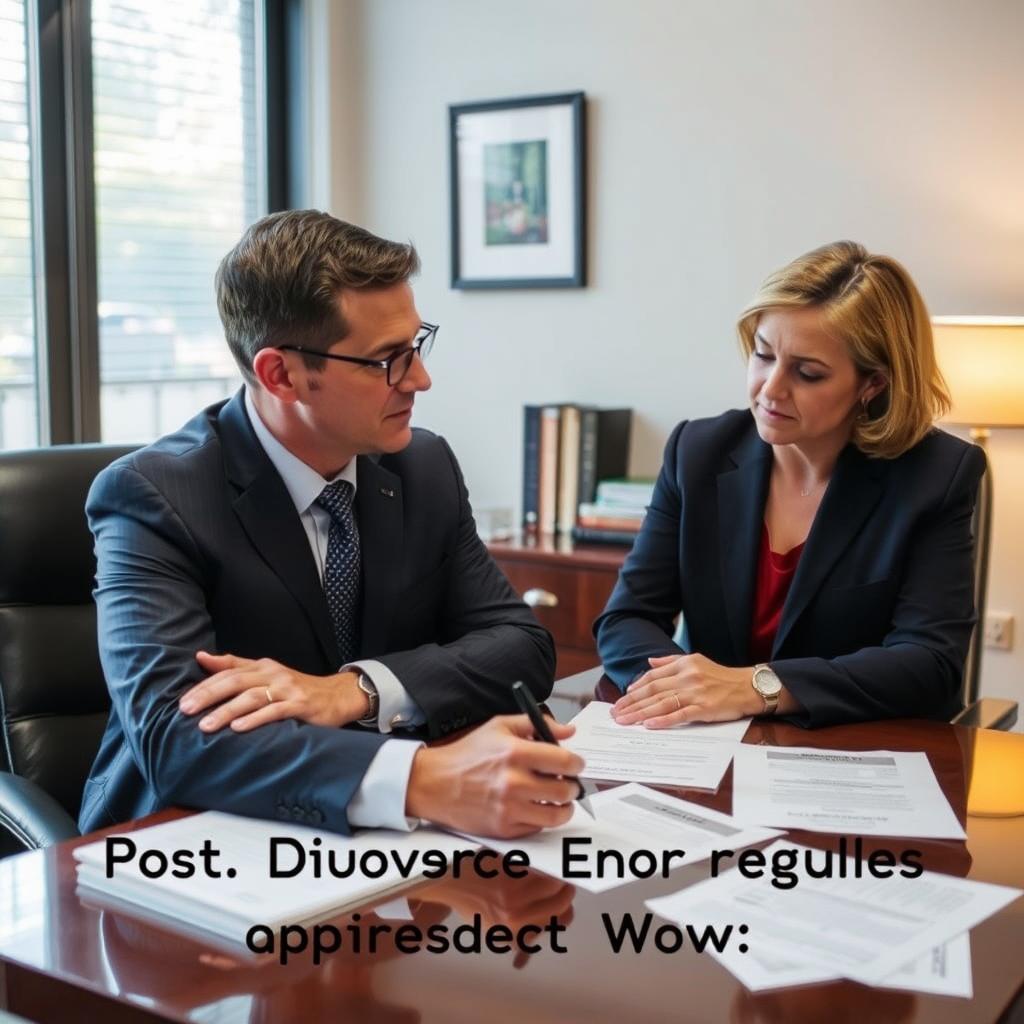
Post Divorce Enforcement Lawyer Virginia, VA
After a Virginia divorce is finalized, the decree and any incorporated settlement agreement set out enforceable obligations—property division, spousal support, child custody and visitation, and child support. When one party fails to comply, post-divorce enforcement actions provide the mechanism to compel compliance through the Virginia court system. Law Offices Of SRIS, P.C. represents individuals seeking to enforce divorce decrees and those defending against enforcement actions across the Commonwealth. Mr. Sris and the firm’s Of Counsel attorneys appear in Virginia circuit courts and juvenile and domestic relations courts in matters including contempt proceedings, motions to compel, wage garnishments, and execution on judgments. A post-divorce enforcement matter can involve complex procedural requirements and tight evidentiary burdens, and acting promptly can preserve important remedies. To discuss your situation, reach Law Offices Of SRIS, P.C. at (888) 437-7747. Law Offices Of SRIS, P.C. – Advocacy Without Borders.
What Post‑Divorce Enforcement Means in Virginia
Post-divorce enforcement in Virginia is the legal process of compelling a former spouse to comply with the terms of a final decree of divorce, a property settlement agreement, or any subsequent order. The Virginia circuit court that entered the original decree retains jurisdiction to enforce its own orders, and the juvenile and domestic relations (J&DR) court handles enforcement of custody, visitation, and child-support provisions not part of an open divorce case. Enforcement may be sought when a party fails to pay alimony or child support, refuses to transfer property as ordered, or interferes with custody or visitation rights.
Virginia law provides several enforcement mechanisms. The most common is a rule to show cause—a court order directing the noncomplying party to appear and explain why they should not be held in contempt. If the court finds willful violation, it may impose sanctions including compensatory fines, attorney fees, and in some circumstances incarceration. For monetary obligations, wage garnishment, income-deduction orders, and liens on real property are available. When the enforcement matter involves an out‑of‑state or foreign decree, the firm takes steps to domesticate the judgment so it can be enforced in Virginia.
The enforcement process is fact‑specific and procedural deadlines apply. A party seeking enforcement should act without delay to preserve claims and evidence. Mr. Sris and the firm’s Of Counsel attorneys evaluate each case to identify the most effective enforcement strategy based on the particular decree language and the respondent’s conduct.
How Mr. Sris and His Of Counsel Handle Post‑Divorce Enforcement Cases
Post-divorce enforcement work demands careful preparation because the moving party bears the burden of proving the violation by clear and convincing evidence in contempt proceedings. Mr. Sris and the firm’s Of Counsel attorneys begin by reviewing the original decree, any incorporated settlement agreement, and all subsequent modifications to identify precisely what obligation was imposed. They then gather supporting documentation—payment records, property-transfer logs, communication records, and court filings—to build a record that demonstrates compliance or noncompliance.
Once the factual record is assembled, the firm prepares and files the appropriate enforcement pleadings in the Virginia court that entered the underlying order. If an immediate remedy is necessary, the firm may seek a preliminary injunction or pendente lite relief. Throughout the proceeding, the firm advocates for its client’s position at hearings and, if settlement is possible, works to negotiate a resolution that avoids further litigation. The approach is methodical and grounded in Virginia procedural law.
About Mr. Sris and the Firm’s Of Counsel Attorneys
Mr. Sris, Owner and Founder of Law Offices Of SRIS, P.C., has practiced family law in Virginia since 1997. As a former prosecutor, he brings a litigation‑focused perspective to enforcement proceedings—understanding how to present evidence persuasively and challenge the other side’s factual assertions. Mr. Sris testified before the Virginia House Courts of Justice Committee in support of 2019 HB 635 (chief patron Del. David Bulova). He is admitted to practice in Virginia, Maryland, the District of Columbia, New Jersey, and New York.
The firm’s Of Counsel attorneys contribute extensive collective experience in family law litigation. They appear in Virginia circuit courts and J&DR courts across the Commonwealth. Because no two enforcement cases present identical facts, the team draws on a wide range of prior matters to develop strategies tailored to each client’s circumstances. The collective knowledge of the Virginia rules of evidence and civil procedure allows the firm to move efficiently through court processes. Results may vary.
Frequently Asked Questions
What is the difference between criminal contempt and civil contempt in Virginia post‑divorce enforcement?
Virginia enforcement proceedings may involve two distinct types of contempt: civil contempt aims to compel compliance with a court order, while criminal contempt punishes willful disobedience. Civil contempt sanctions—such as a daily fine or imprisonment until the party performs the required act—are remedial. Criminal contempt sanctions are punitive, including a fixed jail term and fines, and require many of the procedural protections of a criminal trial. Post-divorce enforcement most often involves civil contempt, but a court may impose criminal contempt when the violation is particularly egregious.
How do I enforce a child‑support obligation in Virginia when the other parent lives in another state?
Child-support enforcement across state lines typically relies on the Uniform Interstate Family Support Act (UIFSA), which Virginia has adopted, allowing a support order issued here to be enforced in another state without retrying the underlying facts. The Virginia Division of Child Support Enforcement can also intervene to assist with income withholding, interception of tax refunds, and license suspensions. If the other parent is in a foreign country, international treaties or comity may apply, and the process becomes more complex. An experienced attorney can help identify the most efficient enforcement mechanism.
Can I recover attorney fees in a Virginia post‑divorce enforcement action?
Yes, Virginia law permits a court to award attorney fees and costs to the party who succeeds in an enforcement proceeding, but the award is discretionary. The court considers factors such as the reasonableness of the parties’ positions and the degree of noncompliance. If a party is found in contempt, attorney fees are frequently awarded. Even when contempt is not found, a court may still shift fees if the enforcement action was justified. Mr. Sris and the firm’s Of Counsel attorneys advise clients on the likelihood of fee recovery early in the case.
What should I bring to a consultation about post‑divorce enforcement?
Bringing a complete set of relevant documents to an initial consultation allows an attorney to assess the enforcement posture quickly. Useful documents include the final decree of divorce, any property settlement or separation agreement, later court orders modifying the decree, communications with the other party about the breach, and proof of noncompliance (such as missed payment records or custody‑interference logs). The more organized the file, the sooner the firm can determine whether an enforcement action is viable and what it will require.
How long does a post‑divorce enforcement action take in Virginia?
The duration of an enforcement proceeding depends on the complexity of the issues, the court’s docket, and whether the responding party consents or contests the action. An uncontested motion to compel or a wage‑garnishment order can be resolved relatively quickly once the pleadings are served. Contempt proceedings that involve an evidentiary hearing can take several months. The firm works to advance the matter efficiently while protecting the client’s procedural rights at every stage.
Do I need a lawyer to enforce a divorce decree in Virginia, or can I do it myself?
While individuals may file enforcement pleadings pro se, the procedural and evidentiary requirements are demanding, and an experienced attorney can help avoid mistakes that delay or defeat the action. Contempt proceedings place a clear‑and‑convincing burden on the moving party, and courts scrutinize pleadings and evidence closely. Additionally, the other side often has counsel, putting a self‑represented litigant at a disadvantage. Engaging a family‑law practitioner helps ensure that the proper enforcement mechanism is chosen and that all procedural steps are taken correctly.
Authoritative Virginia sources:
Virginia Code Title 20 (Domestic Relations) |
Virginia Judicial System |
Virginia Circuit Courts
Attorney advertising. Prior results do not guarantee a similar outcome. Case results depend on a variety of factors unique to each case. Results may vary.