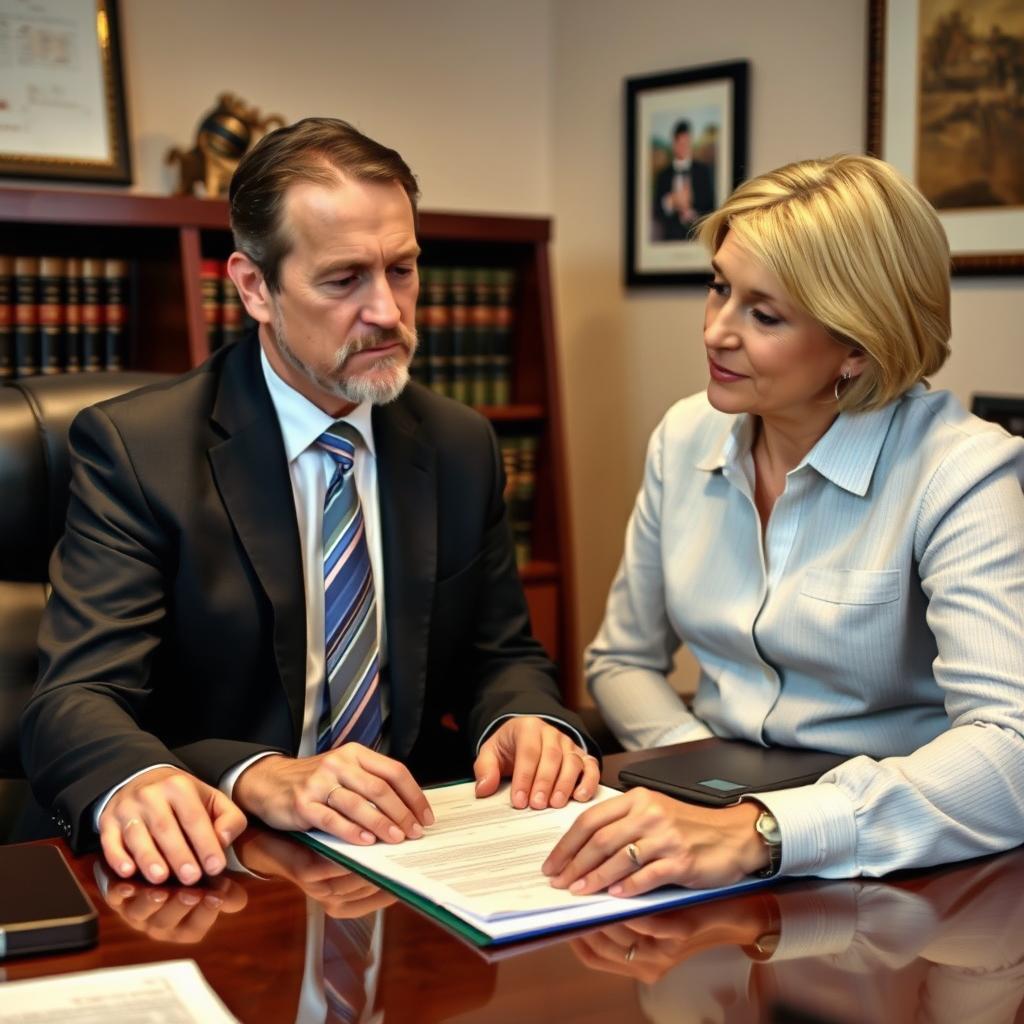
Post Divorce Enforcement Lawyer Louisa County, VA
After a divorce is final, the work is not always done. When a former spouse fails to comply with the terms of a divorce decree—whether by withholding property, missing spousal support payments, or interfering with custody arrangements—you may need a post‑divorce enforcement action. Law Offices Of SRIS, P.C., founded in 1997, represents clients throughout Louisa County in marriage‑dissolution and enforcement matters. Mr. Sris and the firm’s Of Counsel attorneys appear regularly before the Louisa County Circuit Court and Juvenile and Domestic Relations District Court, handling motions for contempt, wage garnishment, and declaratory relief to enforce the orders that protect your rights. Reach our location at (888) 437‑7747 to request a consultation.
What Post‑Divorce Enforcement Means in Louisa County
Post‑divorce enforcement in Virginia refers to the legal tools available when a party fails to comply with a final divorce decree, a separation agreement incorporated into a decree, or a pendente lite order. The relief sought often includes a show‑cause summons directing the non‑compliant spouse to explain why he or she should not be held in contempt. If the court finds a willful violation, it may impose sanctions—including jail time in extreme cases—and award the moving party attorney fees and costs. Enforcement actions can address several categories of non‑performance: failure to pay spousal support or equitable‑distribution payments, refusal to transfer titled property, failure to refinance debt as ordered, or interference with custody and visitation rights.
In Louisa County, which lies within the Sixteenth Judicial District between Richmond and Charlottesville, these matters are heard at the courthouse at 100 West Main Street, Louisa, VA 23093. The Louisa County Circuit Court has jurisdiction over all aspects of divorce and equitable distribution, while the county’s J‑D‑R Court handles standalone custody, visitation, and child‑support enforcement. Virginia law gives the court broad authority to enforce its own orders: under Va. Code § 20‑91 (grounds for divorce), § 20‑107.3 (equitable distribution), and § 20‑108.1 (child‑support guidelines), the court may adjust existing obligations, impose a payment plan, suspend a privilege such as a driver’s license, or, in serious cases, find the non‑complying party in criminal contempt. Law Offices Of SRIS, P.C. works with its clients to determine the most effective enforcement avenue based on the specific facts of the case and the location where the order was entered.
How Mr. Sris and the Firm’s Of Counsel Attorneys Handle Post‑Divorce Enforcement Cases
Mr. Sris and the firm’s Of Counsel attorneys approach post‑divorce enforcement by first reviewing the existing decree or agreement to identify which provisions are being violated and whether the violation is willful. They gather documentation—payment records, property‑title transfers, custodial‑exchange logs—and then evaluate the trusted procedural path. For many matters, the first step is a demand letter sent to the opposing party or counsel that puts the violation in writing and seeks voluntary compliance. When that does not succeed, the firm files the appropriate pleading in the Louisa County Circuit Court or J&DR Court.
The enforcement process in Virginia frequently involves a rule to show cause. If the court issues the rule, the other party must appear and demonstrate why he or she should not be held in contempt. Mr. Sris and the firm’s Of Counsel attorneys prepare the client and any corroborating witnesses for the hearing, present the evidence of non‑compliance, and argue for the specific relief that will bring the matter into conformity with the original order. Because Virginia courts have considerable discretion in fashioning enforcement remedies, the firm works to frame the request in a way that addresses both the immediate harm and the underlying obligation. If the circumstances have materially changed since the original order, the firm can simultaneously pursue a modification—such as a reduction in support or an adjustment of the payment schedule—while still seeking enforcement of the original terms until the court changes them.
Wilful violation of a divorce decree is enforceable through contempt proceedings under Va. Code § 20‑91 and related statutes.
Source: Va. Code § 20‑91 (grounds for divorce). Virginia Legislative Information System
Reviewed by Mr. Sris, admitted in VA, MD, DC, NJ, and NY.
About Mr. Sris and the Firm’s Of Counsel Attorneys
Mr. Sris, Owner and Founder of Law Offices Of SRIS, P.C., is a former prosecutor who has practiced since 1997. His experience includes testifying before the Virginia House Courts of Justice Committee in support of 2019 HB 635 (chief patron Del. David Bulova). The firm’s Of Counsel attorneys include practitioners who have served as a former Virginia State Trooper and a former Maryland Assistant State’s Attorney, giving the team a multi‑perspective understanding of how enforcement matters unfold in Virginia’s trial courts. Mr. Sris and the firm’s Of Counsel attorneys bring extensive combined legal experience to family law matters in Louisa County and across the Commonwealth. Results may vary.
Frequently Asked Questions
What is post‑divorce enforcement in Virginia?
Post‑divorce enforcement is the legal process used to compel compliance with a final divorce decree, separation agreement, or court order when one party fails to meet its obligations. In Virginia, common enforcement tools include show‑cause petitions for contempt, motions for a judgment on arrearages, income‑withholding orders, and requests for attorney fees. The Louisa County Circuit Court and the Louisa County Juvenile and Domestic Relations District Court both hear enforcement actions, depending on the nature of the obligation. A finding of contempt can result in sanctions that range from a monetary award to jail time. Before filing, an attorney typically sends a demand for compliance; if the other party still refuses, the court can use its contempt power to coerce performance. For help with your situation, you can reach Law Offices Of SRIS, P.C. at (888) 437‑7747.
How does the court enforce a divorce decree in Louisa County?
The Louisa County Circuit Court enforces divorce decrees by issuing a rule to show cause that requires the non‑complying party to appear and explain why he or she should not be held in contempt. If the court finds a willful violation, it may order a payment plan, garnish wages, suspend a driver’s license or professional license, award the moving party attorney fees, or, in severe cases of repeated non‑compliance, impose a jail sentence. The J&DR Court handles enforcement of custody, visitation, and child‑support orders. An enforcement action can be filed whenever the violation occurs; there is no fixed waiting period, but the court expects the moving party to act reasonably promptly. Consultation with an attorney about your particular situation helps ensure the proper motion is filed in the correct court.
What are the consequences of failing to comply with a divorce decree?
A spouse who fails to comply with a Virginia divorce decree risks being found in civil or criminal contempt, which can lead to fines, the obligation to pay the other party’s legal fees, suspension of privileges, or incarceration. The severity of the sanction generally depends on whether the violation was willful and whether the party had the ability to comply. Civil contempt is remedial—it is designed to force the person to obey the order—while criminal contempt punishes past disobedience. Additionally, the court can modify the existing order to account for the arrearage or address the non‑performance, such as by entering a judgment for unpaid support that accrues interest. If you are facing a situation where your former spouse is not complying, you should contact a lawyer promptly to discuss your options. For a consultation, you can reach Mr. Sris and the firm’s Of Counsel attorneys at (888) 437‑7747.
Can I modify a divorce decree while also enforcing it?
Yes; you can simultaneously seek enforcement of existing obligations and a modification of the divorce decree if a substantial change of circumstances has occurred since the original order. For example, if your former spouse has stopped paying spousal support and his or her income has decreased, you might ask the Louisa County Circuit Court to enter a money judgment for the arrears while also requesting a temporary reduction of future payments. The enforcement and modification petitions are usually filed together, and the court can address them in a single hearing. Because the remedies are distinct, it is important to plead both clearly so the court has jurisdiction to grant both forms of relief. Discussing your circumstances with an experienced family‑law attorney can help determine which combination of enforcement and modification tools applies in your case.
Do I need a lawyer for post‑divorce enforcement in Louisa County?
While you are not legally required to hire a lawyer for post‑divorce enforcement, the process involves rules of evidence, contempt standards, and procedural deadlines that can be challenging to navigate without representation. A lawyer can help you assess whether a violation is willful, gather the necessary documentation, and draft a show‑cause petition that complies with the requirements of the Louisa County Circuit Court or J&DR Court. An attorney can also advise you on whether a separate modification is needed and present your case in a way that maximizes the likelihood of recovering attorney fees under Va. Code § 20‑99. The firm’s Of Counsel attorneys appear in Louisa County courts and can guide you through each step. To discuss your situation, reach our location at (888) 437‑7747.
Related Practice Areas: Fairfax County Family Law | Fairfax City Family Law | Falls Church Family Law | Prince William County Family Law
Virginia Legal Resources: Virginia Code Title 20 — Domestic Relations | Louisa County General District Court | Virginia Judicial System
Attorney advertising. Prior results do not guarantee a similar outcome. Results may vary.
Case results depend on a variety of factors unique to each case.