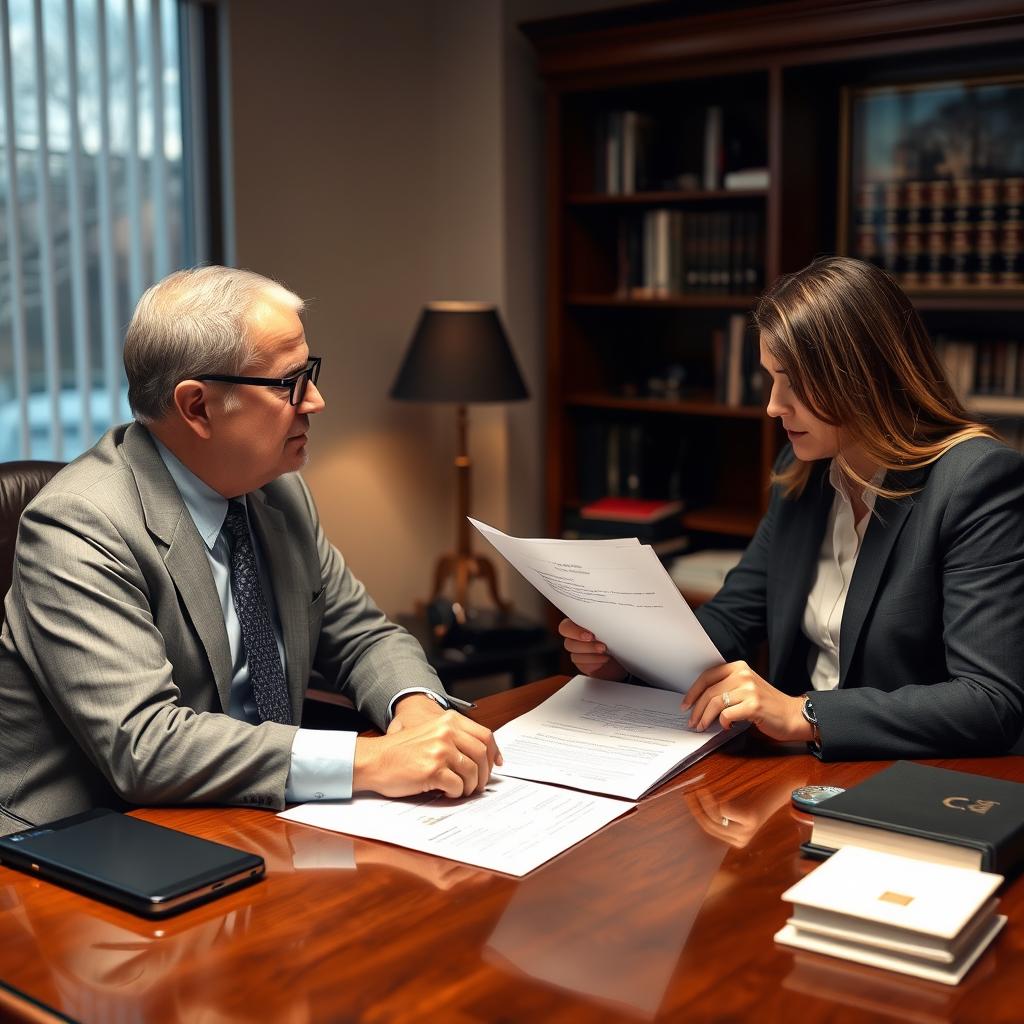
Property Settlement Lawyer Isle of Wight County, VA
The breakdown of a marriage brings financial uncertainty. You may wonder if you will keep the family home, how retirement savings will be divided, and whether you will be able to maintain your standard of living. In Isle of Wight County, Virginia, the division of marital property is governed by the principle of equitable distribution. Unlike community property states, Virginia does not automatically split assets 50‑50 — the court considers multiple factors to achieve a fair outcome. Mr. Sris, Owner and Founder of Law Offices Of SRIS, P.C., handles property settlement matters for clients in Smithfield, Windsor, Carrollton, and throughout Isle of Wight County. To request a consultation, call (888) 437-7747. Law Offices Of SRIS, P.C. – Advocacy Without Borders.
How a Property Settlement Lawyer Helps You Reach Resolution
A property settlement lawyer first identifies and classifies all marital and separate property — real estate, bank accounts, retirement plans, business interests, and debts. With this inventory complete, the lawyer works to negotiate a separation agreement that reflects your financial priorities while staying within Virginia’s equitable‑distribution framework. Where the parties cannot agree, the lawyer prepares the case for mediation or, if necessary, presents the matter to the Isle of Wight County Circuit Court. Throughout, the focus is on protecting your economic future without unnecessary litigation.
What to Expect During a Virginia Property Settlement
You will gather financial documents — tax returns, pay stubs, deeds, investment statements — and meet with legal counsel to discuss the marital estate. The lawyer identifies what must be disclosed under Virginia discovery rules and works with you to determine a reasonable settlement position. If you and your spouse are able to reach agreement, the terms are written into a property settlement agreement and filed with the Circuit Court. If not, the court schedules a hearing where a judge applies the statutory factors to make an equitable distribution of property. The process moves at the pace set by the court’s calendar and the complexity of the estate.
Equitable Distribution in Virginia — An Overview
Virginia Code § 20‑107.3 directs judges to classify property as marital, separate, or hybrid. The court then distributes the marital share equitably — meaning fairly, not necessarily equally — after weighing factors such as each spouse’s contributions, the duration of the marriage, and the circumstances surrounding the divorce. Mr. Sris, Owner and Founder of Law Offices Of SRIS, P.C., testified before the Virginia House Courts of Justice Committee in support of 2019 HB 635 (chief patron Del. David Bulova), a bill that addressed procedural elements of Virginia’s equitable distribution statute. His firsthand knowledge of the legislative intent behind the law is a resource for clients navigating property division in Isle of Wight County.
About Mr. Sris and the Firm’s Of Counsel Attorneys
Mr. Sris, a former prosecutor, founded the firm in 1997. He is admitted to practice in Virginia, Maryland, the District of Columbia, New Jersey, and New York. The firm’s Of Counsel attorneys bring extensive combined legal experience. Results may vary. Together, Mr. Sris and the firm’s Of Counsel attorneys concentrate on family law matters, offering clients a practical understanding of how Virginia courts approach property settlement.
Frequently Asked Questions About Property Settlement in Isle of Wight County
How is property divided in a Virginia divorce?
Virginia uses equitable distribution, meaning marital property is divided fairly but not necessarily 50‑50. The judge considers 11 factors listed in Va. Code § 20‑107.3, including each spouse’s contributions to the marriage, the length of the union, and the tax consequences of any proposed division. Separate property — assets owned before the marriage or received as a gift or inheritance — typically remains with the owning spouse.
What is the difference between marital and separate property in Virginia?
Marital property is everything acquired during the marriage by either spouse, regardless of how title is held, unless the property was a gift or inheritance. Separate property includes property owned before marriage, gifts or inheritances received during the marriage, and anything bought with separate funds that can be traced back to those funds. Proper classification is essential to a fair settlement.
Do I need a lawyer for property settlement in Isle of Wight County?
You are not legally required to hire a lawyer, but the equitable‑distribution process can be complex. Identifying, valuing, and dividing retirement accounts, business interests, and real estate requires careful documentation. A lawyer can help you avoid common mistakes that could affect your financial future. For specific guidance, reach Law Offices Of SRIS, P.C. at (888) 437-7747.
What if my spouse and I have already signed a separation agreement?
A signed separation agreement can be incorporated into a final divorce decree if it meets statutory requirements. The court reviews the agreement for fairness and may enforce it unless it was obtained through fraud or duress. Even with a signed agreement, legal review is advisable to confirm that your rights are protected.
Can a property settlement agreement be modified after the divorce is final?
Generally, property division orders are final and cannot be modified. However, if a provision is ambiguous or the agreement reserved the court’s jurisdiction over a specific asset, the court may clarify or enforce the original terms. Spousal-support provisions may be modifiable if the agreement permits it.
How does the court handle retirement accounts and pensions?
Retirement assets acquired during the marriage are marital property subject to division. The court may award a percentage of the marital share of a pension, 401(k), or IRA to the other spouse. A Qualified Domestic Relations Order (QDRO) is often required to divide certain plans. Proper valuation and QDRO preparation are critical steps.
What if my spouse is hiding assets?
If you suspect hidden assets, your attorney can use discovery tools — subpoenas, depositions, and requests for production — to uncover them. Virginia courts take the concealment of marital property seriously and may impose sanctions or award a larger share to the other party. Early consultation with counsel is important.
Is there a property settlement lawyer near me in Isle of Wight County?
Law Offices Of SRIS, P.C. serves Isle of Wight County from its Richmond Location. Mr. Sris and the firm’s Of Counsel attorneys represent clients in Smithfield, Windsor, Carrollton, and throughout the county. Call (888) 437-7747 to schedule a consultation.
How long does property settlement take in Virginia?
The timeline depends on whether the parties have minor children, the complexity of the marital estate, and the court’s schedule. Uncontested matters with a signed agreement typically resolve in a matter of months; contested equitable‑distribution cases that require experienced attorney valuation and trial can take considerably longer. The firm works to bring each matter to resolution as efficiently as the circumstances allow.
What are the factors the judge considers in equitable distribution?
Virginia Code § 20‑107.3 lists eleven factors, including the monetary and non‑monetary contributions of each spouse, the duration of the marriage, the age and health of the parties, and the tax consequences of the division. The court also considers the causes of the dissolution and any debts of the parties. A lawyer can explain which factors are likely to weigh most heavily in your case.
To discuss your property settlement concerns, reach Mr. Sris and the firm’s Of Counsel attorneys at (888) 437-7747.
7400 Beaufont Springs Drive, Suite 300, Room 395
Richmond, VA 23225
By appointment only. (888) 437-7747
Attorney advertising. Prior results do not guarantee a similar outcome.
Case results depend on a variety of factors unique to each case.
Results may vary.