
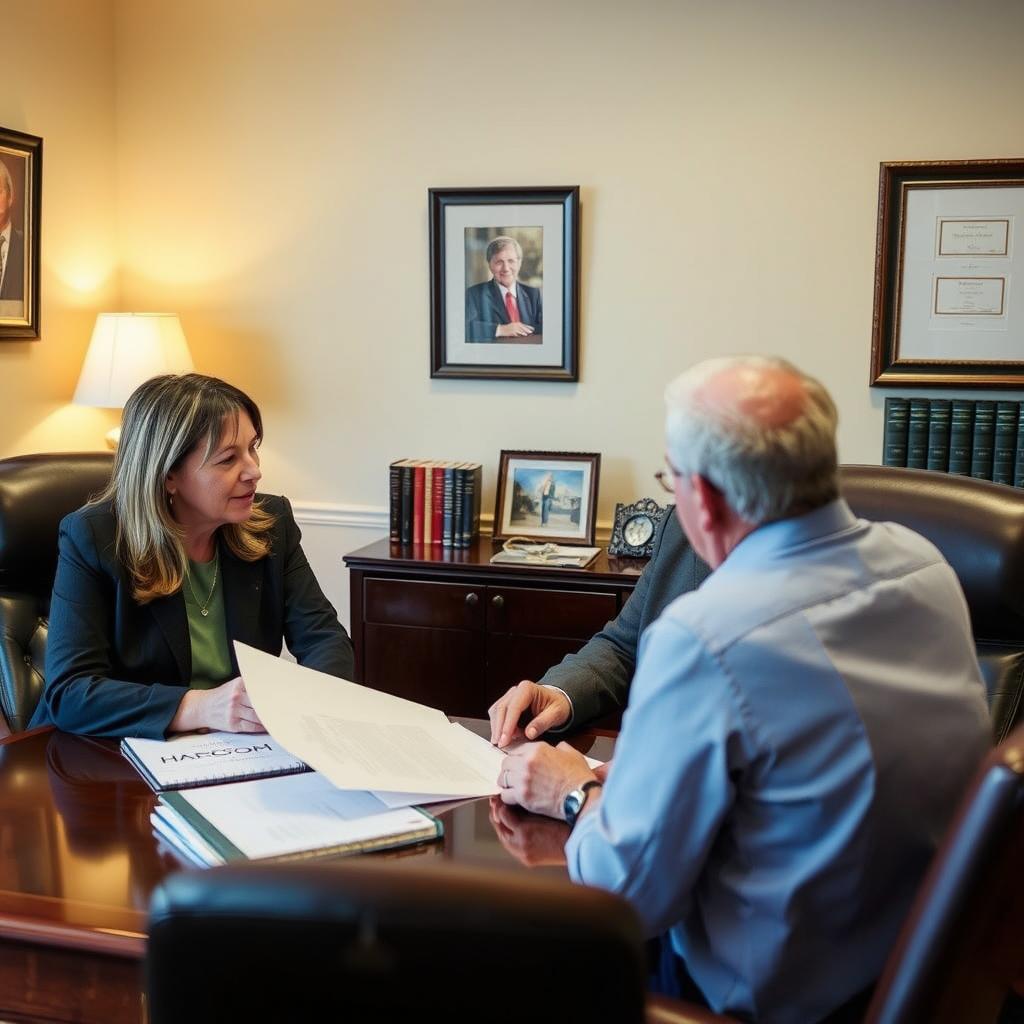
Child Guardianship Lawyer Dinwiddie County, VA
Your niece has been living with you in Dinwiddie for months, but the school needs a guardian’s signature, and the doctor won’t speak with you. A child you love depends on you, yet without a court order, you hold no legal authority. That gap can feel overwhelming—but it can be closed. In Dinwiddie County, child guardianship cases move through the Juvenile and Domestic Relations District Court. Law Offices Of SRIS, P.C. assists individuals and families in Dinwiddie, McKenney, and surrounding communities as they petition for legal guardianship, working to give you the legal standing to make decisions that protect a child. To discuss your situation, call (888) 437-7747. Law Offices Of SRIS, P.C. – Advocacy Without Borders.
How We Approach Child Guardianship in Dinwiddie County
Every child guardianship matter begins with a set of facts that are uniquely personal—and uniquely local. Our approach starts by listening carefully to your story and then building a petition that speaks directly to the judges and procedures of the Dinwiddie County Juvenile and Domestic Relations District Court. Mr. Sris and the firm’s Of Counsel attorneys have years of experience appearing in Virginia’s courts, and we use that experience to prepare every filing, every piece of evidence, and every courtroom presentation with the local bench in mind.
We handle the entire process, from drafting the initial petition and gathering the supporting documentation to preparing you for what to expect at the hearing. While we cannot promise a particular result, we work methodically to present a complete and persuasive case. We also help you understand how a guardianship order interacts with any existing custody or visitation orders, and we are prepared to address questions the court may raise about parental consent, the child’s best interests, and the practical day‑to‑day realities of the arrangement.
What to Expect During the Guardianship Process
The guardianship process in Dinwiddie County typically begins with the filing of a petition in the Juvenile and Domestic Relations District Court. The petition must identify the child, the proposed guardian, the child’s parents, and the reasons why guardianship is in the child’s best interest. Once filed, the court will issue a notice to all interested parties, and a hearing will be scheduled.
At the hearing, the judge considers evidence about the child’s circumstances, the fitness of the proposed guardian, and the input of the parents. The court’s primary focus is the welfare of the child. You should be prepared to answer questions about the child’s living situation, medical and educational needs, and your ability to provide a stable home. Witnesses—such as teachers, counselors, or family members—may offer testimony that supports your petition. After the hearing, if the court finds sufficient grounds, it will issue an order appointing you as guardian, granting you the legal authority to make decisions for the child. Until that order is entered, however, the parents retain their legal rights. We work to help you present your case clearly and to navigate any procedural requirements that arise along the way.
It is important to understand that a guardianship order may be temporary or permanent, depending on the circumstances. The court retains jurisdiction to modify or revoke the order if the situation changes, so we also help clients understand their ongoing obligations and the steps needed to maintain the guardianship over time.
Why Legal Guidance Matters for Guardianship in Dinwiddie County
The standards that govern guardianship petitions are set by Virginia statute, but the way those standards are applied can vary from courtroom to courtroom. The judges in Dinwiddie County’s Juvenile and Domestic Relations District Court expect clear, well‑organized evidence and thorough documentation. A petition that omits required information or fails to address the statutory factors may be delayed or denied. By working with experienced counsel who knows the local court system, you can avoid common pitfalls and ensure that your case is presented effectively.
Legal guidance also matters because guardianship often intersects with other family law issues—custody, visitation, and child support. A guardianship order can affect whatever parenting arrangement already exists. We can help you evaluate whether guardianship is the right legal tool for your situation and, if necessary, coordinate with related proceedings to avoid conflicting orders.
About Mr. Sris and the Firm’s Of Counsel Attorneys
Mr. Sris, Owner and Founder of Law Offices Of SRIS, P.C., is a former prosecutor who has practiced since 1997. He is admitted in Virginia, Maryland, the District of Columbia, New Jersey, and New York. Mr. Sris testified before the Virginia House Courts of Justice Committee in support of 2019 HB 635 (chief patron Del. David Bulova). Together with the firm’s Of Counsel attorneys, Mr. Sris brings extensive combined legal experience to family law matters in Dinwiddie County. Results may vary.
The firm’s Of Counsel attorneys are independent, experienced lawyers who work on matters alongside Mr. Sris. They bring knowledge gathered through years of practice, including backgrounds that inform the handling of sensitive family cases. When you engage the firm, you gain the benefit of a team that understands how Virginia’s courts operate—and how to present a guardianship petition that gets the court’s attention for the right reasons.
Frequently Asked Questions
What is the difference between guardianship and custody in Virginia?
Guardianship gives a non‑parent the legal authority to make decisions for a child, while custody determines where the child lives and how parental responsibilities are shared. In Virginia, a guardian may be appointed by the court to handle a child’s personal affairs—such as education and medical care—without terminating the parents’ rights. Custody, by contrast, defines the physical and legal relationship between a parent and child. Depending on the situation, a guardianship order can coexist with a custody arrangement. The Dinwiddie County Juvenile and Domestic Relations District Court can address both types of cases, but the legal standards and procedures differ.
Who can petition for guardianship of a child in Dinwiddie County?
Any adult who can demonstrate that guardianship is in the child’s best interest may file a petition—most often a grandparent, aunt, uncle, or other close relative. A non‑relative may also petition, but the court will scrutinize the circumstances more closely, especially if the child’s parents contest the request. The proposed guardian must be able to provide a suitable home and must not have a disqualifying criminal history. The court will also consider the child’s relationship with the proposed guardian and the reasons the parents cannot fulfill their role.
Do I need the parents’ permission to obtain guardianship in Virginia?
While parental consent can make the process smoother, it is not always required if you can show by clear and convincing evidence that granting the guardianship serves the child’s best interests. When a parent consents, the case is often less contested and the hearing may be more straightforward. When a parent opposes the petition, the court holds a contested hearing. The judge will weigh testimony and evidence from both sides before deciding. An attorney can help you evaluate whether you have the evidence needed to proceed without consent and can present that evidence persuasively at trial.
How long does a child guardianship case take in Dinwiddie County?
The timeline for a child guardianship case depends on the complexity of the case, the court’s calendar, and whether the parents consent or contest the petition. An uncontested case, where all parties agree and the paperwork is complete, may be resolved after one court hearing. Contested matters require additional discovery, witness preparation, and possibly multiple hearings, extending the process. Our team works to move each case as efficiently as possible while ensuring that every necessary step is taken to protect the child’s interests.
What responsibilities does a guardian have once appointed?
Once appointed, a guardian is legally responsible for making decisions about the child’s housing, education, healthcare, and general welfare, and must act in the child’s best interest at all times. The guardian does not become the child’s parent, but stands in a similar role regarding daily care and major decisions. The guardian must also comply with any reporting requirements the court imposes, such as periodic updates on the child’s well‑being. Failure to fulfill these duties can result in removal as guardian. We help our clients understand the scope of their responsibilities so they can meet the court’s expectations from the start.
Can a guardianship order be changed or ended later on?
Yes, the court that issued the guardianship order retains jurisdiction to modify or revoke it if circumstances change. Either parent or the guardian can petition to amend the order. Common reasons include the parents regaining the ability to care for the child, a guardian relocating, or a change in the child’s needs. The standard remains the child’s best interest. We can assist clients in either enforcing an existing guardianship order or seeking a modification when the original arrangement no longer serves the child’s welfare.
Will a guardianship affect child support obligations in Virginia?
Parents remain legally obligated to support their child even when a guardian is appointed, and the guardian may seek child support on behalf of the child. The Dinwiddie County Juvenile and Domestic Relations District Court can establish or modify child support orders, and a guardianship order does not automatically terminate a parent’s duty to pay support. In fact, the guardian can petition the court for an order directing the parents to contribute financially. We can help guardians understand how to pursue or adjust support obligations in light of the new arrangement.
For further reading on how family law matters are handled across Virginia, see our discussion of the Virginia Code Title 20 — Domestic Relations (Virginia General Assembly) and the Dinwiddie County Combined Courts (Virginia Judicial System).
To request a consultation about a child guardianship matter in Dinwiddie County, call (888) 437-7747. Our Richmond Location, located at 7400 Beaufont Springs Drive, Suite 300, Room 395, Richmond, VA 23225, serves clients throughout Dinwiddie and McKenney by appointment.
Additional family law resources:
Attorney advertising. Prior results do not guarantee a similar outcome. Results may vary.
Reviewed by Mr. Sris, Owner and Founder. Admitted in Virginia, Maryland, District of Columbia, New Jersey, and New York. Practicing since 1997.
Case results depend on a variety of factors unique to each case.