
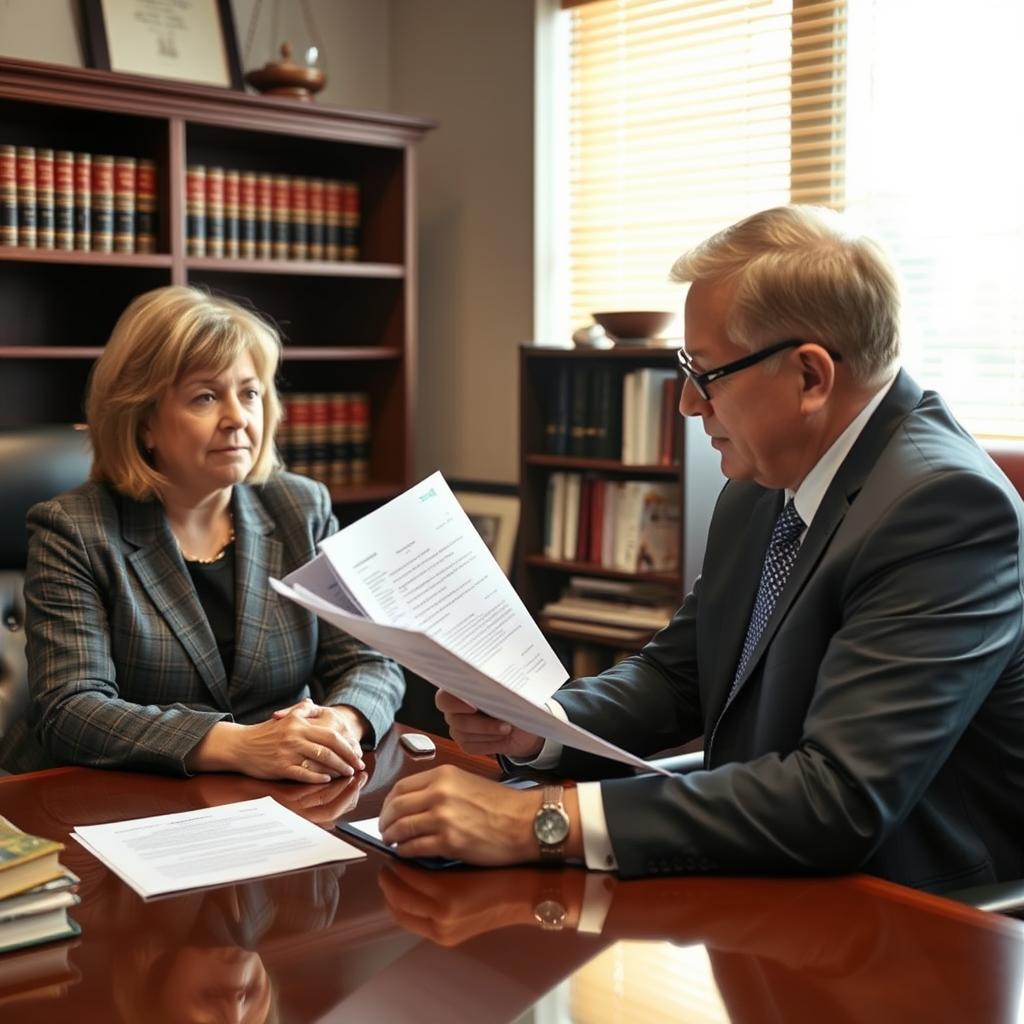
Complex Property Division Lawyer King George County
A Complex Property Division Lawyer King George County handles the equitable distribution of marital assets and debts under Virginia law. The process is governed by Virginia Code § 20-107.3 and requires precise legal strategy. Law Offices Of SRIS, P.C. —Advocacy Without Borders. provides focused representation for high-asset and contested property cases in King George County Circuit Court. (Confirmed by SRIS, P.C.)
The Virginia Statute Governing Property Division
Virginia Code § 20-107.3 — Equitable Distribution — governs all division of marital property in King George County divorces. This statute does not mandate an equal split but a fair one based on multiple factors. The court has broad discretion to classify assets as marital, separate, or hybrid. It can order monetary awards, transfers of property, and payment of debts. The goal is a distribution the court deems equitable under the specific circumstances of your marriage. A Complex Property Division Lawyer King George County must master this code to advocate effectively.
The statute’s application is fact-intensive and rarely simple. Marital property includes all assets acquired from the date of marriage until the date of separation. Separate property is generally what you owned before marriage or received by gift or inheritance. The classification of assets like pensions, businesses, and real estate is often disputed. Virginia law requires a detailed analysis of contributions to the marriage’s well-being. This includes both monetary and non-monetary contributions such as homemaking and child care.
Equitable distribution means a fair split, not always 50/50.
The court weighs statutory factors to decide what is fair. These factors include each spouse’s contributions to the family’s welfare. The duration of the marriage and the circumstances leading to the divorce are considered. The court also examines the age, health, and financial needs of each party. Debts and liabilities are divided using the same equitable principles.
Separate property can become marital through transmutation.
Transmutation occurs when separate property is treated as marital property. This often happens by commingling funds in a joint account. Using marital funds to pay for a separate asset’s mortgage can create a hybrid claim. The increase in value of separate property may be marital if marital effort contributed. Proving the separate character of an asset requires clear documentation and tracing.
Pensions and retirement accounts are subject to division.
Virginia courts use a coverture fraction to divide defined benefit pensions. The marital share is based on the time employed during the marriage. A Qualified Domestic Relations Order (QDRO) is needed to divide most retirement plans. Defined contribution plans like 401(k)s are valued as of the date of separation. Failure to properly value and divide these assets can result in significant financial loss.
The Insider Procedural Edge in King George County
Your case will be filed in the King George County Circuit Court located at 9483 Kings Highway, King George, VA 22485. This court handles all divorce and equitable distribution matters for the county. Procedural specifics for King George County are reviewed during a Consultation by appointment at our King George County Location. The timeline from filing to final hearing varies based on case complexity and court docket. Filing fees are set by the state and are subject to change. Learn more about Virginia legal services.
Local procedural rules can impact the strategy of your property division case. The court requires specific financial disclosures through mandatory discovery procedures. Failure to comply with discovery requests can lead to sanctions or adverse rulings. Motions for pendente lite relief can address temporary support and property use. Understanding the local judge’s preferences on evidence presentation is critical. A skilled marital property split lawyer King George County handles these local nuances.
The discovery process is mandatory and exhaustive.
You must exchange detailed financial information with your spouse. This includes tax returns, bank statements, deeds, and retirement account statements. Interrogatories and requests for production of documents are standard tools. Depositions may be taken to question parties or experienced attorneys under oath. The goal is to ensure full transparency of all assets and debts for the court.
Court-ordered valuations are common for complex assets.
Businesses, professional practices, and unique collections often require experienced appraisal. The court may appoint a neutral experienced to value a disputed asset. Each party can also hire their own forensic accountant or valuation experienced. experienced reports must be exchanged according to the court’s scheduling order. The cost of these valuations is typically borne by the marital estate or the parties.
A final equitable distribution hearing resolves contested issues.
If settlement talks fail, the judge will decide the property division at a hearing. Each party presents evidence and witness testimony supporting their proposed distribution. The judge applies the statutory factors to the evidence presented. A final order detailing the distribution of each asset and debt is entered. This order is enforceable like any other judgment of the court.
Penalties & Defense Strategies in Property Division
The most common penalty in a failed property case is an unequal and unfavorable distribution of assets. The court’s power is broad, and outcomes can significantly impact your financial stability. A strong legal defense focuses on accurate classification and valuation of property. Presenting clear evidence of your contributions to the marriage is essential. Strategic negotiation often yields a better result than leaving everything to a judge. Learn more about criminal defense representation.
| Offense / Issue | Penalty / Consequence | Notes |
|---|---|---|
| Failure to Disclose Assets | Court sanctions; forfeiture of the asset; payment of attorney’s fees. | The court can award the hidden asset entirely to the other spouse. |
| Inaccurate Valuation | Unfavorable distribution; monetary award to the other spouse. | Undervaluing a business or pension leads to a larger offsetting award. |
| Dissipation of Assets | Charged back to the spending spouse; reduction in their share. | Spending marital funds on an affair or gambling before separation is dissipation. |
| Non-Compliance with Court Order | Contempt of court; fines; wage garnishment; lien on property. | Failing to transfer a title or pay a monetary award can lead to contempt. |
[Insider Insight] Local prosecutors are not involved in civil property division. However, the King George County Circuit Court judges expect full financial honesty. Judges in this jurisdiction closely scrutinize claims of separate property and dissipation. They tend to favor detailed documentary evidence over vague testimony. An equitable distribution lawyer King George County must prepare a careful, evidence-based case.
Hiding assets leads to severe court sanctions.
The court can award 100% of a hidden asset to the innocent spouse. You can be ordered to pay the other side’s legal fees incurred to uncover the asset. Intentional nondisclosure can be considered fraud upon the court. This misconduct can influence the judge’s decisions on all other issues in the case. Full transparency from the start is the only defensible position.
Dissipation means wasting marital assets before separation.
Spending money on a paramour is a classic example of dissipation. Gambling losses or extravagant personal gifts can also be considered dissipation. The burden is on the claiming spouse to prove the wasteful spending. The court will add the dissipated amount back to the marital pot before division. This effectively charges the spending spouse for their misconduct.
A monetary award is a common tool to balance distribution.
When assets cannot be physically divided, the court orders a cash payment. This is often used when one spouse keeps the marital home. The award is calculated to achieve an overall equitable result. The court sets a payment schedule, sometimes with interest. Enforcement mechanisms exist if the paying spouse fails to comply.
Why Hire SRIS, P.C. for Your King George County Property Division
Our lead attorney for complex property matters is a seasoned litigator with deep knowledge of Virginia’s equitable distribution statute. This attorney has represented clients in numerous high-asset divorces across Virginia. Their background includes forensic financial analysis and business valuation disputes. They understand how to present complex financial data persuasively to a King George County judge. SRIS, P.C. has secured favorable property settlements for clients facing contentious divisions. Learn more about DUI defense services.
SRIS, P.C. focuses on the precise, aggressive advocacy required for complex property cases. We analyze every financial document to build a compelling narrative for the court. Our team includes professionals skilled in tracing separate property and uncovering hidden assets. We prepare for trial from day one, which strengthens your position in negotiations. You need a Complex Property Division Lawyer King George County who knows the stakes are your financial future.
The firm’s approach is direct and strategic, not passive. We identify the core financial issues in your marriage quickly. We develop a plan to protect your claim to key assets like retirement accounts and real estate. Our goal is to achieve a division that provides you with long-term stability. The team at SRIS, P.C. provides the focused representation these cases demand.
Localized FAQs for King George County Property Division
How is property divided in a King George County divorce?
Property is divided equitably under Virginia Code § 20-107.3. The court classifies assets as marital or separate. It then values marital assets and divides them based on multiple statutory factors. The goal is a fair, not necessarily equal, distribution.
What is considered marital property in Virginia?
Marital property includes all income, assets, and debts acquired from the marriage date until the separation date. This includes earnings, real estate, vehicles, retirement accounts, and businesses. Gifts between spouses are also marital property.
How long does property division take in King George County Circuit Court?
The timeline depends on asset complexity and cooperation. Simple cases may settle in months. Contested cases with valuations and discovery can take a year or more. The court’s trial docket also affects the schedule. Learn more about our experienced legal team.
Can I keep the house in a divorce?
Possibility depends on ownership, mortgage, and other assets. The court considers title, contributions, and children’s needs. You may keep it by buying out your spouse’s equity. Otherwise, the house may be sold, and proceeds divided.
What is a QDRO?
A Qualified Domestic Relations Order is a court order required to divide most employer-sponsored retirement plans. It instructs the plan administrator to pay a portion to the alternate payee. It is separate from the final divorce decree.
Proximity, CTA & Disclaimer
Our King George County Location serves clients throughout the region. We are accessible for meetings to discuss your property division concerns. Consultation by appointment. Call 24/7. Our legal team is ready to review the specifics of your marital assets and debts. Contact SRIS, P.C. to schedule a case review with a property division attorney focused on King George County.
Law Offices Of SRIS, P.C.—Advocacy Without Borders.
Phone: [PHONE NUMBER FROM GMB]
Address: [KING GEORGE COUNTY GMB ADDRESS]
Past results do not predict future outcomes.