
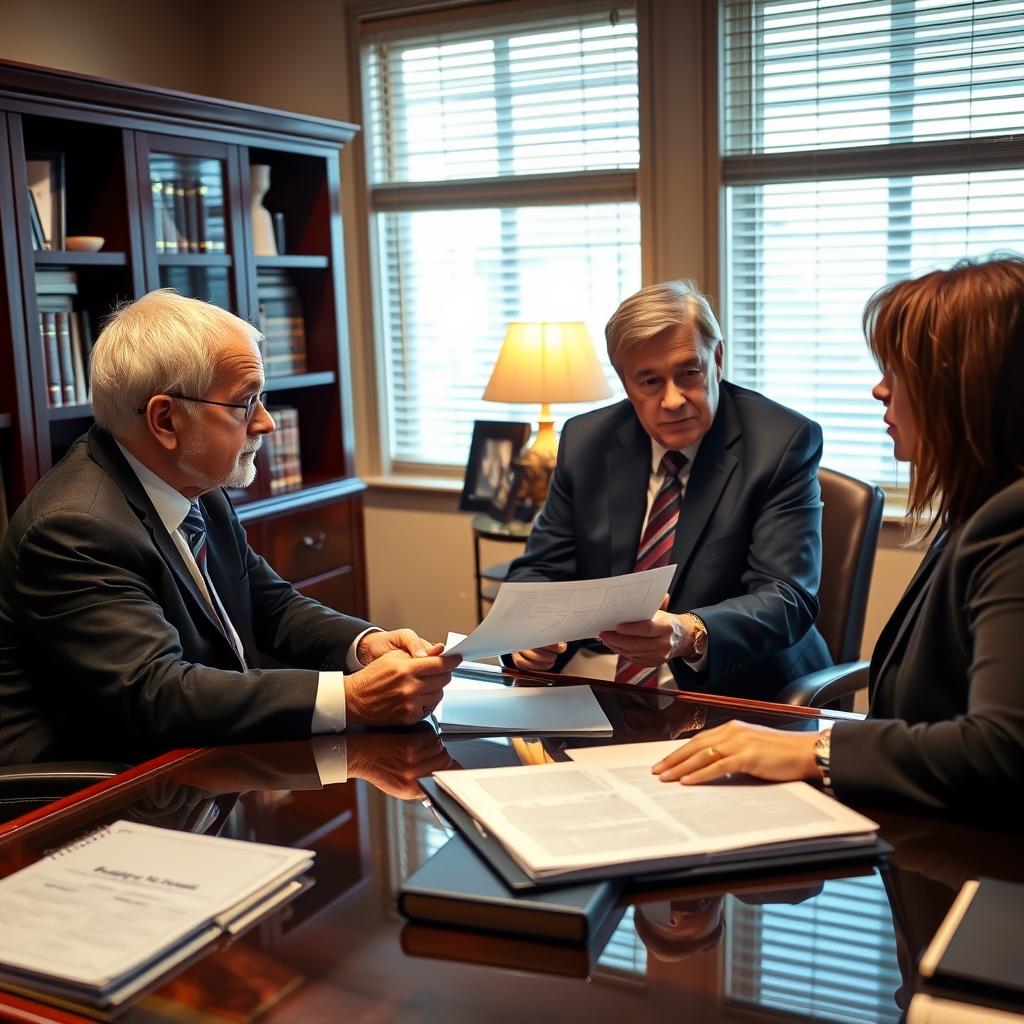
Complex Property Division Lawyer King William County, VA
Divorce involving substantial assets, business interests, multiple real estate holdings, or retirement accounts requires a careful, methodical approach to property division. In King William County, Virginia, all divorce and equitable distribution matters are heard before the King William County Circuit Court, located at 351 Courthouse Lane, Suite 201, King William, VA 23086. The court applies Virginia Code § 20-107.3, the Commonwealth’s equitable distribution statute, to classify, value, and divide marital and separate property. Mr. Sris, Owner and Founder of Law Offices Of SRIS, P.C., knows that complex property division demands more than a formulaic application of factors—it requires thorough identification of marital assets, proper valuation of business and retirement interests, and an understanding of how a King William County judge is likely to weigh the eleven statutory factors. Mr. Sris and his Of Counsel serve King William County, West Point, Aylett, and surrounding communities from the firm’s Richmond location. For a confidential consultation about dividing complex property in your divorce, call (888) 437-7747. Law Offices Of SRIS, P.C. – Advocacy Without Borders.
What Complex Property Division Means in King William County
Virginia is an equitable distribution state, not a community property state. That means marital property is divided fairly but not necessarily equally. The King William County Circuit Court identifies which assets are marital—generally everything acquired during the marriage other than gifts or inheritances—and then distributes them after considering eleven statutory factors set out in Va. Code § 20-107.3. Those factors include the duration of the marriage, each spouse’s monetary and non-monetary contributions, the circumstances that led to the divorce, the ages and health of the parties, the liquidity of the assets, tax consequences, and any other factor the court finds relevant.
In King William County, the court sees few high-volume complex property cases compared to Northern Virginia jurisdictions, so a well-prepared, thorough presentation carries weight. Marital estates involving a family business, professional practice, commercial real estate, stock options, or pension plans often require forensic accounting and business valuation professionals. King William County Circuit Court does not mandate mediation, but a signed property settlement agreement that addresses all issues can avoid trial. Mr. Sris and his Of Counsel are familiar with the local judicial expectations and work to ensure every asset is properly accounted for and valued. The court also requires at least one corroborating witness for an uncontested divorce hearing, and a written separation agreement must cover all material terms.
How Mr. Sris and His Of Counsel Handle Complex Property Division Cases
Complex property division begins with a detailed inventory of all assets and debts. Mr. Sris and his Of Counsel work to identify every marital asset—including hidden or undervalued interests—and determine the proper classification under Virginia law. Where a business or professional practice is involved, the team collaborates with qualified financial attorneys to perform valuations that hold up to scrutiny in the King William County Circuit Court. Retirement accounts, including military pensions and 401(k) plans, are analyzed for the marital share, and appropriate orders are prepared to divide those interests without unnecessary tax penalties.
Once the marital estate is fully identified and valued, Mr. Sris and his Of Counsel negotiate settlement terms where possible. When negotiation reaches an impasse, they are prepared to present a compelling case at trial, supported by expert testimony and detailed financial documentation. The firm’s approach emphasizes clarity: clients in King William County receive a straightforward explanation of which assets are subject to division, how those assets are likely to be treated under equitable distribution, and what strategic options exist to protect their financial future. The timeline for resolving a complex property case varies by the size of the estate, the degree of cooperation between the parties, and the court’s docket.
About Mr. Sris and His Of Counsel Team
Mr. Sris, Owner and Founder of Law Offices Of SRIS, P.C., has practiced since 1997. He testified before the Virginia House Courts of Justice Committee in support of 2019 HB 635 (chief patron Del. David Bulova). That bill became the 2019 revision to Va. Code § 20-107.3(g), the section governing direct payment of retirement and pension plan marital shares—making Mr. Sris’s insight into equitable distribution uniquely informed. Mr. Sris is admitted in Virginia, Maryland, the District of Columbia, New Jersey, and New York.
Mr. Sris and his Of Counsel bring over 120 years of combined legal experience and have achieved 4,739+ documented firm-wide results. Results may vary. The Of Counsel attorneys engaged by the firm are seasoned practitioners with backgrounds in family law, business litigation, and valuation disputes. They collaborate with Mr. Sris on complex property division matters, ensuring each client’s case benefits from deep collective knowledge without sacrificing individual case review.
Frequently Asked Questions
What is equitable distribution under Virginia law?
Equitable distribution is the process by which Virginia courts divide marital property fairly, not necessarily equally, after considering eleven statutory factors outlined in Va. Code § 20-107.3. The court first separates marital property—assets acquired during the marriage, except gifts or inheritances—from separate property. It then determines a division that is equitable given the marriage’s duration, each spouse’s contributions, tax consequences, and other relevant circumstances. For complex estates, this often requires valuation of businesses, professional practices, and retirement accounts. The King William County Circuit Court has exclusive jurisdiction over equitable distribution matters in the county.
How are business assets divided in a King William County divorce?
In Virginia, a business or professional practice acquired during the marriage is considered marital property subject to equitable distribution, even if titled in only one spouse’s name. The business must be valued—typically by a forensic accountant or business valuation experienced attorney—to determine its fair market value. The court then decides whether the business-owning spouse keeps the entire interest (offset by other assets) or whether a portion must be sold or transferred. In King William County, parties often retain the business but provide a monetary award or a larger share of other assets to the non-owning spouse to achieve an equitable result.
What retirement accounts are subject to division in a Virginia divorce?
Under Va. Code § 20-107.3, the marital share of retirement accounts, including 401(k) plans, IRAs, military pensions, and government retirement benefits, is subject to equitable distribution. The marital share is generally the portion accumulated during the marriage. Dividing these accounts often requires a Qualified Domestic Relations Order (QDRO) or similar court order to avoid immediate tax penalties. Mr. Sris’s legislative testimony concerned the 2019 amendment to the subsection governing retirement plan payments, giving him a thorough understanding of how to draft and implement these orders correctly.
Do I need a lawyer for complex property division in King William County?
Virginia does not require you to have a lawyer for a divorce, but when the marital estate includes complex assets—businesses, multiple properties, stock options, or significant retirement accounts—experienced legal counsel helps protect your financial interests. An attorney can identify hidden assets, ensure proper valuation, and negotiate a settlement that reflects the true value of the marital estate. Without representation, you risk overlooking assets, agreeing to an unfair division, or failing to address tax consequences that may arise years later. To discuss your situation, call (888) 437-7747.
How does the King William County Circuit Court handle property division when spouses cannot agree?
When spouses cannot agree on property division, the King William County Circuit Court holds an evidentiary hearing to classify, value, and distribute all marital property under Va. Code § 20-107.3. The judge considers testimony from the parties, financial attorneys, and any corroborating witnesses. A well-documented presentation—including business valuations, real estate appraisals, and retirement account statements—is essential. The court has broad discretion to fashion an equitable award, including ordering a monetary payment or the sale of property. The hearing timeline depends on the court’s calendar and the complexity of the evidence.
Serving King William County from our Richmond location:
7400 Beaufont Springs Drive, Suite 300, Room 395, Richmond, VA 23225
(804) 201-9009 | Toll-free (888) 437-7747
Virginia primary sources: Va. Code § 20-107.3 (equitable distribution) · King William County Circuit Court · Virginia Judicial System
Attorney advertising. Prior results do not guarantee a similar outcome. Case results depend on a variety of factors unique to each case. Results may vary. Law Offices Of SRIS, P.C. is a multi-state law firm practicing in Virginia, Maryland, the District of Columbia, New Jersey, and New York. © 1997-2026 Law Offices Of SRIS, P.C.