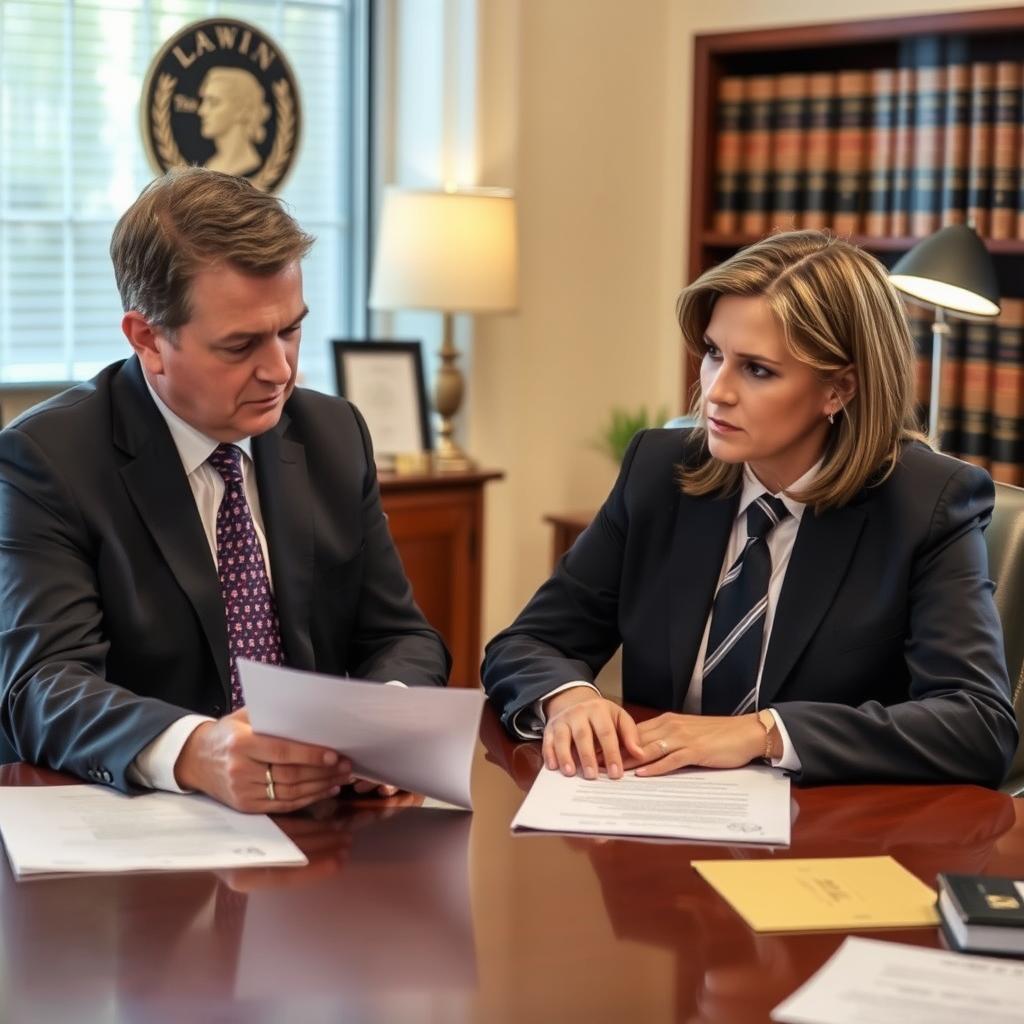
Divorce Decree Enforcement Lawyer Louisa County, VA
When a divorce decree is entered in Louisa County, Virginia, it represents a binding court order. Yet in practice, compliance does not always follow. One spouse may stop paying spousal support, fail to transfer retirement accounts, or ignore a custody schedule. The party seeking enforcement needs experienced family law counsel who understands the local courts, the available enforcement tools, and the strategic path to compel compliance. Mr. Sris and the firm’s Of Counsel attorneys represent individuals in Louisa County enforcement matters, working to secure the relief that the original decree was meant to provide. For a confidential consultation about enforcing a divorce decree, contact Law Offices Of SRIS, P.C. at (888) 437-7747. Law Offices Of SRIS, P.C. – Advocacy Without Borders.
What Divorce Decree Enforcement Means in Louisa County
Divorce decree enforcement in Louisa County involves post-judgment proceedings to compel a former spouse to comply with the terms of a final divorce order. The order may address equitable distribution of marital property, spousal support, child support, custody, or visitation. When a party does not voluntarily comply, the aggrieved spouse may seek judicial intervention. In Louisa County, enforcement actions are brought before the same court that issued the underlying order—typically the Louisa County Circuit Court for property division and spousal support, or the Louisa County Juvenile and Domestic Relations District Court for child-related matters. Both courts sit at 100 West Main Street, Louisa, Virginia 23093.
Virginia law provides several enforcement mechanisms, including motions to compel, petitions for rule to show cause, and contempt proceedings. The court has authority under Va. Code § 20-103 and related provisions to enter orders enforcing compliance, award attorney fees, and sanction noncompliant parties. The enforcement process is fact-specific and driven by the nature of the violation. Mr. Sris and the firm’s Of Counsel attorneys have documented 30 case results in Louisa County across all practice areas, with an 87% favorable outcome rate. Results may vary.
How Mr. Sris and the Firm’s Of Counsel Attorneys Handle Divorce Decree Enforcement Cases
Enforcement of a divorce decree begins with a careful review of the original order and the alleged noncompliance. Mr. Sris and the firm’s Of Counsel attorneys analyze whether the order is clear, enforceable, and whether the violation is material. In many cases, a demand letter is sent to the noncompliant party, seeking voluntary compliance before filing a motion with the court. When litigation becomes necessary, the firm prepares a motion or petition tailored to the specific relief sought—whether it is a monetary judgment for unpaid support, an order directing the transfer of property, or a contempt finding that can carry coercive sanctions.
The firm’s approach emphasizes strategic use of the court’s enforcement powers. For example, in a spousal support enforcement case, counsel may request income withholding, a lump-sum judgment, or a contempt citation. For property division orders, the court may appoint a special commissioner or enter a qualified domestic relations order (QDRO) to effectuate retirement asset transfers. Mr. Sris and the firm’s Of Counsel attorneys handle the procedural steps, including service of process, evidentiary hearings, and negotiation, to move the case toward a resolution that respects the original decree. They appear in the Louisa County Circuit Court and Juvenile and Domestic Relations District Court as required, drawing on their familiarity with local judicial preferences and procedural expectations.
About Mr. Sris and the Firm’s Of Counsel Attorneys
Mr. Sris, Owner and Founder of Law Offices Of SRIS, P.C., has been a practicing attorney since 1997. A former prosecutor, he brings an understanding of courtroom dynamics to each enforcement matter. Mr. Sris testified before the Virginia House Courts of Justice Committee in support of 2019 HB 635 (chief patron Del. David Bulova), a bill that revised aspects of Virginia equitable distribution law. He is admitted in Virginia, Maryland, the District of Columbia, New Jersey, and New York. Mr. Sris and the firm’s Of Counsel attorneys bring extensive combined legal experience to family law enforcement cases, working to translate a paper decree into real-world compliance. The firm’s Richmond location, serving clients in Louisa County and throughout the 16th Judicial District, is at 7400 Beaufont Springs Drive, Suite 300, Room 395, Richmond, VA 23225, by appointment. Call (888) 437-7747 to schedule.
Frequently Asked Questions
What can I do if my former spouse is not paying spousal support as ordered?
You may file a motion for enforcement or a rule to show cause in the Louisa County Circuit Court. If a spousal support order is being violated, the court has several tools to compel payment, including income withholding orders, judgments for arrears, and contempt sanctions. An attorney can help you gather evidence of nonpayment and present a compelling case. The court may also award attorney fees if the violation is found to be willful. Because enforcement proceedings can involve complex valuation of arrears and interest, experienced legal guidance is important.
How do I enforce a property division order when my ex-spouse refuses to transfer an asset?
You can ask the Louisa County Circuit Court to enforce the property division order through a motion to compel or a contempt proceeding. Virginia courts have broad authority under Va. Code § 20-107.3 to effectuate equitable distribution orders. If a party refuses to sign over a deed, transfer a bank account, or execute a QDRO for retirement benefits, the court can sign documents on their behalf, appoint a special commissioner, or hold the noncompliant party in contempt. The specific remedy depends on the asset type and the terms of the decree.
Does it matter that the divorce decree was issued in another state but I now live in Louisa County?
Yes, but a foreign divorce decree can be enforced in Virginia after it is domesticated through a registration process in the Louisa County Circuit Court. Under the full faith and credit clause and Virginia’s domestication statutes, you must file a certified copy of the out-of-state decree and give notice to the other party. Once domesticated, the Virginia court can enforce it as if it were its own order. The firm’s attorneys can handle the procedural steps, including serving the notice and arguing the enforcement motion before the local court.
Can I enforce a child support order from a different jurisdiction in Louisa County?
Yes, child support orders from other states or countries can be registered and enforced in Virginia under the Uniform Interstate Family Support Act (UIFSA). The registration process involves filing the order with the Louisa County Juvenile and Domestic Relations District Court. Once registered, Virginia’s enforcement mechanisms apply, including income withholding, license suspension, and contempt. The firm’s attorneys work with clients to navigate both the registration and enforcement phases.
What should I bring to a consultation about enforcing my divorce decree?
Bring a copy of your divorce decree, any related orders (such as custody or support orders), and documentation of the specific violations. Examples include bank statements showing missed payments, emails or texts refusing to transfer property, or records of denied visitation. The more detailed the evidence, the more efficiently an attorney can assess the strength of your enforcement claim and outline a strategy. A list of questions you want answered is also helpful.
How long does a divorce decree enforcement case take in Louisa County?
The timeline varies depending on the complexity of the violations and the court’s calendar. Simple monetary enforcement through income withholding may resolve relatively quickly, while contested contempt proceedings involving evidentiary hearings can extend over several months. The court’s scheduling, the need for discovery, and the opposing party’s responsiveness all affect the pace. Mr. Sris and the firm’s Of Counsel attorneys work to move each matter toward prompt resolution while ensuring thorough preparation.
Explore our family law representation in other Virginia localities:
Virginia primary legal resources:
Attorney advertising. Prior results do not guarantee a similar outcome.
Case results depend on a variety of factors unique to each case.
Results may vary.