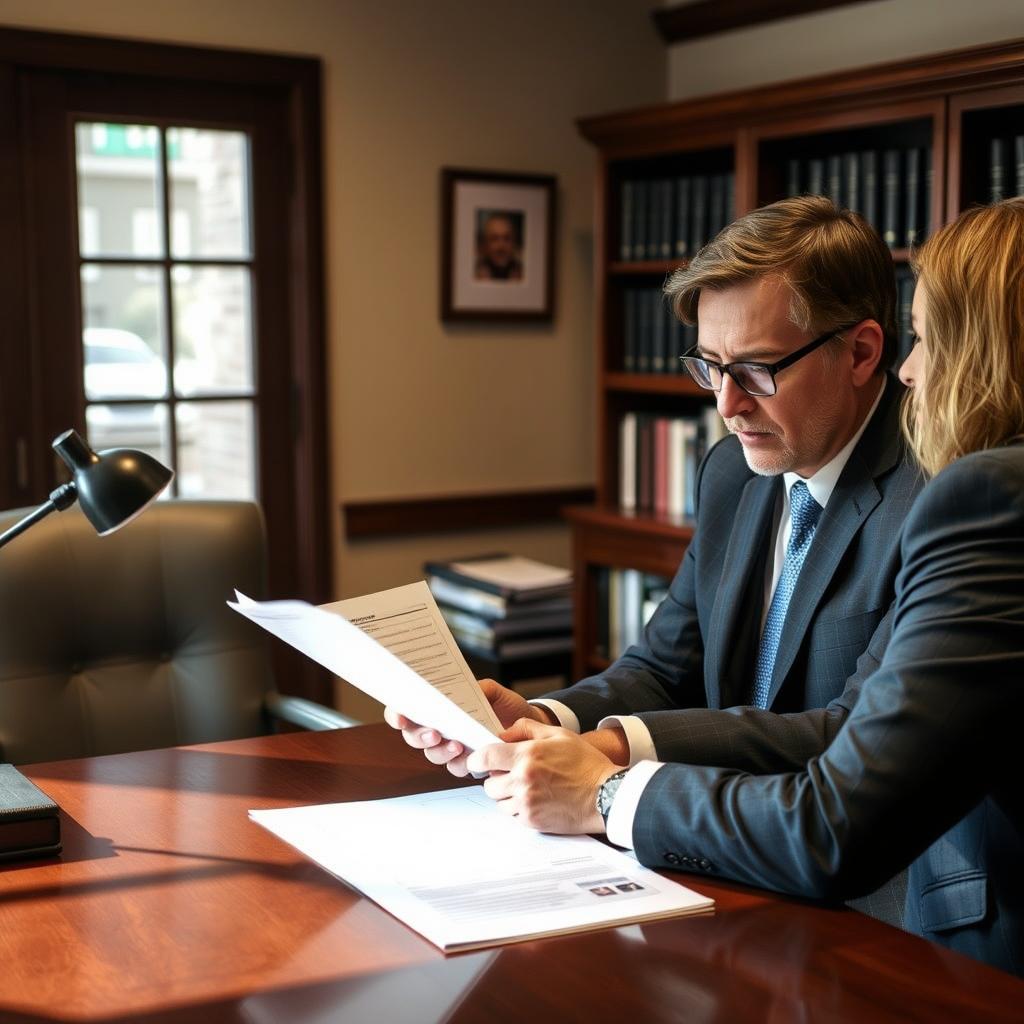
Divorce Decree Modification Lawyer Rappahannock County, VA
Life Changes—Your Divorce Decree Can, Too
You finalized your divorce two years ago, but your situation has shifted. Your former spouse accepted a high-paying position in Washington, D.C. While you were laid off from your job in Warrenton. The alimony award that once felt fair now consumes your monthly budget, and the child support order calculated under the Virginia guidelines no longer matches either household’s reality. In Rappahannock County, a divorce decree is not permanently frozen. When a substantial, unforeseen change in circumstances occurs, you may petition the court to modify the support, custody, or visitation terms of the decree. Law Offices Of SRIS, P.C. represents clients throughout the Virginia counties served from our Fairfax location—including Washington, Sperryville, and Flint Hill. Call (888) 437-7747 to schedule a consultation.
Strategy Options for Modification in Rappahannock County
Every post-divorce modification starts with the same question: can you and your former spouse agree on the new terms, or will the matter be litigated? The strategy you choose determines the timeline, cost, and stress of the process.
Agreed Modification by Consent Order
If both parties agree that a change is needed—for example, a new custody schedule because one parent moved from Flint Hill to Warrenton—counsel can draft a consent order reflecting the new terms. Once signed by both parties and entered by the Rappahannock County Juvenile and Domestic Relations District Court (for support or custody) or the Rappahannock County Circuit Court (for spousal support originally ordered in a divorce case), the agreed order becomes enforceable. This path avoids a contested hearing and preserves a cooperative co-parenting dynamic.
Contested Motion to Modify
When agreement is not possible, the party seeking the change files a motion to modify with the appropriate court. The moving party must serve the former spouse and then present evidence demonstrating that a material change in circumstances justifies the requested modification. The court holds an evidentiary hearing where both sides may present financial records, employment documentation, testimony from witnesses, and—in custody cases—evidence regarding the child’s best interests. The assigned judge determines whether the threshold change has been proven and, if so, what new terms serve the statutory factors under Virginia law.
Emergency or Temporary Modification
In limited situations, such as an immediate threat to a child’s safety or the imminent dissipation of marital assets, counsel may seek an emergency hearing. The court may enter temporary orders while the full motion to modify is pending. These hearings typically occur on shortened notice and demand a strong factual showing.
What To Expect During the Modification Process
A modification case in Rappahannock County proceeds through several predictable stages, though the exact timeline varies with the court’s docket and the complexity of the issues.
First, the attorney reviews the existing decree and gathers current financial and custodial information. If you are seeking a child support modification, for instance, both parents will need to exchange updated income and expense documentation and, in many cases, submit updated child support guideline worksheets. For custody modifications, the court may appoint a guardian ad litem to investigate and report on the child’s circumstances.
Once the motion is filed at the Rappahannock County Juvenile and Domestic Relations District Court (for child support or custody) or the Rappahannock County Circuit Court (for spousal support), the court schedules a return date. The opposing party may file a response. Discovery—interrogatories, requests for production, depositions—may occur in contested matters. Mediation is available and can resolve disputes without a trial.
At the hearing, the judge receives evidence and applies the relevant statute. For child support, the court uses the Virginia child support guidelines set out at Va. Code § 20-108.2. For spousal support, the court weighs the factors listed in Va. Code § 20-107.1 and determines whether the change warrants a modification under Va. Code § 20-109. For custody and visitation, the court must find a material change in circumstances and then determine that the requested change serves the child’s best interests under the ten factors in Va. Code § 20-124.3.
After the hearing, the court enters a written order reflecting the modified terms. Both parties are bound by the new order, and it can be enforced through contempt proceedings if either side fails to comply.
Legal Standards for Post-Divorce Modification in Virginia
Virginia courts do not modify divorce decrees simply because one party wants a different arrangement. The party seeking the change must demonstrate a material change in circumstances that was not contemplated at the time the original order was entered. This is the threshold requirement for all modifications. The specific legal standards differ by the type of relief sought.
For child support modifications, the moving party must show that the existing order is at least three years old or that a change has occurred—such as a loss of employment, a significant increase in the other parent’s income, or a change in the child’s needs—that results in a deviation of at least 25% from the guideline amount. For spousal support modifications, the party must prove a material change in the financial circumstances of either the payor or the recipient that was not reasonably foreseeable and that cannot be mitigated through reasonable efforts. For custody and visitation modifications, the court first examines whether a material change in circumstances has occurred since the last order, and then, if that threshold is met, evaluates the child’s best interests using the statutory factors. These factors include the child’s relationship with each parent, the ability of each parent to meet the child’s needs, the child’s preference if of suitable age, and any history of family abuse.
Because proving these elements requires detailed financial disclosure, witness testimony, and careful case presentation, having experienced counsel is important. Mr. Sris and the firm’s Of Counsel attorneys are familiar with modification litigation in the Rappahannock County courts.
About Mr. Sris and the Firm’s Of Counsel Attorneys
Mr. Sris, Owner and Founder of Law Offices Of SRIS, P.C., is a former prosecutor who has practiced since 1997. He is admitted in Virginia, Maryland, the District of Columbia, New Jersey, and New York. Mr. Sris testified before the Virginia House Courts of Justice Committee in support of 2019 HB 635 (chief patron Del. David Bulova).
The firm’s Of Counsel attorneys bring extensive experience in family law matters, including divorce decree modification, child custody, and support enforcement. They appear regularly in the Rappahannock County Juvenile and Domestic Relations District Court and the Rappahannock County Circuit Court. Together, Mr. Sris and the firm’s Of Counsel attorneys provide representation for clients in Washington, Sperryville, Flint Hill, and throughout Rappahannock County from the firm’s Fairfax location.
Frequently Asked Questions
Can a divorce decree be modified without going to court in Rappahannock County?
A modification can be resolved without a contested hearing if both parties agree. The attorneys draft a consent order reflecting the new terms, which is then submitted to the Rappahannock County Juvenile and Domestic Relations District Court or the Rappahannock County Circuit Court for entry. As long as the agreed terms comply with Virginia law and the judge finds them appropriate, the order becomes enforceable without a trial. If the parties cannot agree, a motion must be filed and the matter set for hearing.
What qualifies as a material change in circumstances for custody modification?
Virginia courts define a material change as a significant and unforeseen alteration in the lives of the child or parent since the last custody order. Examples include a parent’s relocation that disrupts the existing visitation schedule, a change in the child’s educational or medical needs, evidence of substance abuse or neglect, or a substantial shift in a parent’s work schedule that affects their ability to care for the child. The change must affect the child’s well-being, not merely inconvenience a parent.
How long does a modification case take in Rappahannock County, Virginia?
The timeline for a modification case depends on whether the matter is contested and the current court calendar. An agreed modification by consent order can be finalized within weeks once both parties sign. A contested case typically takes several months, as it involves discovery, possible mediation, and a hearing date set by the court. The Rappahannock County courts set hearings based on available docket space, so the specific timeline varies with judicial scheduling.
Do I need a lawyer to modify a divorce decree in Rappahannock County?
You are not required to hire a lawyer, but proceeding without counsel carries risks. Modification petitions involve procedural requirements, evidentiary burdens, and statutory factors that a self-represented litigant may find difficult to navigate. Errors in presenting the motion or meeting the material-change threshold can result in denial and, in some cases, an award of attorney fees to the other party. An experienced family law attorney can evaluate the strength of your claim, prepare the motion and supporting evidence, and represent you at the hearing.
Can child support be modified if my income has decreased in Rappahannock County?
Yes, a significant and involuntary decrease in income may justify a child support modification. Under Virginia law, a payor who loses a job or suffers a substantial pay cut can file a motion to modify. The court will examine whether the reduction was in good faith—voluntary underemployment is generally not a basis for lowering support. The moving party must also show that the new income would result in a support obligation that differs by at least 25% from the current order under the Virginia child support guidelines. It is important to file the motion promptly; arrears that accumulate before a modification petition are not retroactively forgiven.
What are the grounds for modifying spousal support in Virginia?
Spousal support in Virginia can be modified upon a showing of a material change in circumstances that was not reasonably foreseeable at the time of the last order. Common examples include the involuntary loss of employment by the paying spouse, a substantial increase in the recipient’s income, remarriage of the recipient (if the support is not contractually non-modifiable), or the cohabitation of the recipient in a relationship analogous to marriage. The court weighs the factors in Va. Code § 20-107.1 when determining a new amount. The burden is on the moving party to prove both the change and that it warrants modification.
How is a custody modification different from an initial custody determination in Rappahannock County?
An initial custody order is based on the child’s best interests at the time of the divorce; a modification requires an additional step. The party seeking modification must first prove a material change in circumstances since the last order. Only after that threshold is met does the court proceed to the trusted-interests analysis using the ten statutory factors. This two-part test is meant to provide stability for children and discourage serial litigation over custody. The court may also consider the child’s preference if the child is of reasonable intelligence, understanding, age, and experience.
Will the same judge who handled my divorce hear the modification in Rappahannock County?
There is no guarantee that the same judge will preside over a modification hearing. Judge assignments in Rappahannock County rotate, and the modification case may be assigned to a different judge of the Rappahannock County Circuit Court or the Juvenile and Domestic Relations District Court. Even if the same judge is available, the case is a separate proceeding. Your attorney will present the current evidence and legal arguments regardless of which judge hears the matter.
For a consultation about your specific modification matter, contact Law Offices Of SRIS, P.C. at (888) 437-7747.
What if my former spouse lives outside Virginia but the original decree is from Rappahannock County?
The Rappahannock County court that issued the original decree generally retains jurisdiction to modify it, even if one party has moved out of state. Under the Uniform Interstate Family Support Act (UIFSA), which Virginia has adopted, the state that issued the support order retains continuing exclusive jurisdiction as long as one of the parties or the child still resides in Virginia. For custody modifications, the home state rule under the Uniform Child Custody Jurisdiction and Enforcement Act (UCCJEA) usually keeps the case in Virginia if Virginia was the child’s home state within six months of the filing and one parent still lives here. Service of process on the non-resident ex-spouse must be accomplished per court rules.
Can I stop paying alimony if my ex-spouse is cohabitating?
Cohabitation can be a basis to terminate or modify spousal support in Virginia, but it is not automatic. Under Va. Code § 20-109, if the recipient spouse is habitually cohabitating with another person in a relationship analogous to marriage, the court may reduce or terminate support. The paying spouse must file a motion and prove the cohabitation. The court will examine factors such as shared finances, living arrangements, and the duration and stability of the relationship. The support obligation does not end until the court enters an order; unilateral halting of payments risks a contempt finding and accumulation of arrears.
How do I start a modification case in Rappahannock County?
The first step is to consult with an experienced family law attorney who can assess the viability of your claim. The attorney will review the existing decree, gather current financial and custodial documentation, and advise whether the facts satisfy the material-change threshold. If the claim has merit, the attorney will prepare and file a motion to modify in the appropriate court—the Juvenile and Domestic Relations District Court for child-related issues or the Circuit Court for spousal support and divorce-level orders. The motion must be served on the other party. Your attorney will guide you through discovery, negotiation, and, if necessary, the evidentiary hearing.
For a consultation about modifying your divorce decree in Rappahannock County, reach Mr. Sris and the firm’s Of Counsel attorneys at (888) 437-7747 or contact us through our Fairfax location.
Rappahannock County General District Court is located at 250 Gay Street, Suite 1, Washington, VA 22747. Court hours: Mon-Fri 8:00AM-4:00PM. Counsel appearing on family law matters should plan filings accordingly.
Attorney advertising. Prior results do not guarantee a similar outcome. Results may vary.
Case results depend on a variety of factors unique to each case.