
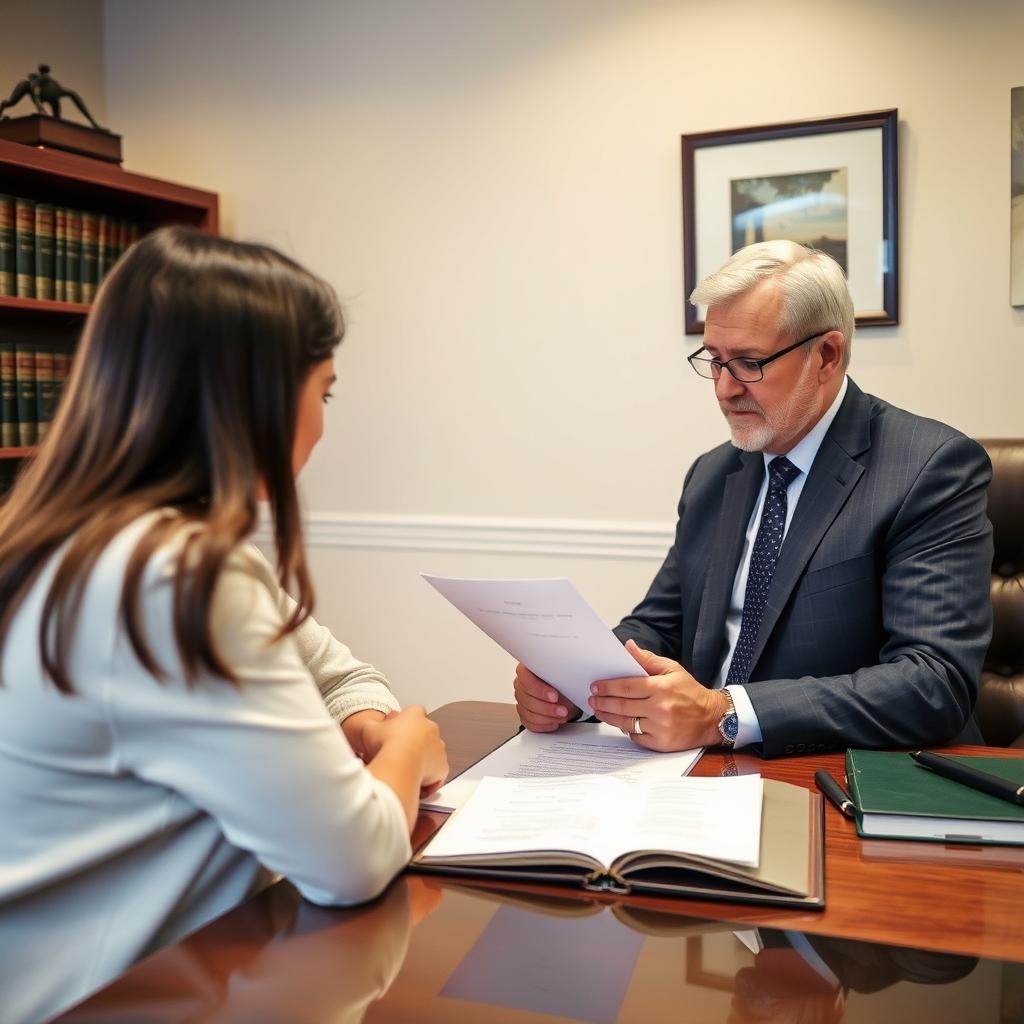
Felony Conviction Divorce Lawyer King William County, VA
Your spouse has been convicted of a felony and sentenced to prison. Suddenly, the foundation of your marriage is gone and you are left wondering what comes next for your family, your finances, and your peace of mind. In Virginia, a spouse’s felony conviction resulting in imprisonment for more than one year is a fault ground for divorce under Va. Code § 20-91, which allows you to file immediately without waiting for the standard one-year separation period. At Law Offices Of SRIS, P.C., Mr. Sris and his Of Counsel work with clients in King William County to move forward under these difficult circumstances. To discuss your next steps, reach our location at (888) 437-7747. Law Offices Of SRIS, P.C. – Advocacy Without Borders.
Your Strategic Options When Your Spouse Is Incarcerated
Using a felony conviction as a ground for divorce gives you the ability to act quickly. You do not need to wait out a separation period. The first step is to confirm the details of the conviction and the length of the sentence. Because the ground requires the sentence to exceed one year, you will want to obtain a certified copy of the conviction order.
Under Va. Code § 20-91, a spouse sentenced to confinement for more than one year for a felony may file for divorce immediately, without any mandatory separation period.
Source: Va. Code § 20-91. Virginia Law
Reviewed by Mr. Sris, admitted in VA, MD, DC, NJ, and NY.
Once you have that documentation, a complaint for divorce can be filed in the King William County Circuit Court, which has exclusive jurisdiction over divorce cases in the county. Mr. Sris and his Of Counsel can help you gather the necessary evidence, draft the complaint, and address immediate concerns such as temporary child custody, visitation, and spousal support through pendente lite motions. The court will schedule a hearing to resolve these issues while the divorce is pending.
What to Expect in the King William County Court System
King William County has two courts that handle family law matters. The King William County Circuit Court, located at 351 Courthouse Lane, Suite 201, King William, VA 23086, hears all divorce cases, equitable distribution, and spousal support matters. The King William County Juvenile & Domestic Relations District Court handles standalone custody, visitation, and child support cases. If your divorce includes minor children, you may need to file companion petitions in both courts. Service of process on an incarcerated spouse may require special procedures, and Mr. Sris and his Of Counsel are familiar with the logistics of serving someone in prison. Once the complaint is filed, the court will set a schedule based on its docket. The length of time to a final order varies depending on whether the divorce is contested or uncontested and on the court’s calendar. If the incarcerated spouse does not answer or appear, a decree may be entered by default, but you must still present sufficient evidence to support the ground and the terms of equitable distribution and support.
How a Felony Conviction Shapes Your Divorce: Legal Grounds and Consequences
Virginia is an equitable distribution state, meaning property is divided fairly but not necessarily equally. When a divorce is granted on fault grounds, including felony conviction and imprisonment, the court may consider the fault as one factor in determining spousal support and property division under Va. Code § 20-107.3. However, the conviction does not automatically bar the incarcerated spouse from receiving a share of marital property or from seeking custody. Child custody decisions remain governed by the trusted-interests-of-the-child standard under Va. Code § 20-124.3, and a parent’s incarceration is only one of ten factors the court evaluates. If the crime involved violence or other conduct that would put a child at risk, the court will weigh that heavily. Mr. Sris and his Of Counsel can explain how the specific facts of your case are likely to influence the outcome, without making any guarantees.
About Mr. Sris and His Of Counsel Team
Law Offices Of SRIS, P.C. was founded in 1997 by Mr. Sris, a former prosecutor with years of courtroom experience. Mr. Sris is admitted to practice in Virginia, Maryland, the District of Columbia, New Jersey, and New York, and he personally testified before the Virginia House Courts of Justice Committee in support of 2019 HB 635 (chief patron Del. David Bulova), which updated Virginia’s equitable distribution statute. Mr. Sris and his Of Counsel bring over 120 years of combined legal experience to family law matters, with over 4,739 documented firm-wide results. Results may vary. Their backgrounds, including former prosecutors and law enforcement, provide insight into how criminal proceedings intersect with family law. On every case, Mr. Sris and his Of Counsel work to protect your interests and pursue a favorable resolution.
Frequently Asked Questions
Can I get a divorce if my spouse is in prison in Virginia?
Yes, Virginia law allows you to file for divorce on the ground that your spouse has been sentenced to confinement for more than one year for a felony. This is a fault-based ground under Va. Code § 20-91, and it eliminates the need for a mandatory separation period. The divorce can proceed even while your spouse remains incarcerated. The court will still need to resolve issues such as property division, spousal support, and custody. Contact our location to discuss how to move forward.
Do I need to wait the full separation period before filing?
No, when you use the felony-conviction ground, you do not have to live apart for six months or one year before filing for divorce. The law treats the conviction and imprisonment as a fault ground that allows immediate filing. However, you must be able to prove that your spouse has been convicted of a felony and sentenced to more than one year. The divorce can be filed right away, and the court will schedule the case without requiring a separation period as a prerequisite.
How does a spouse’s felony conviction affect property division?
The conviction may be considered by the court as one factor in dividing marital property, but it does not automatically strip the incarcerated spouse of their share. Virginia uses equitable distribution under Va. Code § 20-107.3, and fault is one of the factors the judge may weigh. The court will also consider the duration of the marriage, contributions of each spouse, and the needs of any children. Outcomes vary based on the specific circumstances.
Will a felony conviction impact child custody in King William County?
A felony conviction can influence custody decisions, especially if the crime involved violence or neglect, but it is not a complete bar to a parent’s contact with a child. Virginia courts decide custody based on the best interests of the child under Va. Code § 20-124.3. The ten statutory factors include the physical and mental health of each parent and any history of family abuse. The judge will evaluate how the conviction and incarceration affect the child’s wellbeing.
What if my spouse is incarcerated in another state?
The divorce can still proceed in King William County as long as you meet Virginia’s residency requirement. You need to have lived in Virginia for at least six months and be a bona fide resident. The fact that your spouse is held out of state does not stop the case, but special rules apply for service of process. Our team can arrange for proper service on an out-of-state prisoner.
How is service of process handled on an incarcerated spouse?
Service on an incarcerated spouse must comply with both Virginia civil procedure and prison regulations. Typically, service is carried out by a sheriff or a private process server authorized to enter the facility. The specific rules depend on whether the facility is in Virginia or out of state. Mr. Sris and his Of Counsel have experience with these procedures and can manage the logistics so that the divorce moves forward.
Does the incarcerated spouse have any say in the divorce?
An incarcerated spouse retains the right to participate in the divorce, though practical obstacles may limit involvement. Your spouse can file an answer, request hearings, and be represented by counsel. In some cases, the court may allow telephonic or written participation. If your spouse does not respond, you may proceed by default after proper service, but you still must present evidence to obtain a divorce decree.
Can I get spousal support when my spouse is in prison?
It may be difficult to collect spousal support from an incarcerated spouse, but the court can still order support based on the spouse’s earning capacity. The judge will consider the factors in Va. Code § 20-107.1, including the spouse’s ability to pay, even if currently limited. If the spouse has assets, the court may award support from those resources. Each case is different, and outcomes vary.
How long does a divorce based on felony conviction take?
The timeline varies by case, but a divorce on this ground can often be completed more quickly than a no-fault divorce because there is no separation waiting period. Once the complaint is filed, the court schedules the matter based on its docket. If the case is uncontested and all issues are resolved by agreement, a final decree may be entered in a matter of months. Contested cases take longer.
Do I need to appear in court in King William County?
In most cases, you will need to appear at least once for the final divorce hearing. Virginia generally requires a party to appear and present testimony, even in uncontested divorces. Mr. Sris and his Of Counsel will prepare you for what to expect and appear with you. If travel is difficult, we can discuss whether a virtual appearance may be permitted, but in-person attendance is common.
Our family law team also assists clients across Virginia: Fairfax County family law lawyer | Fairfax City family law lawyer | Falls Church family law lawyer | Prince William County family law lawyer | Manassas family law lawyer
For a full statutory breakdown of Virginia divorce grounds, see our comprehensive analysis.
To discuss your divorce options, call Law Offices Of SRIS, P.C. at (888) 437-7747 or contact our Richmond Location at 7400 Beaufont Springs Drive, Suite 300, Room 395, Richmond, VA 23225. By appointment only. Phones answered during business hours.
Attorney advertising. Prior results do not guarantee a similar outcome.
Results may vary.
Case results depend on a variety of factors unique to each case.