
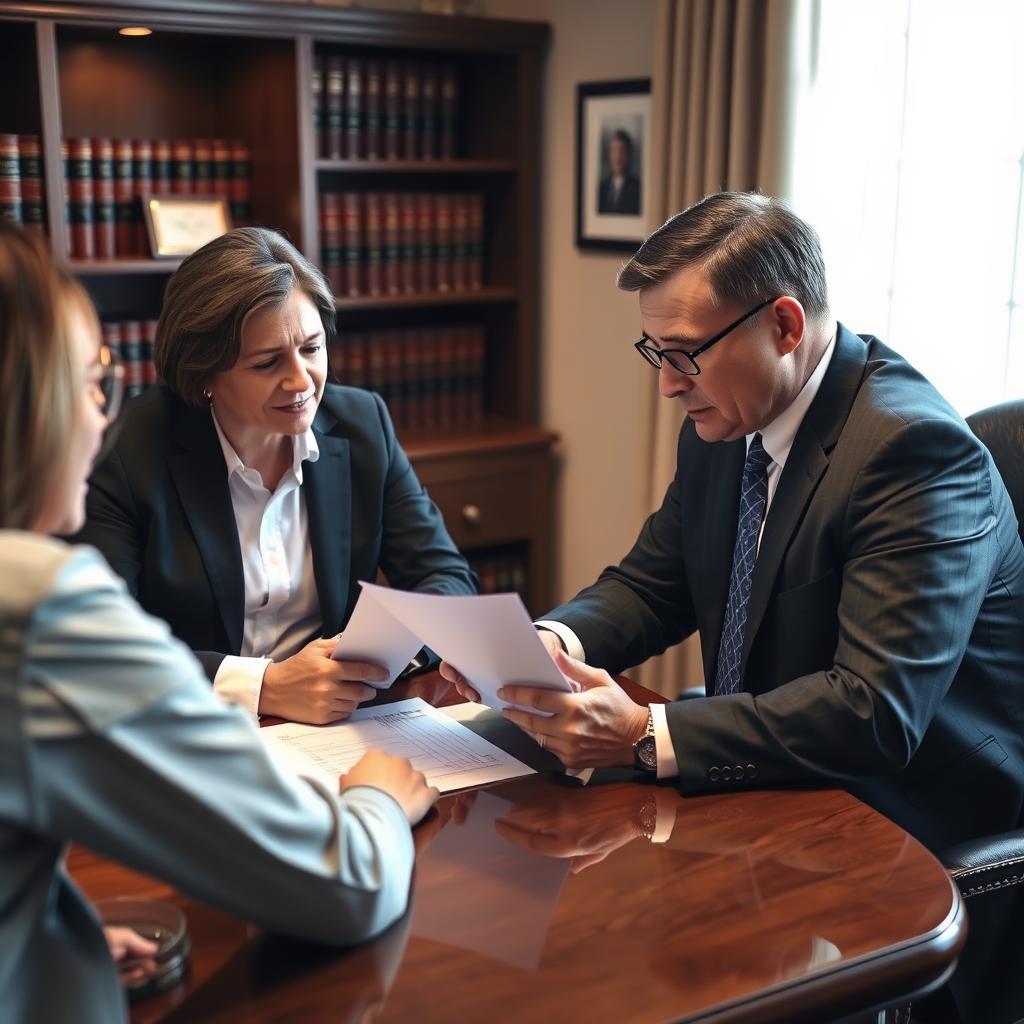
Felony Conviction Divorce Lawyer Louisa County, VA
You recently learned that your spouse has been convicted of a felony in Virginia and sentenced to confinement for more than one year. After the shock, a question surfaced: can you file for divorce on that ground, and what does the process look like in Louisa County? The answer is yes—Virginia law treats a spouse’s felony conviction resulting in a year or more of imprisonment as a fault ground for divorce. Law Offices Of SRIS, P.C. represents clients in Louisa County who need to move forward when a marriage has been fractured by a partner’s incarceration. Our Richmond Location serves Louisa County residents, and our phones are answered 24 hours a day. To discuss your situation, call (888) 437-7747. Law Offices Of SRIS, P.C. – Advocacy Without Borders.
Strategy Options for a Felony Conviction Divorce in Louisa County
Virginia Code § 20‑91(3) provides that a divorce from the bond of matrimony may be granted when one spouse has been convicted of a felony and sentenced to confinement for more than one year. That fault ground can shorten the waiting period for a divorce compared to a no‑fault separation case, and it may influence how the court addresses spousal support and property division. When we meet with a client, we walk through several possible paths. You could pursue a fault‑based divorce citing the felony conviction alone; you could also file a no‑fault divorce after living separate and apart for the required period—one year, or six months if you have no minor children and have signed a separation agreement. In many cases, a no‑fault divorce proceeds more smoothly when the incarcerated spouse will not or cannot contest the filing, but the fault ground remains available when the circumstances support it.
Divorce cases in Louisa County are filed in the Louisa County Circuit Court, located at 100 West Main Street, Louisa, VA 23093. The Circuit Court has exclusive original jurisdiction over divorce matters under Virginia law. Standalone custody, visitation, and child support matters proceed in the Louisa County Juvenile and Domestic Relations District Court. Because the two courts operate under different procedural rules, coordinating filing strategy is essential—particularly when children are involved and you need orders for custody, support, or protective measures.
What to Expect When You File
Once a divorce complaint is filed in the Louisa County Circuit Court, the next steps depend heavily on whether the incarcerated spouse will participate. Service of process can be completed through the sheriff or a private process server, but when the defendant is in a state correctional facility, coordination with the facility’s administration is required. If the spouse does not respond within the statutory period, the case may proceed as an uncontested divorce. If the spouse contests the grounds or raises objections to support or property division requests, the matter moves toward a contested divorce. The court schedules hearings based on its calendar and the complexity of the issues presented.
Virginia is an equitable distribution state. The court classifies property as marital, separate, or hybrid, then divides the marital share fairly—but not necessarily equally—after considering the eleven factors listed in Virginia Code § 20‑107.3. Fault, including a felony conviction, is one of the circumstances the court may weigh. Spousal support is determined under a separate set of statutory factors. An experienced family law attorney can help you evaluate whether the felony conviction ground may affect the financial outcome in your particular case.
The Felony Conviction Ground and Its Legal Effect
When you rely on the felony conviction ground, Virginia law does not require a separation period before filing. That can be important when you need to resolve financial ties or remarry. The ground itself is established by presenting evidence of the conviction and the sentence—typically a certified copy of the sentencing order. The court then determines whether the marriage should be dissolved on that basis. While the felony conviction ground does not automatically penalize the incarcerated spouse in the property division, the circumstances surrounding the offense may be relevant to the equitable distribution analysis and to spousal support.
It is also worth understanding that a fault divorce on this ground does not, by itself, alter any child support obligation the incarcerated parent may have, although a parent’s incarceration can affect custody and visitation arrangements. In Louisa County, the Juvenile and Domestic Relations District Court handles child‑related orders when they are not part of the divorce itself. Our team routinely works across both courts to ensure that the final outcome addresses all the issues your family faces.
About Mr. Sris and His Of Counsel Team
Mr. Sris, Owner and Founder of Law Offices Of SRIS, P.C., founded the firm in 1997. He is a former prosecutor and is admitted to practice in Virginia, Maryland, the District of Columbia, New Jersey, and New York. Mr. Sris testified before the Virginia House Courts of Justice Committee in support of 2019 HB 635 (chief patron Del. David Bulova), a bill that revised the equitable distribution statute. His Of Counsel team brings over 120 years of combined legal experience and has achieved 4,739+ documented firm-wide results. Results may vary. Together, they represent clients in family law matters across multiple jurisdictions, including Louisa County. Our Richmond Location routinely handles family law cases heard at the Louisa County Circuit Court and the Juvenile and Domestic Relations District Court.
Frequently Asked Questions
How long does a felony conviction divorce take in Louisa County?
A felony conviction divorce in Louisa County, Virginia, can be completed more quickly than a no‑fault divorce because no separation period is required. The exact timeline depends on whether the incarcerated spouse contests the divorce and on the Circuit Court’s calendar. When the case is uncontested, the final decree can often be entered within a few months of filing. Contested matters, especially those involving property division or child custody, may extend the process. A family law attorney can give you a better estimate after reviewing the specific circumstances.
Can I get a divorce based on my spouse’s felony conviction if the conviction happened in another state?
Yes, a felony conviction from another jurisdiction can serve as a fault ground for divorce in Virginia as long as the conviction carries a sentence of confinement of more than one year. The key requirement is that the spouse has actually been sentenced to a term of imprisonment exceeding twelve months. You will need to present a certified copy of the out‑of‑state sentencing order. The Louisa County Circuit Court will review that documentation to determine whether the statutory ground has been met.
Do I have to wait until my spouse is released from prison to file for divorce?
No, you do not need to wait until your spouse’s release. Virginia Code § 20‑91(3) permits you to file for divorce while your spouse is still confined, provided the sentence exceeds one year. Service of process can be completed on an incarcerated defendant by following the procedures of the correctional facility. In practice, many felony conviction divorces are filed well before the release date because the ground is immediately available and the plaintiff wants to resolve the marriage while the circumstances are clear.
Will the felony conviction affect child custody in Louisa County?
The felony conviction itself does not automatically strip a parent of custody or visitation rights, but it is a factor the court may consider under Virginia’s best‑interests analysis. In Louisa County, custody matters are heard in the Juvenile and Domestic Relations District Court. That court examines the ten factors listed in Virginia Code § 20‑124.3, which include the history of each parent and any conduct that affects the child’s wellbeing. Incarceration plainly limits a parent’s ability to exercise physical custody, so the practical effect is often a change in the parenting arrangement, but the legal determination always centers on the child’s best interests.
How much does a felony conviction divorce cost in Louisa County?
The cost of a felony conviction divorce in Louisa County varies depending on whether the divorce is contested and on the complexity of any related custody or property matters. Filing fees, service costs, and attorney fees depend on the specific circumstances of your case. Uncontested matters generally involve lower overall expenses. Law Offices Of SRIS, P.C. provides a consultation where we discuss the fee arrangement that applies to your situation. Contact us at (888) 437‑7747 to schedule a consultation.
Can I get spousal support if I file for divorce on the felony conviction ground?
Filing on the felony conviction ground does not automatically entitle you to spousal support, but fault is one of the factors the court considers when determining support. Virginia courts evaluate thirteen statutory factors under Virginia Code § 20‑107.1, including the circumstances that contributed to the dissolution of the marriage. A felony conviction that led to the breakdown of the marriage may influence the support analysis. The court also looks at the financial resources and needs of each party, the standard of living during the marriage, and the duration of the marriage.
What if my spouse was convicted of a felony but received a suspended sentence?
A suspended sentence does not satisfy the felony conviction ground under Virginia Code § 20‑91(3) because the statute requires a sentence of confinement for more than one year. If the entire sentence was suspended and the defendant served no imprisonment, the fault ground based on the conviction is not available. You may still qualify for a no‑fault divorce after meeting the separation requirements, or you may be able to use another fault ground if one applies. An experienced attorney can review the sentencing documents and advise you on your options.
Do I need a lawyer to file a felony conviction divorce in Louisa County?
You are not legally required to hire a lawyer to file for divorce in Virginia, but the process involves technical rules of procedure, service requirements, and potential financial consequences that are difficult to navigate without experienced counsel. Because a felony conviction divorce often involves an incarcerated defendant, coordinating service and handling property or custody issues can be particularly challenging. Mr. Sris and his Of Counsel team regularly appear in the Louisa County courts and can guide you through each step. For a consultation, call (888) 437‑7747.
Request a Consultation
If you are considering a divorce based on a spouse’s felony conviction in Louisa County, Virginia, we encourage you to speak with an attorney. Law Offices Of SRIS, P.C. has served clients across Virginia since 1997. Mr. Sris and his Of Counsel team are available to discuss your options and help you decide on the trusted path forward. Call (888) 437‑7747 to request a consultation, or contact us online to schedule an appointment at our Richmond Location, which serves Louisa County. For a full statutory breakdown, see our comprehensive analysis on srislawyer.com.
Our Richmond Location: 7400 Beaufont Springs Drive, Suite 300, Room 395, Richmond, VA 23225 · (888) 437‑7747
Attorney advertising. Prior results do not guarantee a similar outcome. Results may vary.
Case results depend on a variety of factors unique to each case.