
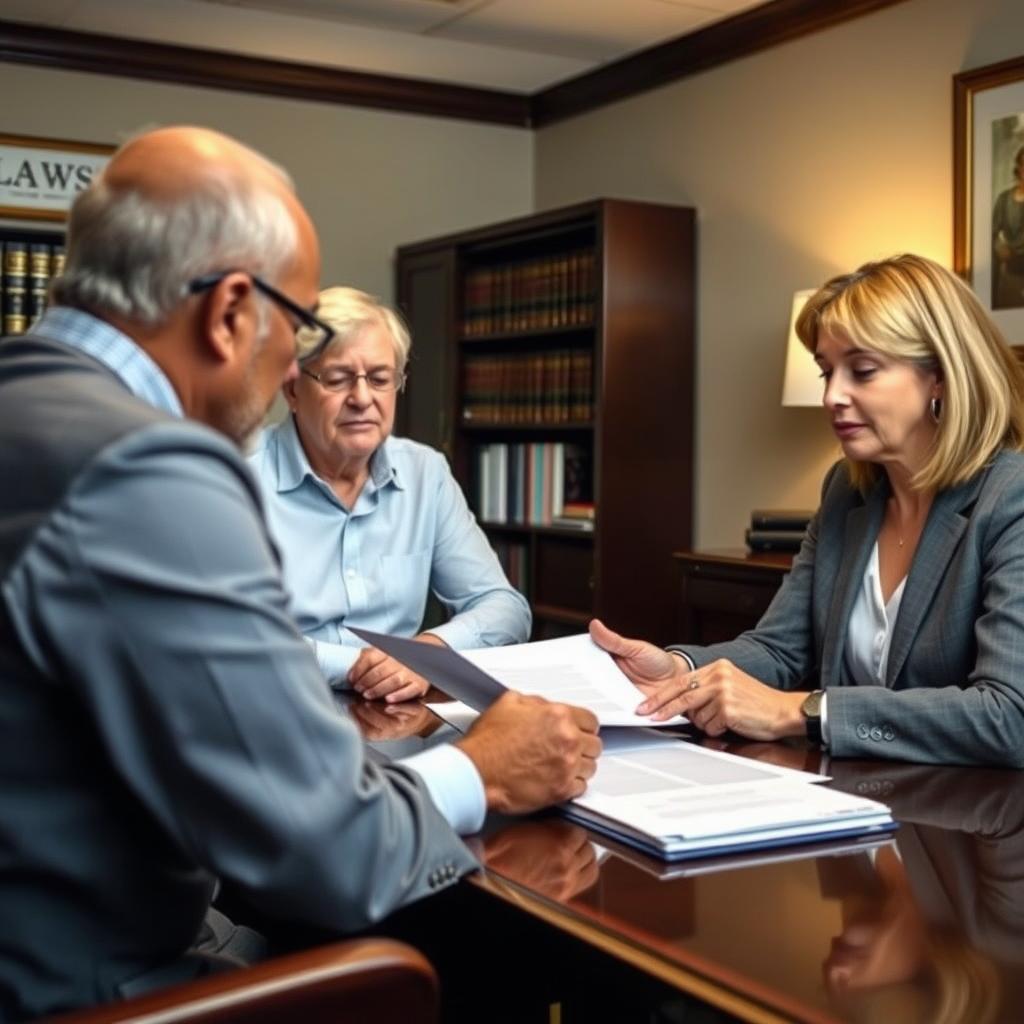
High Net Worth Divorce Lawyer Augusta County
You need a High Net Worth Divorce Lawyer Augusta County to protect complex assets. Law Offices Of SRIS, P.C. —Advocacy Without Borders. handles Augusta County divorces involving significant wealth. Virginia law requires precise valuation and division of marital property. SRIS, P.C. attorneys know the Augusta County Circuit Court procedures. We defend your financial interests in complex asset division. (Confirmed by SRIS, P.C.)
Statutory Definition of High Net Worth Divorce in Virginia
Virginia divorce law is governed by Title 20 of the Code of Virginia, with equitable distribution under § 20-107.3. This statute does not define “high net worth” but establishes the framework for dividing all marital property. The court must classify assets as marital or separate. It then values and equitably divides marital property. The maximum penalty is the loss of a substantial portion of your estate. The classification of property is the critical first legal step. Marital property includes all assets acquired during the marriage. Separate property is owned before marriage or received by gift or inheritance. The line between these classifications is often disputed in wealthy divorces. Augusta County judges examine the source of funds and title. Commingling of assets can transform separate property into marital property. This is a common issue in high net worth cases. Business interests, retirement accounts, and real estate portfolios require detailed tracing. Virginia law mandates an equitable, not equal, division. The court considers multiple statutory factors under § 20-107.3(E). These factors include each spouse’s contributions and the duration of the marriage. The court also considers the debts and liabilities of each party. Tax consequences of a proposed division are a key consideration. Non-monetary contributions to the family’s well-being are given weight. The age and physical condition of each party can influence the division. The court has broad discretion in making its final award. This discretion makes skilled legal representation essential.
How does Virginia define marital property for division?
Virginia Code § 20-107.3 defines marital property as all property titled in either spouse’s name acquired during the marriage. This includes property titled in the names of both parties. The presumption is that all property acquired post-marriage is marital. The burden of proof is on the party claiming an asset is separate. This is a critical point of contention in a High Net Worth Divorce Lawyer Augusta County case. Separate property must be proven by a preponderance of the evidence. Deeds, financial statements, and gift letters are key evidence.
What is the legal standard for “equitable distribution”?
Equitable distribution means a fair division based on statutory factors, not necessarily a 50/50 split. The Augusta County Circuit Court judge applies the factors in § 20-107.3(E). No single factor controls the outcome of the division. The judge’s discretion is guided by the evidence presented at trial. A wealthy divorce lawyer Augusta County must aggressively present your contributions.
How are business valuations handled in an Augusta County divorce?
Business interests are marital property subject to valuation and division under Virginia law. The court often appoints a neutral forensic accountant as a commissioner. This experienced will determine the fair market value of the business. The valuation date is typically the date of the last separation. Methods include asset-based, market-based, and income-based approaches. The active versus passive appreciation of a separate business is a complex issue.
The Insider Procedural Edge in Augusta County Circuit Court
The Augusta County Circuit Court is located at 6 East Johnson Street, Staunton, VA 24401. All divorce cases, including high net worth matters, are filed here. The court serves both Augusta County and the City of Staunton. Procedural specifics for Augusta County are reviewed during a Consultation by appointment at our Augusta County Location. The filing fee for a Complaint for Divorce is approximately $89. You must meet Virginia’s residency requirement before filing. Either party must have been a resident of Virginia for at least six months. The court requires a one-year separation for a no-fault divorce. This is reduced to six months with a separation agreement and no minor children. Fault-based grounds like adultery or cruelty can waive the waiting period. Proving fault requires clear and convincing evidence. The discovery process in a complex asset divorce is extensive. Interrogatories, requests for production, and depositions are standard tools. Augusta County judges expect strict adherence to local rules and deadlines. All pleadings must follow the specific formatting requirements of the court. Motions must be filed with sufficient notice to the opposing party. Settlement conferences are often ordered before a trial date is set. The court uses commissioners in chancery to hear complex evidence. These commissioners make recommendations to the presiding judge. Their findings carry significant weight in the final decree. Understanding this local procedure is a key advantage.
What is the typical timeline for a contested high net worth divorce?
A contested divorce with complex assets can take 12 to 24 months to resolve. The timeline depends on the cooperation level and asset complexity. The discovery phase alone can consume six to nine months. experienced witness scheduling can cause further delays. Motions for temporary support or injunctions may be heard sooner. A wealthy divorce lawyer Augusta County can work to simplify this process.
Where are Augusta County divorce hearings held?
All divorce hearings are held at the Augusta County Circuit Court in Staunton. The courthouse is a historic building in downtown Staunton. Courtroom decorum is formal, and judges expect professional attire. Hearings for temporary support or pendente lite motions are common early in the process. The final divorce hearing is where property division and support are decided.
Penalties, Financial Exposure, and Defense Strategies
The most common penalty is an unequal division of marital assets favoring the lower-earning spouse. In high net worth cases, the financial exposure reaches millions of dollars. The court can award a disproportionate share of the marital estate. It can also order the sale of real estate or business assets. Spousal support awards can be substantial and long-term. A complex asset divorce lawyer Augusta County builds a defense around accurate valuation and contribution.
| Offense / Issue | Penalty / Consequence | Notes |
|---|---|---|
| Unequal Property Division | Loss of 60-70% of marital estate to other spouse | Based on statutory factors under § 20-107.3. |
| Spousal Support | Monthly payments for years or indefinitely | Governed by Va. Code § 20-107.1; based on need and ability to pay. |
| Business Division | Forced sale or buyout of ownership interest | Court can order liquidation if no other equitable method exists. |
| Retirement Account Division | QDRO required; loss of 50% or more of account value | Qualified Domestic Relations Order splits 401(k), pension plans. |
| Attorney’s Fees | Court can order one party to pay other’s legal costs | Common if one party unreasonably prolongs litigation. |
[Insider Insight] Augusta County prosecutors in juvenile/domestic relations matters and judges in circuit court prioritize finality. In divorce cases, they favor settlements that are clear and avoid future litigation. They scrutinize asset hiding aggressively. Presenting organized financial documentation builds credibility. A legal team experienced in Virginia family law attorneys knows this local temperament.
How can a business be protected from division in a divorce?
A business can be protected by proving it is separate property or a passive asset. A prenuptial or postnuptial agreement is the strongest protection. Without an agreement, you must trace all capital contributions to separate funds. Commingling business and marital finances jeopardizes this defense. Hiring a forensic accountant is often necessary for a wealthy divorce lawyer Augusta County.
What are the tax implications of a high net worth divorce?
Property transfers between spouses incident to divorce are generally tax-free under IRC § 1041. This does not apply to transfers to third parties. The recipient spouse takes the transferor’s cost basis in the asset. This can create large capital gains taxes upon a future sale. Alimony payments are no longer deductible for the payor under current federal law. State tax treatment of support may differ.
Why Hire SRIS, P.C. for Your Augusta County High Net Worth Divorce
Our lead attorney for complex financial divorces is a seasoned litigator with over 15 years in Virginia courts. He has managed cases involving multi-million dollar asset portfolios. SRIS, P.C. has secured favorable settlements and trial verdicts for clients across the state. Our approach is direct, strategic, and focused on your financial security.
Lead Counsel Experience: Our primary attorney for high net worth matters has handled over 200 complex divorce cases. His background includes intricate business valuations and forensic accounting analysis. He knows how to present financial evidence persuasively to an Augusta County judge. He coordinates with financial experienced attorneys to build an unassailable case for property division.
The firm’s differentiator is its dedicated focus on litigation preparedness. We prepare every case as if it is going to trial. This posture forces serious settlement discussions from the opposing side. We use financial subpoenas and depositions to uncover full asset disclosure. Our team understands the nuances of Virginia equitable distribution law. We have a network of trusted financial experienced attorneys, including CPAs and business appraisers. These professionals are essential for a complex asset divorce lawyer Augusta County. We protect client privacy and handle sensitive financial data with strict confidentiality. Your case is managed with the discretion that high-stakes matters demand. Our goal is to achieve a division that preserves your financial foundation.
Localized Augusta County Divorce FAQs
What court handles high net worth divorces in Augusta County?
The Augusta County Circuit Court handles all divorce and equitable distribution cases. The address is 6 East Johnson Street, Staunton. Complex asset cases are assigned to a specific judge’s docket.
How is spousal support calculated for high earners in Virginia?
Virginia uses statutory guidelines as a starting point for support calculations. For high earners, the court often deviates from these guidelines. The judge considers the standard of living during the marriage and both parties’ needs.
Can a spouse hide assets in an Augusta County divorce?
Hiding assets is illegal and can result in severe sanctions from the court. Judges can award the hidden asset entirely to the other spouse. Forensic accounting is used to trace undisclosed income and assets.
What is the role of a guardian ad litem in a divorce?
A guardian ad litem represents the best interests of minor children in custody disputes. They are appointed by the Juvenile and Domestic Relations District Court. Their recommendations heavily influence the judge’s final custody order.
How long does an uncontested high net worth divorce take?
An uncontested divorce with a signed agreement can be finalized in a few months. The one-year separation period must still be met for a no-fault divorce. The court process is quicker without disputes over assets or support.
Proximity, Consultation, and Critical Disclaimer
Our Augusta County Location is strategically positioned to serve clients throughout the region. We are accessible from Staunton, Waynesboro, and surrounding communities. Procedural specifics for Augusta County are reviewed during a Consultation by appointment. Call our dedicated line for high net worth divorce matters. We provide criminal defense representation and family law services across Virginia. For direct counsel from our experienced legal team, contact us. Consultation by appointment. Call 855-523-5603. 24/7.
Law Offices Of SRIS, P.C.—Advocacy Without Borders.
NAP: SRIS, P.C., 855-523-5603.
Past results do not predict future outcomes.