
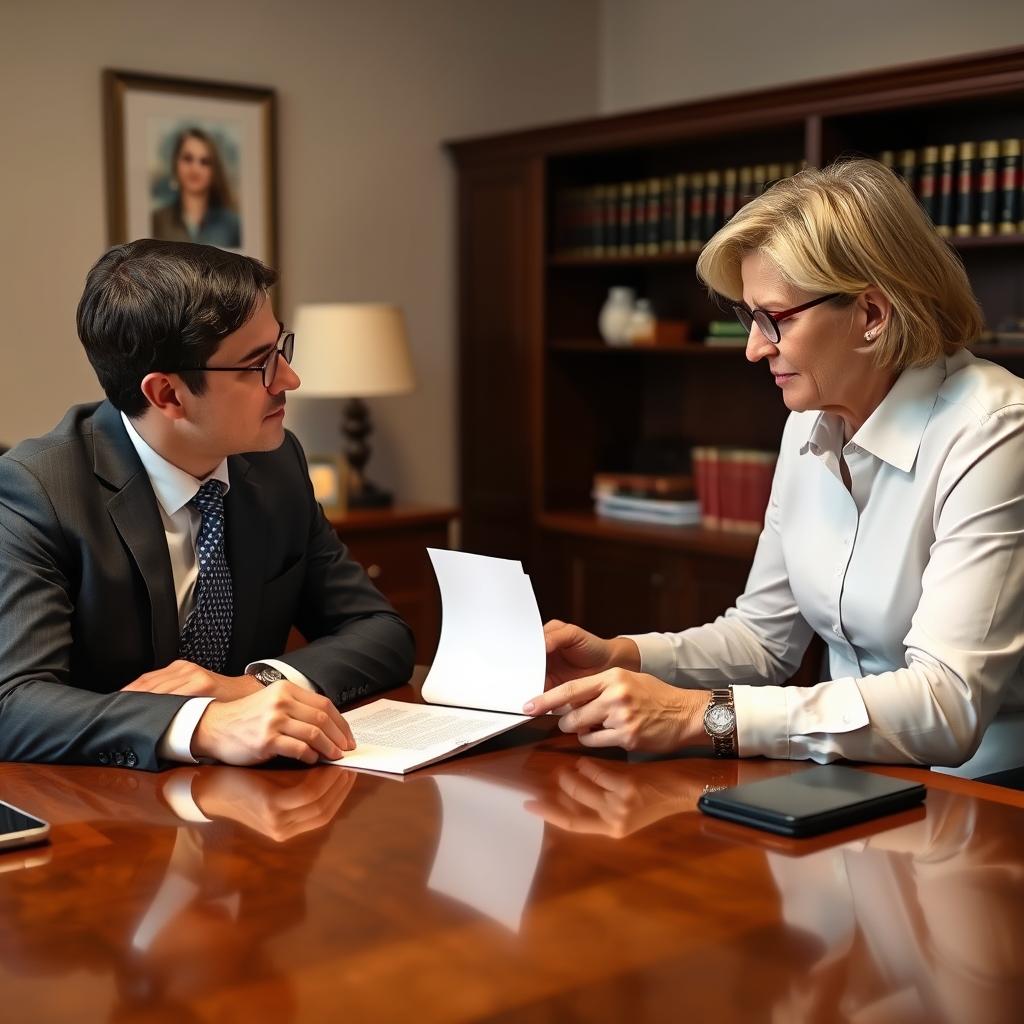
Marital Settlement Agreement Lawyer Stafford County
A Marital Settlement Agreement Lawyer Stafford County drafts and enforces the binding contract that finalizes your divorce terms. This document controls property division, spousal support, and debt allocation under Virginia law. You need a lawyer who knows Stafford County court procedures to protect your rights. Law Offices Of SRIS, P.C.—Advocacy Without Borders. provides this critical representation. (Confirmed by SRIS, P.C.)
Statutory Definition of a Marital Settlement Agreement in Virginia
A Marital Settlement Agreement (MSA) in Virginia is a contract governed by statute, not merely a private understanding. The Virginia Code provides the framework for its creation and enforcement. Failing to adhere to these statutes can invalidate your agreement. A Marital Settlement Agreement Lawyer Stafford County ensures every clause complies with state law. This prevents future legal challenges from your former spouse.
Virginia Code § 20-109.1 — Contract — Enforceable as a court order upon incorporation into a final decree of divorce. This statute transforms your signed agreement into a court order. Once incorporated, violations are contempt of court, not just breach of contract. The court can impose penalties for non-compliance, including wage garnishment. Your Stafford County divorce settlement terms lawyer must draft for this specific outcome.
The agreement must resolve all issues related to the marriage’s dissolution. This includes equitable distribution of marital property under Virginia Code § 20-107.3. It also covers spousal support under Virginia Code § 20-107.1. Child support and custody are typically addressed in a separate agreement. A marital settlement lawyer Stafford County integrates these statutory requirements into a single, coherent document. The goal is a final decree that leaves no issue open for dispute.
What must be included in a valid Virginia MSA?
A valid MSA must include a full and complete disclosure of all marital assets and debts. The agreement must state that both parties entered into it voluntarily. It must also be signed by both parties and notarized. Virginia law requires the agreement to be fair and reasonable at the time of its creation. A Stafford County attorney reviews for these essential elements to prevent a judge from setting it aside.
Can a Marital Settlement Agreement be modified after the divorce?
Modification of an MSA after incorporation is extremely difficult in Virginia. Terms related to property division are generally final and non-modifiable. Spousal support provisions may be modifiable only if the original agreement expressly allows for it. The court retains jurisdiction to modify child support and custody based on a material change in circumstances. A Stafford County lawyer must draft with future finality in mind to protect your long-term interests.
What happens if one spouse hides assets during the MSA process?
Hiding assets constitutes fraud and can void the entire Marital Settlement Agreement. Virginia courts can set aside a final decree obtained through fraud upon clear and convincing evidence. The offending spouse may face sanctions and be ordered to pay the other’s attorney’s fees. Full financial disclosure is a non-negotiable prerequisite for a binding agreement. A diligent marital settlement lawyer Stafford County employs discovery tools to ensure transparency.
The Insider Procedural Edge in Stafford County Circuit Court
Your case will be filed at the Stafford County Circuit Court located at 1300 Courthouse Road, Stafford, VA 22554. This court handles all divorce and marital settlement agreement filings for the county. Knowing the specific procedures of this courthouse provides a significant advantage. Local rules and judicial preferences directly impact how your agreement is presented and approved. A Marital Settlement Agreement Lawyer Stafford County handles these local nuances daily.
The court requires the original signed and notarized agreement be filed with your divorce complaint or answer. Filing fees are set by the state and are subject to change. Procedural specifics for Stafford County are reviewed during a Consultation by appointment at our Stafford County Location. The timeline from filing to a final hearing can vary based on the court’s docket. An uncontested divorce with a properly drafted MSA typically moves faster than a contested case.
Stafford County judges expect agreements to be clear, complete, and compliant with Virginia law. They will review the MSA to ensure it is not unconscionable. The judge may question provisions related to child support or custody to ensure they serve the child’s best interests. Having an attorney who is familiar with the presiding judges simplifies this approval process. This local knowledge is a key reason to hire a dedicated Stafford County divorce settlement terms lawyer.
What is the typical timeline for finalizing a divorce with an MSA in Stafford County?
The timeline for an uncontested divorce with an MSA in Stafford County is often several months. Virginia has a mandatory separation period that must be met before a divorce is granted. The court’s scheduling and docket availability also affect the final hearing date. A properly prepared case with a complete agreement avoids unnecessary delays. An experienced attorney manages the process to move as efficiently as possible.
Are there specific local forms required by Stafford County Circuit Court?
Stafford County Circuit Court uses the standard Virginia state forms for divorce filings. These include the Complaint for Divorce, Civil Cover Sheet, and the Final Decree of Divorce. The Marital Settlement Agreement itself is a separate document that is attached to the decree. The court clerk can provide basic forms, but they offer no legal advice. A lawyer ensures all forms are completed correctly and filed in proper sequence.
Penalties for Non-Compliance and Defense of Your Agreement
The most common penalty for violating an incorporated MSA is a contempt of court finding, which can result in fines or jail time. When your MSA is incorporated into the final divorce decree, it becomes a court order. Violating any term, such as failing to make a property transfer or spousal support payment, is not just a breach of contract. It is an act of contempt against the court itself. The aggrieved party must file a Motion for Rule to Show Cause in Stafford County Circuit Court to enforce the order.
| Offense | Penalty | Notes |
|---|---|---|
| Failure to Pay Spousal Support | Contempt of Court; Wage Garnishment; Liens; Possible Jail Time | Court can order immediate income withholding. |
| Failure to Transfer Property Title | Contempt of Court; Fines; Court-Ordered Signing | Judge can sign the deed on the non-compliant party’s behalf. |
| Failure to Pay Marital Debts as Ordered | Contempt of Court; Monetary Judgment to Reimburse Creditor | Creditor can still sue you, and you can then sue your ex-spouse for indemnification. |
| Violation of Non-Financial Terms (e.g., Insurance) | Contempt of Court; Fines | Court can order specific performance of the contractual duty. |
[Insider Insight] Stafford County prosecutors in the Commonwealth’s Attorney’s Location do not handle these contempt actions; they are civil proceedings. However, the judges in Stafford County take enforcement of their own decrees seriously. They have broad discretion to compel compliance and punish willful disobedience. Defending against an enforcement action requires demonstrating a lack of willfulness or an inability to comply. A strong initial agreement drafted by a Virginia family law attorney minimizes these future conflicts.
What defenses exist against a contempt motion for violating an MSA?
A valid defense is proving an inability to comply, not an unwillingness. This requires showing a genuine lack of financial resources or physical capacity to perform. Another defense is that the moving party themselves violated the agreement, excusing your performance. Ambiguity in the agreement’s language can also be a defense, as the court must interpret unclear terms. Your Stafford County lawyer argues these points to avoid a contempt finding.
Can I be jailed for not following my Marital Settlement Agreement?
Yes, you can be jailed for civil contempt for willfully violating a court order from your MSA. The purpose of jail in civil contempt is to coerce compliance, not to punish. You hold the “keys to the jailhouse” because you can be released once you comply with the order. However, the threat of incarceration is very real for non-payment of support or refusal to transfer assets. This highlights the need for precise drafting and realistic terms from the start.
Why Hire SRIS, P.C. for Your Stafford County Marital Settlement Agreement
Our lead family law attorney for Stafford County is a seasoned litigator with direct experience in its Circuit Court. This attorney understands how to draft agreements that withstand scrutiny and enforcement challenges. SRIS, P.C. has secured favorable outcomes in numerous family law matters in Stafford County. We focus on creating clear, enforceable documents that protect your financial future. Our approach is direct and strategic, avoiding unnecessary conflict while firmly advocating for your rights.
Primary Stafford County Family Law Attorney: Our assigned attorney possesses extensive knowledge of Virginia’s equitable distribution and support statutes. This attorney has negotiated and litigated complex marital settlements involving businesses, retirement accounts, and real estate. Familiarity with Stafford County’s judicial expectations allows for efficient case resolution. We prepare every case as if it will go to trial, which strengthens our position at the negotiation table.
Our firm differentiator is our “Advocacy Without Borders.” approach. We provide consistent, aggressive representation whether negotiating an agreement or defending it in court. We do not treat MSAs as simple paperwork; we treat them as the foundational legal document for your post-divorce life. Our Stafford County Location is staffed to handle your case locally. We integrate our knowledge with a network of our experienced legal team for complex asset issues.
Localized Stafford County Marital Settlement Agreement FAQs
How is marital property divided in a Stafford County MSA?
Virginia uses “equitable distribution,” which means fair, not necessarily equal, division. The court considers factors like each spouse’s contributions and the marriage’s duration. Your MSA can specify any division you both agree upon, bypassing the court’s formula.
Does Stafford County require mediation before finalizing an MSA?
Stafford County Circuit Court does not mandate mediation for divorce cases. However, judges often encourage it to resolve disputes. A voluntarily reached agreement through mediation is typically faster and less costly than a court trial.
Can I create my own Marital Settlement Agreement without a lawyer?
You can, but it is highly risky. Errors in legal wording or omission of required terms can render the agreement unenforceable. A missing clause can cost you thousands of dollars or lead to a lengthy court battle later.
How does an MSA handle retirement accounts like 401(k)s?
Retirement accounts earned during the marriage are marital property. Dividing them requires a separate court order called a Qualified Domestic Relations Order (QDRO). Your MSA must specify the division percentage, and the QDRO must be drafted and approved by the plan administrator.
What if my spouse and I agree on everything after separation?
This is an uncontested divorce, the ideal scenario for using an MSA. You still need a legally precise document drafted and filed properly. A lawyer ensures your agreement meets all Virginia legal standards for a swift court approval.
Proximity, Contact, and Critical Disclaimer
Our Stafford County Location is strategically positioned to serve clients throughout the county. We are accessible for meetings to discuss your marital settlement agreement needs. Consultation by appointment. Call 855-696-3348. 24/7.
Law Offices Of SRIS, P.C.—Advocacy Without Borders.
NAP: SRIS, P.C., Stafford County Location.
Phone: 855-696-3348.
Whether your case involves direct asset division or complex financial entanglements, our focus is on your outcome. We provide the same diligent representation for criminal defense representation and other practice areas. Do not leave the terms of your divorce to chance or a generic form.
Past results do not predict future outcomes.