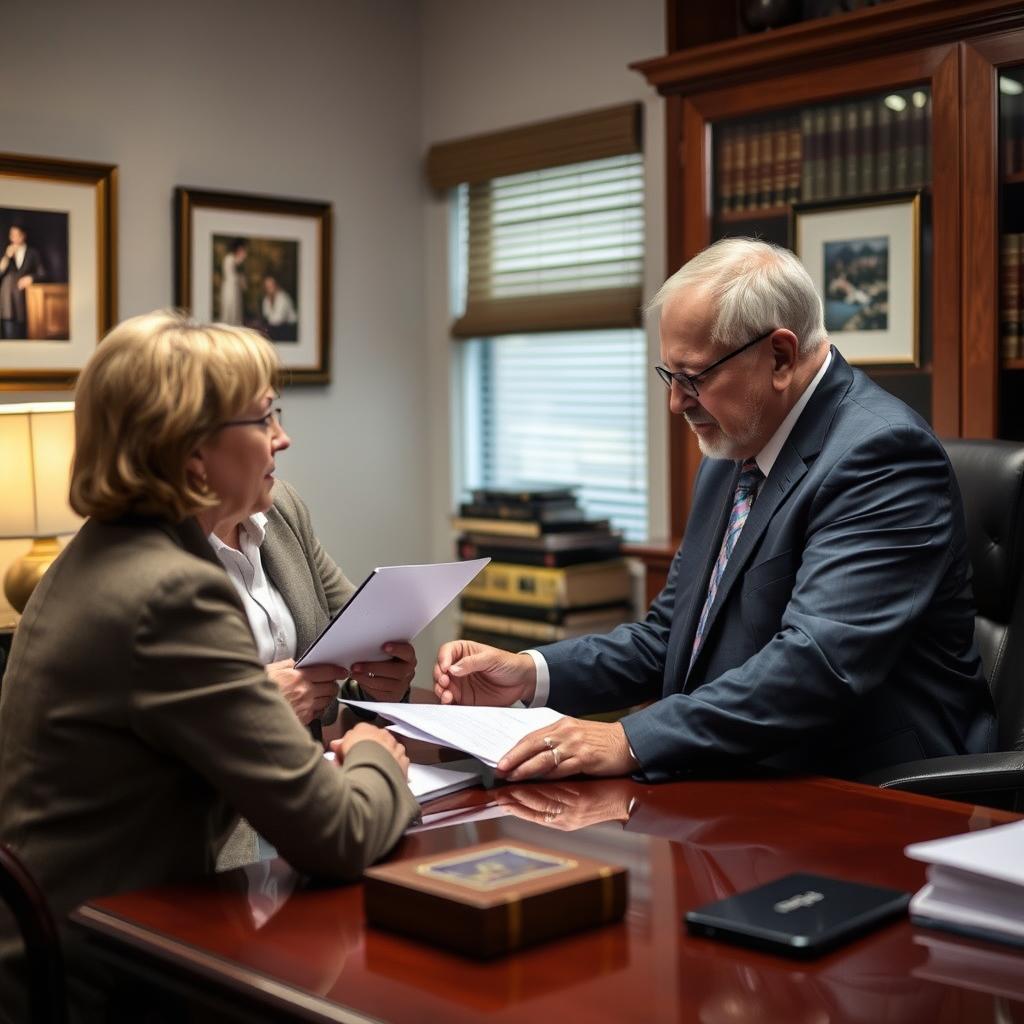
Postnup Lawyer Fauquier County, VA
A postnuptial agreement is a contract entered into by spouses after marriage that addresses property division, spousal support, and other financial issues in the event of divorce or death. In Fauquier County, these agreements are governed by the Virginia Premarital Agreement Act, Va. Code § 20‑147 et seq. Mr. Sris and the firm’s Of Counsel attorneys handle postnuptial agreement matters for clients throughout Fauquier County, including Warrenton, New Baltimore, Bealeton, Marshall, and The Plains. Whether you wish to define separate property rights, clarify retirement‑account division, or establish financial expectations during the marriage, a properly drafted postnuptial agreement can provide clarity and reduce conflict later. To discuss a postnuptial agreement that fits your circumstances, reach Law Offices Of SRIS, P.C. at (888) 437‑7747. Law Offices Of SRIS, P.C. – Advocacy Without Borders.
What Postnuptial Agreements Mean in Fauquier County
Under Virginia law, a postnuptial agreement—sometimes called a postmarital agreement—must be in writing and signed by both spouses to be enforceable. The agreement can address the division of marital and separate property, the payment of spousal support, and other economic arrangements, but it may not prejudge child‑custody or child‑support issues, as those are always determined by a court based on the best interests of the child at the time of the proceeding.
Fauquier County Circuit Court, located at 6 Court Street in Warrenton, has jurisdiction over all equitable‑distribution and spousal‑support matters that arise in a divorce. The Juvenile and Domestic Relations District Court handles custody and support cases that are not part of a divorce proceeding. Because the enforcement of a postnuptial agreement can involve both courts, working with attorneys who are familiar with the procedural norms of the Twentieth Judicial District is essential.
The Virginia Premarital Agreement Act applies equally to agreements made after marriage. A valid postnuptial agreement must be entered voluntarily and must not be unconscionable when executed. Full financial disclosure is not strictly required by statute, but the absence of disclosure can later be raised as a factor in a challenge to the agreement’s enforceability. Courts in Fauquier County will examine the circumstances surrounding the negotiation to determine whether the agreement was fairly procured.
How Mr. Sris and the Firm’s Of Counsel Attorneys Handle Postnuptial Agreement Cases
When a client engages the firm for a postnuptial agreement, the first step is a thorough consultation to understand the couple’s assets, debts, business interests, retirement accounts, and any separate property that either spouse brought to the marriage. Based on that information, the firm’s attorneys discuss which provisions will best meet the client’s objectives while remaining compliant with Virginia law.
Drafting is a collaborative process. The attorney prepares a proposed agreement, which is then reviewed with the other spouse or the other spouse’s independent counsel. Because postnuptial agreements are frequently challenged when a divorce occurs, the firm’s approach emphasizes careful documentation of the parties’ negotiations and a full exchange of financial information. This deliberate process helps build a record that supports the agreement’s enforceability if a dispute later develops.
If a postnuptial agreement is already in place and a party contests it in a divorce or separate proceeding, the firm represents clients in enforcement or defense actions. Mr. Sris and the firm’s Of Counsel attorneys evaluate whether the agreement meets the statutory requirements of voluntary execution and lack of unconscionability, and they present the agreement’s history to the Fauquier County Circuit Court as necessary.
About Mr. Sris and the Firm’s Of Counsel Attorneys
Mr. Sris, Owner and Founder of Law Offices Of SRIS, P.C., has practiced since 1997 and is admitted in Virginia, Maryland, the District of Columbia, New Jersey, and New York. He is a former prosecutor and brings that trial‑experience perspective to family‑law matters. Mr. Sris testified before the Virginia House Courts of Justice Committee in support of 2019 HB 635 (chief patron Del. David Bulova).
The firm’s Of Counsel attorneys are independent professionals who work under the firm’s name on client matters. They bring diverse litigation and transactional backgrounds to family‑law cases, including experience before the Fauquier County General District Court, the Juvenile and Domestic Relations District Court, and the Circuit Court. Together, Mr. Sris and the firm’s Of Counsel attorneys provide postnuptial‑agreement representation that is thorough, grounded in Virginia statutory requirements, and attentive to each client’s individual financial situation.
Frequently Asked Questions
Can I create a postnuptial agreement after marriage in Virginia?
Yes, Virginia law permits spouses to enter into a postnuptial agreement after marriage under the same Premarital Agreement Act that governs prenuptial agreements. The agreement must be in writing, signed by both parties, and it must not be unconscionable or the product of fraud, duress, or overreaching. A postnuptial agreement can address property division, spousal support, and other financial matters, but it cannot determine child‑custody or child‑support arrangements.
What happens if a postnuptial agreement is challenged in Fauquier County?
If a spouse seeks to set aside a postnuptial agreement during a divorce, the Fauquier County Circuit Court will evaluate whether the agreement was voluntarily made and whether it was unconscionable when executed. The court may consider the parties’ financial circumstances, the adequacy of disclosure, and the presence of independent legal advice. The party seeking to enforce the agreement typically carries the burden of showing that it meets the statutory requirements.
Does a postnuptial agreement need to be notarized in Virginia?
Virginia law does not require a postnuptial agreement to be notarized, but notarization provides strong evidence that the signatures are genuine and that the parties appeared before an authorized official. Many practitioners recommend notarization as a best practice to reduce future evidentiary disputes. The agreement itself must be in writing and signed by both spouses.
Can a postnuptial agreement cover retirement accounts in Fauquier County?
Yes, a postnuptial agreement may address the division of retirement accounts, including 401(k)s, IRAs, and pensions, as long as the terms comply with the applicable plan rules and federal law. If a qualified domestic relations order (QDRO) is later needed to divide a retirement account, the agreement can state how and when such an order will be entered. Mr. Sris’s experience with equitable‑distribution cases helps ensure that retirement provisions are properly drafted.
I already have a separation agreement. Do I still need a postnuptial agreement?
A separation agreement governs the terms of a divorce after separation, while a postnuptial agreement is executed during the marriage and typically addresses what will happen if the marriage ends in the future. If you are still married and wish to define property rights before any separation occurs, a postnuptial agreement may be the appropriate instrument. If you are already separated, a separation agreement—or a marital settlement agreement—is the more suitable document. An attorney can help you determine which one fits your situation.
How long does it take to create a postnuptial agreement?
The time required to draft and finalize a postnuptial agreement depends on the complexity of the couple’s finances and the level of negotiation between the parties. After an initial consultation, the attorney will prepare a draft for review. If both sides reach agreement promptly, the process can move quickly; if there are points of disagreement or if a business or other complex asset must be valued, it may take longer. For an estimate tailored to your circumstances, speak with an attorney.
For guidance on your specific situation, reach Law Offices Of SRIS, P.C. at (888) 437‑7747.
If you are looking for family law representation in neighboring counties, you may also find these resources helpful:
- Family law attorneys in Fairfax County
- Family law representation in Prince William County
- Family law practice in Loudoun County
- Family law counsel in Stafford County
- Family law services in Arlington County
For additional statutory context, you may consult the following official sources:
Attorney advertising. Prior results do not guarantee a similar outcome. Results may vary.
Case results depend on a variety of factors unique to each case.