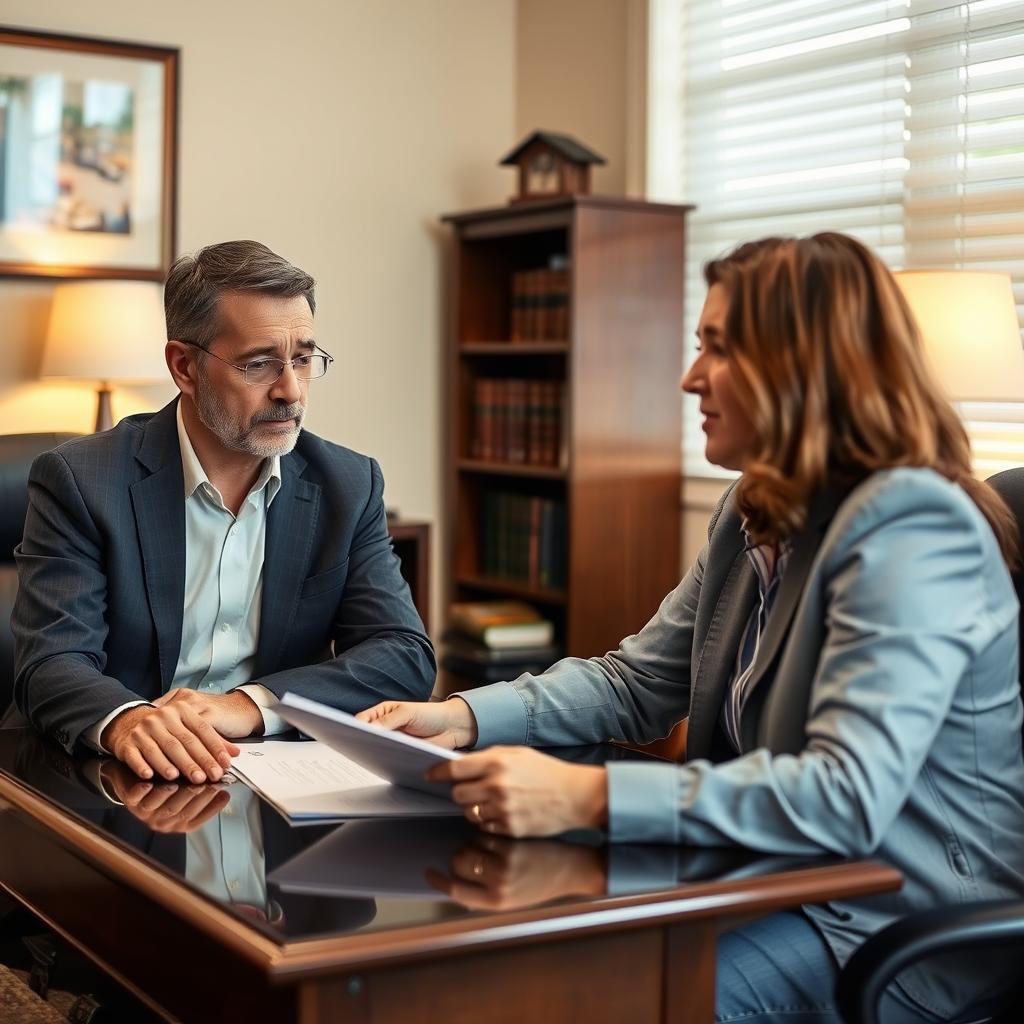
Property Settlement Lawyer Fluvanna County, VA
Dividing property at the end of a marriage is often one of the most emotionally and financially challenging aspects of a divorce. In Fluvanna County, Virginia, spouses must navigate the commonwealth’s equitable distribution framework—a set of rules that determine how marital assets and debts are classified, valued, and divided. Whether you own a home in Lake Monticello, operate a business in Palmyra, or hold retirement accounts accumulated during the marriage, the outcome of a property settlement can shape your financial future for years to come. The process requires a clear understanding of what constitutes marital versus separate property, the eleven statutory factors the court must weigh, and the procedural steps that unfold at the Fluvanna County Circuit Court. An error at any stage—failing to properly trace separate property, undervaluing a marital asset, or overlooking tax consequences—can skew the entire division. That is why having an experienced property settlement lawyer is essential. Mr. Sris and the firm’s Of Counsel attorneys work with clients throughout Fluvanna County to pursue a fair resolution under Virginia law. To request a consultation, reach Law Offices Of SRIS, P.C. at (888) 437-7747. Law Offices Of SRIS, P.C. – Advocacy Without Borders.
What Property Settlement Means in Fluvanna County
Property settlement in a Virginia divorce follows the principle of equitable distribution—not equal division. Under Va. Code § 20-107.3, the court must classify all property as marital, separate, or hybrid, assign values, and then distribute the marital estate in a manner that is fair, considering eleven specific factors. These factors range from the duration of the marriage and each spouse’s contributions to the family’s well‑being to the tax consequences of a particular division.
The Fluvanna County Circuit Court, located at 72 Main Street, Suite B, Palmyra, VA 22963, has exclusive original jurisdiction over divorce and all related equitable distribution matters. The court will first determine whether a proposed separation agreement—a written contract signed by both spouses—resolves the property issues consensually. If the agreement meets statutory requirements and is not unconscionable, the court will incorporate it into the final divorce decree. When an agreement cannot be reached, the case proceeds to a contested equitable distribution hearing, where each side presents evidence about the character and value of assets, debts, and any claims for classification. While mediation is not mandatory in Virginia, many judges encourage the parties to explore settlement before trial. The court’s calendar, the complexity of the marital estate, and the availability of forensic accountants or business valuators all influence the timeline. Our Richmond Location serves clients throughout Fluvanna County, and we are familiar with the procedural expectations in the Sixteenth Judicial District.
Fluvanna County General District Court is currently presided over by Hon. Claiborne H. Stokes Jr. Court hours: Mon‑Fri 8:30 AM‑4:30 PM. Counsel appearing on family law matters should plan filings accordingly.
How Mr. Sris and the Firm’s Of Counsel Attorneys Handle Property Settlement Cases
Every property settlement case in Fluvanna County begins with a thorough investigation of the marital balance sheet. The firm’s Of Counsel attorneys, working alongside Mr. Sris, identify all assets and debts—real property, bank accounts, investment accounts, retirement plans, business interests, vehicles, and personal property—and classify each item according to Virginia’s equitable distribution rules. Separate property, such as assets owned before the marriage or received as a gift or inheritance, is traced to its source to ensure it is properly excluded. Marital property is valued, often with the assistance of independent financial professionals, and the firm analyzes how the eleven statutory factors under Va. Code § 20-107.3 apply to the particular facts of the case.
When litigation is necessary, Mr. Sris and the firm’s Of Counsel attorneys present a well-organized case to the Circuit Court. They work with forensic accountants, business appraisers, and pension consultants when a marital estate involves closely held businesses, professional practices, or complex deferred compensation arrangements. Throughout the process, the goal is to position the client for a resolution—whether through negotiation, mediation, or trial—that reflects a full and accurate picture of the marital finances. The strategy is guided by the client’s realistic objectives and the court’s historical treatment of similar issues within the Sixteenth Judicial District.
About Mr. Sris and the Firm’s Of Counsel Attorneys
Mr. Sris, Owner and Founder of Law Offices Of SRIS, P.C., has practiced family law since founding the firm in 1997. A former prosecutor, Mr. Sris is admitted in Virginia, Maryland, the District of Columbia, New Jersey, and New York. He testified before the Virginia House Courts of Justice Committee in support of 2019 HB 635 (chief patron Del. David Bulova), the legislation that revised the equitable distribution statute’s retirement‑benefit provisions. That experience reflects a practical understanding of how statutory language affects real‑world property division.
The firm’s Of Counsel attorneys bring extensive combined legal experience. Results may vary. Together, Mr. Sris and the firm’s Of Counsel attorneys handle property settlement matters in Fluvanna County with a collaborative approach that draws on each attorney’s background. For a consultation about your property division concerns, contact Law Offices Of SRIS, P.C. at (888) 437-7747.
Frequently Asked Questions
Is Virginia a community property state?
No—Virginia is an equitable distribution state, not a community property state. Unlike community property jurisdictions where assets are split 50/50, a Virginia court divides marital property based on what is fair after weighing eleven statutory factors under Va. Code § 20-107.3. The distinction is critical: in Fluvanna County, a spouse may receive more or less than half of the marital estate depending on the circumstances of the marriage and each party’s contributions. Separate property—acquired before the marriage or received by gift or inheritance during the marriage—remains with the owning spouse and is not subject to division. The court retains broad discretion to fashion an equitable award that accounts for non‑monetary contributions, the needs of each party, and the conduct that contributed to the dissolution of the marriage.
How is marital property divided in a Fluvanna County divorce?
Marital property in Fluvanna County is divided through the equitable distribution process set out in Va. Code § 20-107.3. The judge first classifies every asset and debt as marital, separate, or part‑marital/part‑separate. After classification, the court assigns a value to each item and then decides how to allocate the marital estate after considering the eleven statutory factors. These factors include the length of the marriage, the age and health of each spouse, how and when the property was acquired, the liquid or non‑liquid nature of the assets, and the tax consequences of a proposed division. The court may order one spouse to pay a monetary award to the other, transfer ownership of specific property, or divide retirement accounts through a Qualified Domestic Relations Order. The entire proceeding takes place in the Fluvanna County Circuit Court.
What is a property settlement agreement in Virginia?
A property settlement agreement—often called a separation agreement—is a written contract signed by both spouses that resolves all financial and property issues arising from the divorce. Under Va. Code § 20-109, if the agreement is found to be conscionable, the court will affirm, ratify, and incorporate it into the final divorce decree. A comprehensive agreement in Fluvanna County typically addresses the division of real and personal property, allocation of debts, retirement‑account splits, spousal support, and, when children are involved, custody and child support. Because the agreement effectively determines the entire financial outcome, it is essential that each party fully discloses all assets and liabilities before signing. Once incorporated, the agreement becomes an enforceable order of the court.
Do I need a lawyer for property settlement in Fluvanna County?
Virginia law does not require you to have an attorney for property settlement, but the complexity of equitable distribution makes legal guidance highly advisable. In Fluvanna County, the Circuit Court expects the parties to follow procedural rules, meet disclosure obligations, and present evidence in admissible form. Mistakes in classifying property, valuing businesses or retirement accounts, or drafting an agreement can lead to a division that is far less favorable than what a well‑prepared case could achieve. An attorney can also negotiate settlement terms that account for tax implications and future financial needs. Many individuals who attempt to handle property division on their own later discover they accepted terms that undervalued certain assets or failed to consider long‑term consequences.
How long does it take to reach a property settlement in Fluvanna County?
The time required to resolve a property settlement in Fluvanna County depends on whether the parties can agree and the complexity of the marital estate. If both spouses negotiate a separation agreement and present it to the court early in the divorce process, the property issues can be resolved without a contested hearing, moving the case forward more quickly. When the parties cannot agree—particularly in high‑asset matters involving business valuations, retirement‑plan analysis, or allegations of hidden assets—discovery, experienced attorney consultations, and trial scheduling can extend the timeline considerably. The court’s own calendar, the availability of appointed professionals, and the willingness of each side to negotiate all influence the pace. Mr. Sris and the firm’s Of Counsel attorneys work to move each case toward resolution as efficiently as the circumstances allow.
For more on family law in Virginia, visit our pages covering related localities:
Fairfax County family law attorney,
Prince William County family law attorney, and
Manassas family law attorney.
Additional information is available through official Virginia resources:
Virginia Code § 20‑107.3 (equitable distribution) and
Virginia Judicial System. The Fluvanna County Circuit Court handles all divorce and property settlement matters.
Attorney advertising. Prior results do not guarantee a similar outcome.
Results may vary.
Case results depend on a variety of factors unique to each case.