
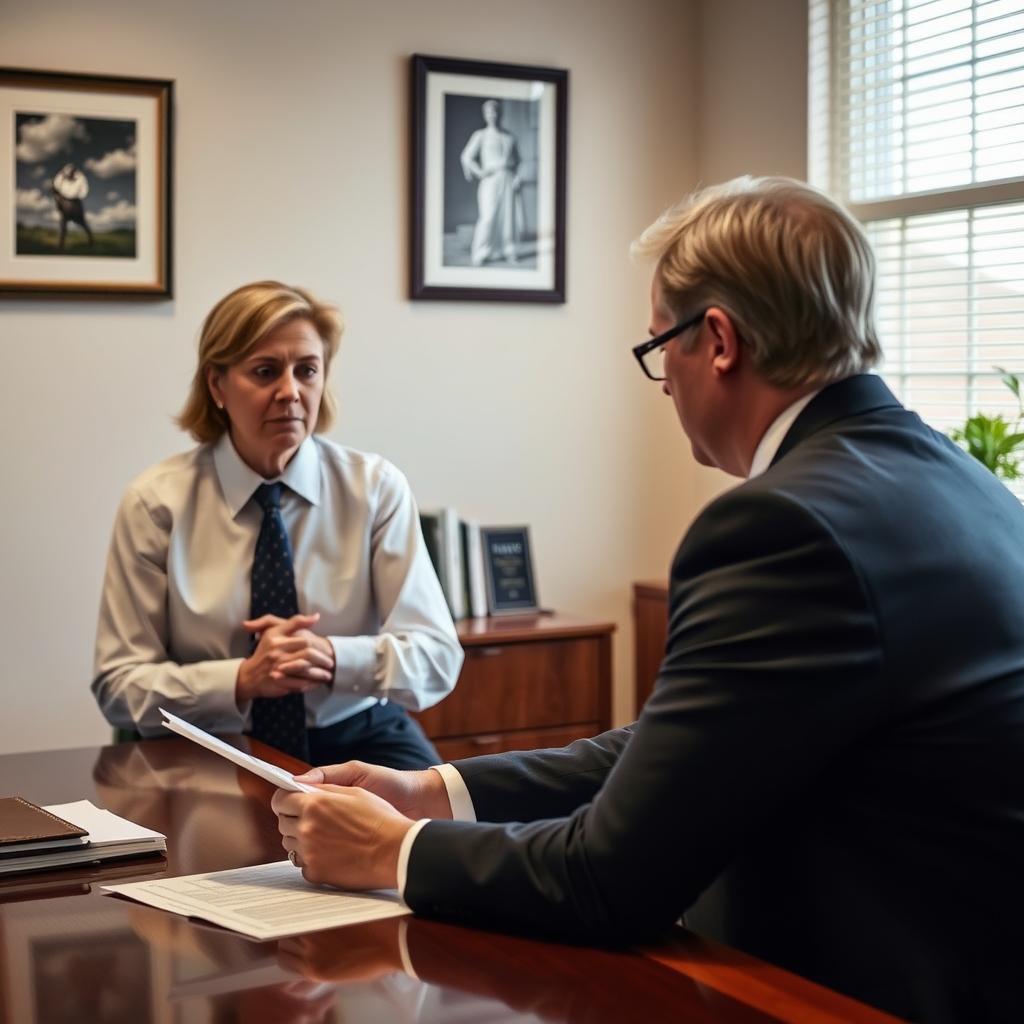
Rehabilitative Alimony Lawyer Louisa County, VA
When a marriage ends in Virginia, one spouse often needs financial support to gain the education or training necessary to become self-sufficient. Rehabilitative alimony — a form of spousal support governed by Va. Code § 20-107.1 — is designed to provide that bridge. Law Offices Of SRIS, P.C. represents clients seeking or contesting rehabilitative alimony in Louisa County, where the Circuit Court (100 West Main Street, Louisa, VA 23093) exercises authority over divorce and spousal support matters. Mr. Sris and the firm’s Of Counsel attorneys are familiar with how local judges apply the statutory factors, including the length of the marriage and each spouse’s ability to enter the workforce. If you have questions about your financial future after divorce, you can reach our firm at (888) 437-7747 to request a consultation. Law Offices Of SRIS, P.C. – Advocacy Without Borders.
What Rehabilitative Alimony Means in Louisa County
Rehabilitative alimony is a temporary award of financial support intended to assist a spouse who needs time and resources to obtain the education, training, or work experience required to become self-supporting. Under Virginia Code § 20-107.1, a court may order rehabilitative spousal support after considering a range of statutory factors: the length of the marriage; each party’s age, health, and earning capacity; contributions to the marriage and to the other spouse’s education or career; the standard of living established during the marriage; and any financial need that will continue beyond a reasonable rehabilitation period.
In Louisa County, these cases are heard by the Louisa County Circuit Court. The court has discretion to set the amount and duration of rehabilitative alimony based on a realistic timeline for the receiving spouse to achieve employability. Because every marital dissolution has its own financial history, a judge will examine tax returns, pay stubs, vocational evaluations, and other documentation to craft an appropriate support order. Law Offices Of SRIS, P.C. helps clients present that evidence effectively, whether the goal is to secure a fair rehabilitative award or to argue that ongoing support is unwarranted.
How Mr. Sris and the Firm’s Of Counsel Attorneys Handle Rehabilitative Alimony Cases
Rehabilitative alimony disputes often turn on whether the requesting spouse has a genuine need for retraining and a concrete plan to achieve self-sufficiency within a reasonable time. Mr. Sris and the firm’s Of Counsel attorneys examine the earning history and vocational prospects of both parties. They work with financial attorneys as needed to develop a clear picture of the marital finances, analyze the income disparity that justifies support, and identify the steps the supported spouse plans to take — for example, enrolling in a degree program or obtaining a professional certification.
When opposing a petition, counsel scrutinize the claimed rehabilitation plan for overreach, such as indefinite retraining or educational pursuits that are not tied to realistic employment. The firm’s attorneys present documentary evidence, cross-examine vocational witnesses, and argue the statutory factors to the court. Because Louisa County Circuit Court retains jurisdiction to modify spousal support if circumstances change, the firm also helps clients address future modifications, including situations where the paying spouse’s income declines or the receiving spouse completes rehabilitation ahead of schedule.
About Mr. Sris and the Firm’s Of Counsel Attorneys
Mr. Sris, Owner and Founder of Law Offices Of SRIS, P.C., has been practicing in Virginia since 1997. A former prosecutor, he brings extensive courtroom experience to family law disputes, including contested spousal support matters. His background in accounting and information systems offers an added dimension when analyzing the financial records that drive alimony determinations.
The firm’s Of Counsel attorneys contribute significant additional experience in Virginia family law. One Of Counsel attorney is a former Virginia State Trooper who applies investigative discipline to case preparation; another served for years as a contract attorney for the City of Alexandria handling child welfare and domestic relations cases. Together, these attorneys work alongside Mr. Sris to develop a thorough factual and legal presentation in each rehabilitative alimony case. With a Richmond Location at 7400 Beaufont Springs Drive, Suite 300, Room 395, Richmond, VA 23225, the firm regularly appears in Louisa County courts and serves clients in Louisa, Mineral, and Zion Crossroads.
The firm has obtained favorable outcomes in 30 documented case results in Louisa County across multiple practice areas.
Source: Firm records. Case results listing
Reviewed by Mr. Sris, admitted in VA/MD/DC/NJ/NY.
Frequently Asked Questions
What is the difference between rehabilitative and permanent alimony in Virginia?
Rehabilitative alimony is temporary support designed to help a spouse become self-sufficient through education or training, while permanent alimony provides ongoing support without a set end date. Virginia courts award permanent support only when the receiving spouse is unlikely to achieve self-sufficiency due to age, disability, or a long absence from the workforce. In Louisa County, a judge will evaluate the specific circumstances of each case under Va. Code § 20-107.1 before deciding which type of spousal support is appropriate. For guidance on your specific situation, reach Law Offices Of SRIS, P.C. at (888) 437-7747.
How does a court determine the amount and duration of rehabilitative alimony in Louisa County?
The court considers the receiving spouse’s need for financial assistance, the paying spouse’s ability to pay, and the factors listed in Va. Code § 20-107.1. Among the key considerations are the length of the marriage, the standard of living established, the age and health of each party, and the time reasonably needed for the requesting spouse to complete education or training. The Louisa County Circuit Court requires documentation of the rehabilitation plan, such as tuition invoices, a course schedule, and evidence of employment opportunities after completion. The timeline depends on the court’s assessment of a realistic path to self-sufficiency.
Can rehabilitative alimony be modified after the court issues an order?
Yes, a Virginia court may modify rehabilitative spousal support if there has been a material change in circumstances. A paying spouse might seek reduction if they lose their job or suffer a substantial income drop, while a receiving spouse might ask for an extension if the original rehabilitation plan proves unworkable through no fault of their own. Either party can file a motion in the Louisa County Circuit Court. Law Offices Of SRIS, P.C. can explain how to present evidence of changed circumstances. Results may vary.
Do I need an attorney to request rehabilitative alimony in a Louisa County divorce?
You are not legally required to hire an attorney, but the statutory factors and procedural rules of the Louisa County Circuit Court make experienced legal guidance important for achieving a fair award. An attorney can help you gather the necessary financial records, develop a credible rehabilitation plan, and present testimony from vocational attorneys. Without informed preparation, a spouse may receive less support than needed or may be ordered to pay more than is fair. To discuss the details of your matter, contact Law Offices Of SRIS, P.C. at (888) 437-7747.
Related legal services:
- Virginia spousal support practice
- Alimony enforcement in Virginia
- Rehabilitative alimony modification
- Family law representation in Fairfax County
- Family law help in Prince William County
Additional resources: Virginia Code § 20-107.1 – Spousal Support Factors | Louisa County Circuit Court | Virginia Judicial System
Attorney advertising. Prior results do not guarantee a similar outcome. Case results depend on a variety of factors unique to each case. Results may vary.