
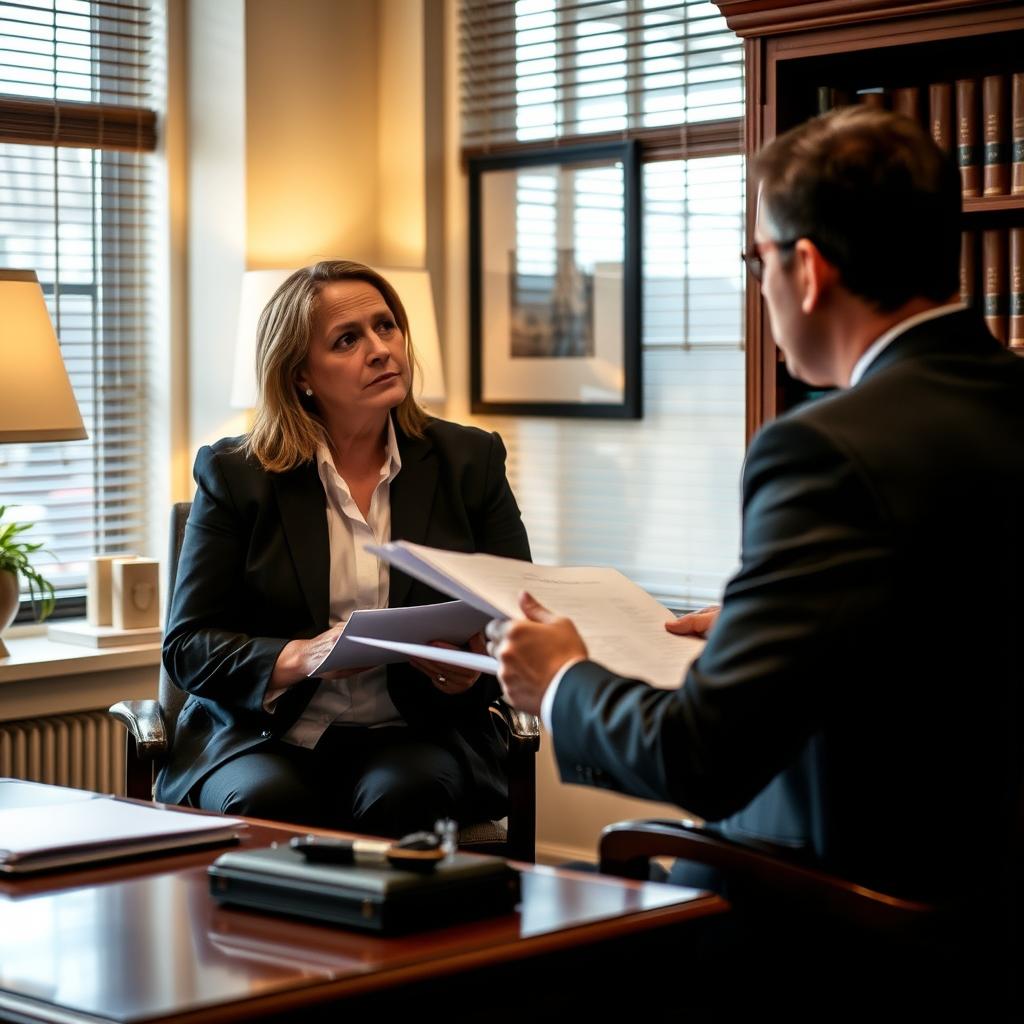
Rehabilitative Alimony Lawyer Virginia Beach, VA
Rehabilitative alimony is a form of spousal support that Virginia courts may order for a limited time to help a spouse become self‑supporting. Under Va. Code § 20‑107.1, judges consider a range of statutory factors before deciding whether rehabilitative support is appropriate, how much should be paid, and for how long. In Virginia Beach, these issues arise in divorce and separate‑maintenance actions filed in the Virginia Beach Circuit Court, while related custody or support matters may be heard in the Virginia Beach Juvenile and Domestic Relations District Court. Because rehabilitative alimony directly affects your financial future, working with an attorney who understands how the local courts handle these cases can make a meaningful difference. To discuss your situation with a rehabilitative alimony lawyer who practices in Virginia Beach, call Law Offices Of SRIS, P.C. at (888) 437‑7747. Law Offices Of SRIS, P.C. – Advocacy Without Borders.
What Rehabilitative Alimony Means in Virginia Beach
Rehabilitative alimony is one of several types of spousal support available under Virginia law. Unlike indefinite support, which may continue without a fixed end date, rehabilitative alimony is designed to bridge the gap while a dependent spouse pursues education, job training, or other steps needed to re‑enter the workforce and become economically independent. The court may award rehabilitative support for a defined period, often tied to the length of an academic program or vocational certification.
In Virginia Beach, the Circuit Court—located at 2425 Nimmo Parkway, Bldg 10B—has jurisdiction over divorce and equitable distribution, and therefore over spousal support claims. When a divorcing spouse requests rehabilitative alimony, the judge applies the thirteen factors listed in Va. Code § 20‑107.1, including the duration of the marriage, the parties’ earning capacities, their ages and health, the standard of living established during the marriage, and the contributions each spouse made to the family’s well‑being. The court also considers whether the requesting spouse has a realistic plan for self‑support and whether the paying spouse has the ability to provide assistance without undue hardship. Law Offices Of SRIS, P.C. Appears regularly in Virginia Beach courts and can help you present a thorough case under these statutory criteria.
How Mr. Sris and the Firm’s Of Counsel Attorneys Handle Rehabilitative Alimony Cases
Every rehabilitative alimony matter begins with a careful evaluation of the facts. Mr. Sris and the firm’s Of Counsel attorneys gather documentation of both spouses’ income, assets, employment history, and educational backgrounds. They work with clients to develop a clear narrative: for the spouse seeking support, demonstrating a concrete plan for rehabilitation and a timeline for reaching independence; for the spouse opposing support, showing that the requesting spouse is already capable of self‑support or that the proposed rehabilitation plan is unreasonable.
Once the financial picture is complete, the firm’s attorneys prepare motions for pendente lite support if immediate relief is needed while the divorce is pending. They engage in negotiation and mediation when possible, but they are prepared to litigate when a fair agreement cannot be reached. In the Virginia Beach Circuit Court, the judge will hear evidence on each of the § 20‑107.1 factors and decide whether rehabilitative support is warranted, the monthly amount, and the duration. Mr. Sris and his Of Counsel draw on extensive combined legal experience to advocate for an outcome that reflects the realities of both spouses’ financial circumstances.
About Mr. Sris and the Firm’s Of Counsel Attorneys
Mr. Sris, Owner and Founder of Law Offices Of SRIS, P.C., has practiced law since 1997. He is a former prosecutor and has testified before the Virginia House Courts of Justice Committee in support of 2019 HB 635 (chief patron Del. David Bulova). Alongside him, the firm’s Of Counsel attorneys bring extensive combined legal experience to family law matters. The team represents clients across Virginia—including Virginia Beach, Sandbridge, and Oceana—and appears in the Virginia Beach Circuit Court and Juvenile and Domestic Relations District Court. Each attorney is either licensed in Virginia or admitted in multiple jurisdictions, and the firm is able to serve clients in five states and the District of Columbia.
The firm’s approach is grounded in thorough preparation and a focus on the client’s long‑term interests. Whether you are seeking rehabilitative alimony or responding to a request, you can expect attentive representation that addresses both immediate financial concerns and the broader objectives of your divorce. Law Offices Of SRIS, P.C. maintains a Richmond location that serves clients throughout the Virginia Beach area; meetings can be arranged by appointment. Call (888) 437‑7747 to schedule a consultation.
Frequently Asked Questions
What is rehabilitative alimony in Virginia?
Rehabilitative alimony is a type of spousal support ordered by a Virginia court for a limited period to allow a dependent spouse to obtain education, training, or work experience needed to become self‑supporting. Unlike indefinite support, rehabilitative alimony has a defined goal and an endpoint linked to a specific plan, such as completing a degree program or certification. The court considers thirteen statutory factors under Va. Code § 20‑107.1, including the duration of the marriage, the parties’ earning capacities, and the contributions each spouse made to the family. An experienced family law attorney can help you present evidence that supports a reasonable rehabilitative plan or, conversely, shows that such support is unnecessary in your case.
How does a Virginia court decide whether to award rehabilitative alimony?
A Virginia court decides rehabilitative alimony by weighing the thirteen factors in Va. Code § 20‑107.1, with a focus on whether the requesting spouse has a concrete plan to become self‑supporting and whether the paying spouse can afford to help. The judge examines both parties’ incomes, assets, debts, ages, health, and the standard of living during the marriage. The spouse seeking support typically must show that additional training or education is necessary to find suitable employment and that a realistic timeline exists for completing that training. The court may also consider fault grounds that contributed to the divorce, though fault is only one factor among many. Because each case turns on its own facts, legal guidance tailored to your circumstances is important.
Can rehabilitative alimony be modified after the divorce decree?
Yes, rehabilitative alimony can be modified under Virginia law if there has been a material change in circumstances that was not anticipated at the time of the original award. For example, if the receiving spouse completes the planned education sooner than expected, or if the paying spouse suffers a substantial involuntary reduction in income, either party may petition the court to modify the amount or duration. Modification requires filing a new motion in the Virginia Beach Circuit Court and presenting evidence of the changed circumstances. The judge retains discretion to adjust the award, but the modification must be supported by the facts. A lawyer can assess whether your situation meets the legal threshold for a modification and help you seek a fair adjustment.
How long does rehabilitative alimony last in Virginia?
Rehabilitative alimony lasts for a defined period set by the Virginia court, typically tied to the time needed to complete the recipient’s education or training plan. The duration is not fixed by statute; rather, the judge determines a reasonable length based on the evidence, such as the length of a degree program or vocational course. Once the ordered period expires, the support obligation ends unless a modification is granted. In some cases, the divorce decree may allow for an extension if the recipient, through no fault of their own, cannot complete the plan on time. Working with an attorney who understands local court practices can help ensure the duration is realistic and properly documented.
Do I need a lawyer for a rehabilitative alimony issue in Virginia Beach?
While you are not legally required to have a lawyer, having an experienced family law attorney is strongly recommended because rehabilitative alimony decisions depend heavily on the specific facts and on persuasive presentation to the court. An attorney can gather the necessary financial records, retain vocational attorneys if needed, and argue the § 20‑107.1 factors effectively. In Virginia Beach, where the Circuit Court handles spousal support claims alongside equitable distribution, courtroom familiarity can be a practical advantage. Mr. Sris and the firm’s Of Counsel attorneys have represented clients in Virginia Beach courts and can help you evaluate your options, negotiate a settlement when possible, or take your case to trial if necessary. To discuss your situation, call Law Offices Of SRIS, P.C. at (888) 437‑7747.
Related family law pages:
Family Law Lawyer Fairfax County |
Family Law Lawyer Fairfax City |
Family Law Attorney Falls Church |
Family Law Lawyer Prince William County |
Family Law Lawyer Manassas
Virginia legal resources:
Virginia Code Title 20 (Domestic Relations) |
Virginia Judicial System |
Virginia Beach Circuit Court
Attorney advertising. Prior results do not guarantee a similar outcome. Results may vary. Cases may be handled by multiple attorneys. Mr. Sris is licensed in Virginia, Maryland, the District of Columbia, New Jersey, and New York. The firm’s Richmond location represents clients in Virginia Beach by appointment.
Case results depend on a variety of factors unique to each case.