
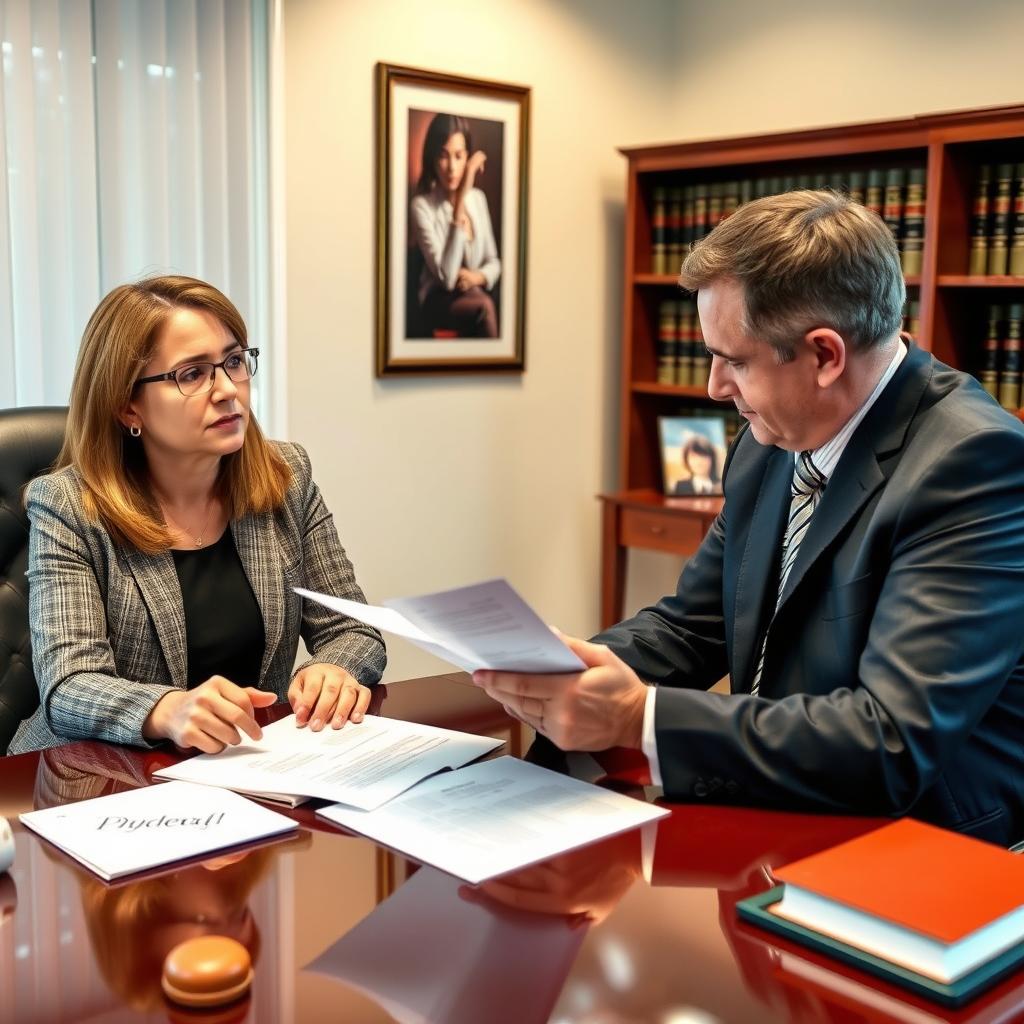
Service Member Divorce Lawyer Colonial Heights
You need a Service Member Divorce Lawyer Colonial Heights who knows Virginia military divorce law and the Colonial Heights court. Law Offices Of SRIS, P.C. —Advocacy Without Borders. handles the Servicemembers Civil Relief Act (SCRA) protections, residency rules, and asset division unique to military families. Our Colonial Heights Location provides direct access to the Colonial Heights Juvenile and Domestic Relations District Court. (Confirmed by SRIS, P.C.)
Statutory Definition of Military Divorce in Virginia
Virginia military divorce is governed by Virginia Code § 20-97 and the federal Servicemembers Civil Relief Act (SCRA). The SCRA provides critical procedural protections for active-duty personnel. These laws directly impact how and when a divorce case proceeds in Colonial Heights. A Service Member Divorce Lawyer Colonial Heights must handle both state and federal statutes. Understanding these codes is the first step in protecting your rights.
Virginia Code § 20-97 — Civil Action — Determined by Court. This statute establishes jurisdiction for divorce in Virginia. It requires that at least one party be a resident of the Commonwealth for six months before filing. For military members, this often means establishing Virginia as their home of record or legal residence. The court must have personal jurisdiction over both parties to enter binding orders on support and property.
The Servicemembers Civil Relief Act (50 U.S.C. § 3901 et seq.) is federal law. It provides active-duty service members with the right to request a stay of civil proceedings. This includes divorce and child custody cases. The stay can be granted for a minimum of 90 days. The court may grant additional stays upon further application. This protection prevents default judgments when military duty prevents court attendance.
Virginia Code § 20-124.2 governs child custody factors. The court considers the child’s relationship with each parent. Military deployment is a factor, but it cannot be the sole reason for denying custody. The court must consider a proposed family care plan from the deploying parent. A Colonial Heights divorce lawyer uses this statute to argue for equitable parenting time. The goal is a stable arrangement for the child during and after service.
How does military pay affect divorce settlements?
Military pay and benefits are divisible marital property under the Uniformed Services Former Spouses’ Protection Act (USFSPA). Retired pay is subject to division if the marriage overlapped 10 years of service. The “10/10 rule” governs direct payment by the Defense Finance and Accounting Service (DFAS). A dissolution of marriage lawyer Colonial Heights calculates the marital portion of the retirement. Thrift Savings Plan (TSP) accounts and VA disability pay have specific rules for division.
What are the residency requirements for a military divorce in Virginia?
A service member can file for divorce in Virginia if Virginia is their legal residence. The six-month residency requirement applies to the filing party. Military orders assigning you to Fort Lee or Fort Gregg-Adams establish physical presence. Legal residence (domicile) is a matter of intent. You must demonstrate intent to remain in Virginia indefinitely. A Colonial Heights attorney reviews your Leave and Earnings Statement (LES) and voter registration.
Can I get a divorce if my spouse is deployed?
Yes, you can initiate a divorce while a spouse is deployed. The SCRA requires the serving spouse be notified of the proceedings. The court cannot enter a default judgment without proof of proper service. The deployed spouse can request a stay of proceedings under the SCRA. The case may be delayed until the stay expires. A lawyer files the necessary military affidavits and ensures procedural compliance.
The Insider Procedural Edge in Colonial Heights
Your case is heard at the Colonial Heights Juvenile and Domestic Relations District Court at 401 Temple Avenue, Colonial Heights, VA 23834. This court handles all family law matters for the city. The clerk’s Location is specific about filing requirements for military affidavits. Filing fees are set by Virginia statute and are subject to change. A local lawyer knows the court’s scheduling preferences and judge’s expectations.
The physical address is critical for proper service and filing. The courthouse is located near the Colonial Heights Central Library. Parking is available on-site. The court requires original signatures on all pleadings. Electronic filing may be available for certain documents. You must check with the clerk for current e-filing procedures. Procedural specifics for Colonial Heights are reviewed during a Consultation by appointment at our Colonial Heights Location.
Military cases require a completed Military Affidavit (Form CC-1416). This form details the service member’s duty status and contact information. The court uses this to determine SCRA applicability. Failure to file this affidavit can delay your case. The court may also require a copy of the service member’s military ID or orders. A Colonial Heights divorce attorney ensures all forms are accurately completed and filed timely.
What is the typical timeline for a military divorce here?
A contested military divorce in Colonial Heights can take nine to eighteen months. An uncontested divorce may finalize in two to three months if no SCRA stay is invoked. The timeline starts from the date of filing the Complaint. Mandatory waiting periods apply after serving the spouse. The court’s docket availability impacts final hearing dates. A lawyer manages the process to avoid unnecessary delays.
How much are the court filing fees?
The filing fee for a divorce complaint in Colonial Heights is approximately $89. This fee is set by the Virginia Supreme Court. Additional fees apply for serving the spouse by sheriff ($12) or publication. There may be fees for filing motions or scheduling hearings. Fee waivers are available for qualified low-income parties. Your attorney will provide the exact current fee during your case review.
Penalties & Defense Strategies in Military Divorce
The most common outcomes involve division of military pensions and setting child support based on LES income. The court uses Virginia child support guidelines which include Basic Allowance for Housing (BAH). Failure to comply with court orders can result in contempt charges. Contempt penalties include fines or jail time. A dedicated defense strategy focuses on accurate financial disclosure and SCRA compliance.
| Offense / Issue | Potential Penalty / Outcome | Notes |
|---|---|---|
| Non-Compliance with Child Support | Contempt of Court, Wage Garnishment, License Suspension | DFAS can garnish military pay directly. |
| Violation of Custody Order | Contempt, Modification of Custody, Make-Up Parenting Time | Military deployment requires a family care plan. |
| Failure to Disclose Assets | Unequal Division of Property, Sanctions, Attorney’s Fees | Full disclosure of TSP and SBP is required. |
| Default Judgment (Without SCRA Protection) | Loss of Rights to Argue Support, Property, and Custody | SCRA stay must be formally requested. |
[Insider Insight] Colonial Heights judges expect strict adherence to military affidavit rules. Prosecutors and judges in this jurisdiction are familiar with Fort Lee personnel. They prioritize the child’s stability when a parent is subject to PCS or deployment. Presenting a clear family care plan is often viewed favorably. Local prosecutors will enforce support orders through garnishment actions promptly.
How is child support calculated for active-duty members?
Child support is based on gross monthly income from the Leave and Earnings Statement (LES). This includes base pay, BAH, BAS, and special duty pay. Virginia guidelines apply the same percentage calculations as civilian cases. The non-military parent’s income is also factored in. Deployment does not automatically reduce the support obligation. A lawyer ensures all applicable pays are included in the calculation.
What happens to my VA disability pay in a divorce?
VA disability compensation is generally not divisible as marital property in Virginia. It is not considered income for child support calculations under state law. However, if you waived military retirement to receive VA disability, that amount may be considered. The court looks at the total financial picture. An attorney argues for the correct characterization of these benefits to protect your income.
Why Hire SRIS, P.C. for Your Military Divorce
Our lead attorney is a former military legal focused practitioner with direct experience in family law for service members. This background provides an inherent understanding of military culture, pay, and procedures. We know how to present your case to a Colonial Heights judge. We translate military life into terms the civilian court understands. This is crucial for fair outcomes on custody and asset division.
Primary Colonial Heights Attorney: Our team includes attorneys with specific training in the Servicemembers Civil Relief Act and the USFSPA. We have represented clients stationed at Fort Lee and Fort Gregg-Adams. We understand the pressure of deployment on family law cases. We prepare thorough military affidavits and family care plans. Our goal is to protect your parental rights and financial future.
SRIS, P.C. has a Location in Colonial Heights for your convenience. We provide criminal defense representation and family law services. Our approach is direct and focused on your objectives. We explain the process in clear terms without jargon. You will know what to expect at each stage. We prepare you for court appearances and negotiations.
Localized FAQs for Colonial Heights Military Divorce
How long do you have to be separated for a divorce in Virginia?
Virginia requires a six-month separation with a written agreement for a no-fault divorce. For a no-fault divorce without an agreement, you must be separated for one year. The separation period begins when you stop living together as husband and wife. Military deployment does not automatically count as separation if intent to remain married exists.
Can a military spouse get alimony in Virginia?
Yes, a military or civilian spouse can be awarded alimony in Virginia. The court considers the standard of living during the marriage, duration, and each party’s financial resources. The payor’s military retirement and ability to pay are key factors. Alimony can be awarded on a temporary or permanent basis depending on the circumstances.
What is a military affidavit in a Virginia divorce?
A military affidavit (Form CC-1416) is a required Virginia court form. It declares whether either party is an active-duty service member. It provides the service member’s unit, branch, and contact information. The court uses it to apply SCRA protections. Failure to file it can halt the divorce proceedings.
How is military retirement divided in a Virginia divorce?
Military retirement is divided as marital property if the marriage overlapped service time. The court uses a “coverture fraction” (marital years of service / total years of service). The non-service member spouse receives a percentage of the marital share. Direct payment from DFAS requires the 10/10 rule. An attorney calculates the precise divisible amount.
Where do I file for divorce in Colonial Heights if I’m in the military?
File your divorce complaint at the Colonial Heights Juvenile and Domestic Relations District Court. The address is 401 Temple Avenue, Colonial Heights, VA 23834. You must meet Virginia’s six-month residency requirement. Your military status does not change the filing location. A local lawyer handles the filing and service for you.
Proximity, CTA & Disclaimer
Our Colonial Heights Location serves clients from Fort Lee, Fort Gregg-Adams, and the surrounding Tri-Cities area. We are positioned to provide immediate legal support for service members and their families. Consultation by appointment. Call 888-437-7747. 24/7.
SRIS, P.C.
Colonial Heights, Virginia
Phone: 888-437-7747
We provide Virginia family law attorneys and DUI defense in Virginia. Learn more about our experienced legal team.
Past results do not predict future outcomes.