
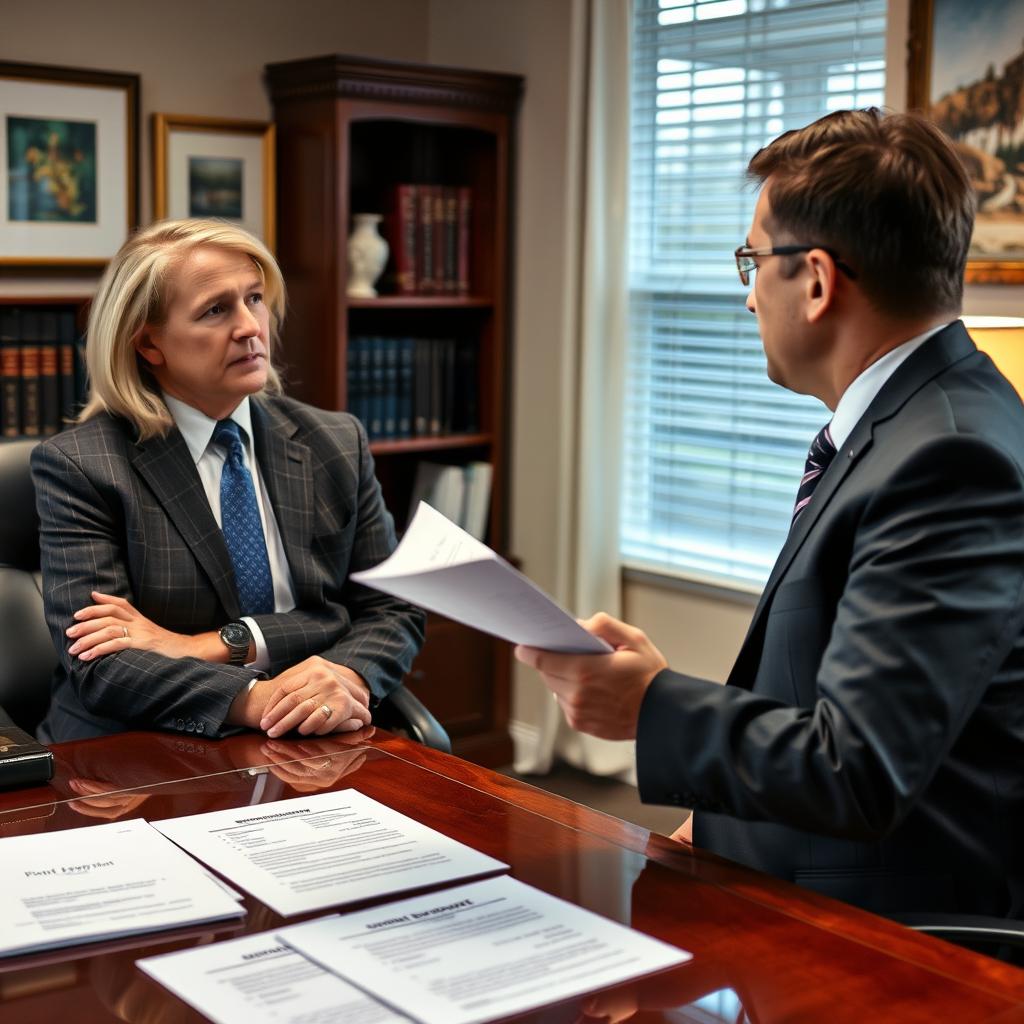
Spousal Support Lawyer Chesterfield County, VA
You have been the primary caregiver for years while your spouse built a career. Now the marriage is ending, and you worry about how you will cover your monthly expenses, maintain the home your children grew up in, and protect your financial future. Spousal support—often called alimony—is designed to address that gap, but getting a fair result in Chesterfield County requires a clear understanding of how Virginia courts evaluate these claims. Chesterfield County Circuit Court, located at 9500 Courthouse Road, handles all divorce-related spousal support matters under Va. Code § 20‑107.1. The court weighs 13 statutory factors, including the duration of the marriage, each spouse’s earning capacity, contributions to the family, and the standard of living established during the marriage. Mr. Sris and the firm’s Of Counsel attorneys represent clients in spousal support proceedings throughout Chesterfield County, including Midlothian, Chester, Colonial Heights, Bon Air, Brandermill, and Moseley. The firm has 15 documented case results in Chesterfield County across all practice areas, with favorable outcomes in every reported instance. Results may vary. Reach Law Offices Of SRIS, P.C. at (888) 437‑7747 to schedule a consultation. Law Offices Of SRIS, P.C. – Advocacy Without Borders.
What Spousal Support Means in Chesterfield County
In Virginia, spousal support is a court-ordered payment from one spouse to the other after separation or divorce. Unlike child support, which follows a formula based on combined gross income, spousal support is decided on a case-by-case basis. The Chesterfield County Circuit Court evaluates the requesting spouse’s need and the other spouse’s ability to pay, guided by the 13 factors listed in Va. Code § 20‑107.1. Those factors include not only income and property but also the age and health of each party, the contributions each spouse made to the family’s well-being, the tax consequences of any award, and whether one spouse’s career was disrupted to support the other’s education or professional advancement. There is no automatic entitlement to support, and the amount and duration can vary widely depending on the specific facts of the marriage.
Chesterfield County’s location south of Richmond and its mix of suburban neighborhoods and commuter communities often brings disputes involving professional practices, retirement assets, and long-term marriages where one spouse sacrificed career opportunities. The Circuit Court at 9500 Courthouse Road hears all requests for pendente lite (temporary) support during the divorce and permanent support after the divorce is final. Because spousal support is often intertwined with equitable distribution of marital property, a clear presentation of the marital balance sheet—including pensions, business interests, and real estate—can directly influence the support award. Mr. Sris and his Of Counsel are experienced in presenting these financial pictures to the Chesterfield County court and advocating for support arrangements that reflect the realities of each family’s circumstances.
How Mr. Sris and His Of Counsel Handle Spousal Support Cases
Every spousal support matter begins with a thorough review of the marriage’s financial history. Mr. Sris and the firm’s Of Counsel attorneys work to identify all sources of income, recurring expenses, and assets that bear on both the need for support and the ability to pay. For dependent spouses, the goal is to present a complete picture of the financial gap created by the divorce; for paying spouses, the focus is on ensuring the support obligation is reasonable and based on accurate financial data. In Chesterfield County Circuit Court, the judge may award lump-sum support, periodic payments, or a combination, and may reserve the right to modify an award later if circumstances change.
The firm handles contested spousal support hearings as well as negotiated settlements. When both parties can agree on support terms through a property settlement agreement, the process is faster and less expensive. When negotiation is not possible, Mr. Sris and his Of Counsel prepare for trial by marshalling financial records, working with forensic accountants when complex assets are involved, and presenting testimony that directly addresses the statutory factors. The firm’s extensive combined legal experience between Mr. Sris and his Of Counsel enables a practical, detail-oriented approach that accounts for both the legal standards and the human dimensions of each case. Results may vary.
About Mr. Sris and the Firm’s Of Counsel Attorneys
Mr. Sris, Owner and Founder of Law Offices Of SRIS, P.C., has practiced law since 1997 and is admitted in Virginia, Maryland, the District of Columbia, New Jersey, and New York. He is a former prosecutor who has testified before the Virginia House Courts of Justice Committee in support of 2019 HB 635 (chief patron Del. David Bulova). Mr. Sris keeps his personal caseload limited so that he can give thorough attention to each matter, and he works alongside a group of Of Counsel attorneys who bring their own substantial courtroom experience. The firm’s Richmond location—7400 Beaufont Springs Drive, Suite 300, Room 395, Richmond, VA 23225—serves clients throughout Chesterfield County. By appointment only; call (888) 437‑7747 to schedule.
The firm’s Of Counsel attorneys include former prosecutors and attorneys with decades of litigation experience. They collaborate with Mr. Sris on case strategy, financial discovery, and courtroom presentation. Our multi-state practice means the firm can assist clients whose spousal support matters span more than one jurisdiction—for example, when one spouse lives in Virginia and the other in Maryland or the District of Columbia. Every attorney handling Chesterfield County family law matters is familiar with the local court procedures and the expectations of the Twelfth Judicial District bench.
Frequently Asked Questions
How is spousal support decided in Chesterfield County, Virginia?
Virginia courts decide spousal support by weighing 13 statutory factors listed in Va. Code § 20‑107.1, including the duration of the marriage, each spouse’s income and earning capacity, and the standard of living during the marriage. The Chesterfield County Circuit Court examines the financial need of the requesting spouse and the other spouse’s ability to pay. There is no mathematical formula; the judge has discretion to award support for a defined period or indefinitely, depending on the facts. Evidence of marital fault is not a factor unless it is relevant to the financial circumstances that led to the divorce.
Can spousal support be modified after a Chesterfield County divorce is final?
Yes, spousal support can be modified in Chesterfield County if there has been a material change in circumstances that was not anticipated at the time of the original order. Common reasons for modification include a substantial change in either party’s income, involuntary job loss, a serious health condition, or retirement. The party seeking modification must file a motion in Chesterfield County Circuit Court and prove the changed circumstances. Support awards that are set by agreement and stated as non-modifiable generally cannot be changed later.
How long does spousal support last in Virginia?
The duration of spousal support in Virginia depends on the circumstances of the marriage and the statutory factors considered by the court. Support may be ordered for a limited period—for example, to allow a spouse to obtain education or job training—or it may be indefinite, which is more common in long-term marriages where one spouse cannot become self-supporting. Indefinite support can still end upon remarriage, cohabitation in a relationship analogous to marriage, or the death of either party.
Do I need a lawyer for a spousal support case in Chesterfield County?
You are not legally required to hire a lawyer for a spousal support case, but proceeding without experienced counsel can put your financial future at risk. Spousal support disputes often turn on detailed financial evidence, tax considerations, and the specific factors the court must apply. Mr. Sris and his Of Counsel can help you present a complete financial picture, negotiate a settlement, or argue your position in Chesterfield County Circuit Court. To discuss the details of your matter, contact Law Offices Of SRIS, P.C. at (888) 437‑7747.
What is the difference between spousal support and alimony in Virginia?
There is no legal difference; “spousal support” and “alimony” are interchangeable terms in Virginia. Both refer to court-ordered payments from one spouse to the other after separation or divorce. The term “spousal support” is used in the Virginia Code, while “alimony” remains a common everyday term. The same statutory factors under Va. Code § 20‑107.1 govern both concepts.
Are there tax implications to spousal support in Virginia?
For divorces finalized after December 31, 2018, spousal support payments are not tax-deductible for the payor and not taxable income for the recipient, consistent with the federal Tax Cuts and Jobs Act. Support orders entered before that date generally follow the old rules unless modified. Because tax treatment can affect the net financial impact of a support award, it is important to structure any agreement with a clear understanding of the relevant tax law. For guidance on your specific situation, reach Law Offices Of SRIS, P.C. at (888) 437‑7747.
Related locations we serve:
- Henrico County family law attorney
- Hanover County family law lawyer
- Fairfax County family law attorney
- Prince William County family law lawyer
Additional resources:
Attorney advertising. Prior results do not guarantee a similar outcome. Results may vary.
Case results depend on a variety of factors unique to each case.