
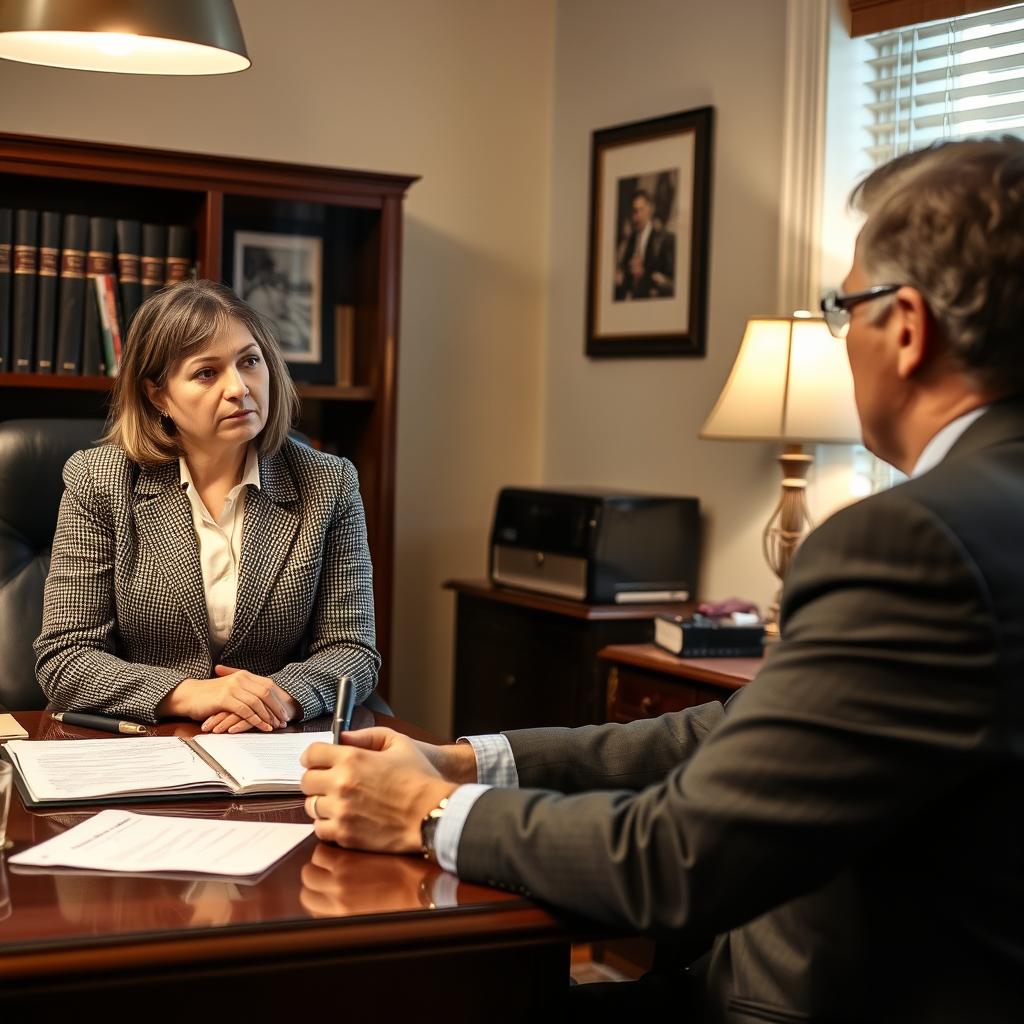
Spousal Support Lawyer Rappahannock County, VA
Spousal support—often called alimony—is a critical issue for many people going through a divorce in Rappahannock County, Virginia. Under Virginia Code § 20‑107.1, a court may order one spouse to pay support to the other when the evidence shows a financial need and an ability to pay. Rappahannock County Circuit Court, located at 250 Gay Street in Washington, Virginia, has jurisdiction over divorces and any request for spousal support. The court evaluates spousal support by considering thirteen statutory factors, including the duration of the marriage, each spouse’s earning capacity, and the standard of living established during the marriage. Because Virginia is an equitable distribution state and does not use a strict mathematical formula for spousal support, having an experienced lawyer who understands how Rappahannock County judges apply the statute can make a meaningful difference. Mr. Sris and the firm’s Of Counsel attorneys appear regularly in Rappahannock County courts and work with clients to present the financial and personal circumstances that matter under Virginia law. For a confidential discussion of your situation, reach Law Offices Of SRIS, P.C. at (888) 437‑7747. Law Offices Of SRIS, P.C. – Advocacy Without Borders.
What Spousal Support Means in Rappahannock County
Spousal support in Virginia is governed by Title 20 of the Virginia Code. The trial court has broad discretion to award support, modify an existing order, or decline to award support altogether. In Rappahannock County, spousal support cases are heard in the Circuit Court when they are part of a divorce, and in the Juvenile and Domestic Relations District Court when they involve standalone family support matters. The court applies the thirteen factors listed in Va. Code § 20‑107.1, which range from the financial resources of each party to the contributions each spouse made to the family’s well‑being, including non‑monetary contributions such as child‑rearing and homemaking. No single factor automatically decides the outcome; the judge balances all of the evidence to reach a fair result.
Rappahannock County is part of the Twentieth Judicial District and shares judges with Fauquier and Loudoun counties. That regional structure means the bench is familiar with the rural economy of the area, including the significance of family farms, small businesses, and the tourism-related income common along Route 211 near the Shenandoah National Park. Because the county does not have a large urban center, the court’s calendar can sometimes allow for more deliberate scheduling, although contested spousal support issues still move within the timelines established by the judge. The court also retains authority to enter pendente lite support while a divorce is pending under Va. Code § 20‑103, which can provide immediate financial relief when one spouse controls the majority of the marital income. Having an attorney who understands local court practices helps a party present the information the judge needs without unnecessary delay.
How Mr. Sris and the Firm’s Of Counsel Attorneys Handle Spousal Support Cases
Every spousal support case begins with a careful review of the financial picture of both spouses. The firm gathers tax returns, pay stubs, business records, and information about retirement accounts and other assets. Mr. Sris and the firm’s Of Counsel attorneys then analyze the statutory factors and prepare a detailed presentation that explains why a support award—or a modification—is appropriate under the facts. The firm often works with forensic accountants when a business or complex asset structure is involved, because a fair support determination depends on an accurate picture of both income and expenses.
When a couple has already signed a separation agreement that addresses spousal support, the firm assists with incorporating that agreement into the final divorce decree. When the parties cannot agree, the firm’s approach is methodical: negotiating with the other side where possible and, when necessary, presenting the case at a hearing before the Rappahannock County Circuit Court. The goal throughout is to achieve a sustainable support order that reflects the reality of both households while protecting the client’s long‑term financial position. The firm’s attorneys emphasize clear communication so that each client understands how the thirteen factors apply and what to expect at each stage of the proceeding.
About Mr. Sris and the Firm’s Of Counsel Attorneys
Mr. Sris, Owner and Founder of Law Offices Of SRIS, P.C., has practiced law since 1997 and is a former prosecutor. His background gives him an in‑depth understanding of how evidence is weighed and how to present financial information persuasively to a court. Mr. Sris is admitted to practice in Virginia, Maryland, the District of Columbia, New Jersey, and New York, and he concentrates a substantial portion of his practice on family law matters, including spousal support, throughout Northern Virginia and the surrounding counties.
The firm’s Of Counsel attorneys bring extensive experience in family law, civil litigation, and trial work, strengthening the support available to every client. The attorneys who handle Rappahannock County spousal support cases are familiar with the local courts and work together on each matter to craft a strategy suited to the client’s unique financial circumstances. Law Offices Of SRIS, P.C. has been serving clients since 1997, and Mr. Sris and the firm’s Of Counsel attorneys have documented case results across multiple practice areas. Results may vary.
Frequently Asked Questions
How does a Virginia court decide whether to award spousal support?
A Virginia court decides spousal support by evaluating thirteen factors listed in Va. Code § 20‑107.1, including each spouse’s income, earning capacity, age, health, the duration of the marriage, and the standard of living established during the marriage. The judge weighs all of the evidence presented and has broad discretion to order support—or not—based on the unique facts of the case. There is no automatic formula, and a spouse seeking support must show both a financial need and the other spouse’s ability to pay. The court can also consider fault grounds such as adultery when assessing whether a support award is appropriate, though fault is only one factor among many.
Can spousal support be modified after a final order is entered in Rappahannock County?
Yes, spousal support can be modified in Rappahannock County if the party seeking the change demonstrates a material change in circumstances that was not anticipated at the time of the original order. Common reasons for modification include a substantial change in either spouse’s income, a serious health condition that affects earning ability, or the recipient spouse’s remarriage. The request is filed in the same court that issued the original order, and the moving party bears the burden of proving that the change is significant enough to warrant an adjustment. A lawyer can help gather the financial documentation necessary to support the request.
What is pendente lite spousal support, and when is it available?
Pendente lite spousal support is temporary financial support ordered by the court while a divorce is pending, designed to maintain the status quo until a final resolution is reached. In Rappahannock County, a party can request pendente lite support under Va. Code § 20‑103 shortly after a divorce complaint is filed. The judge holds a hearing to evaluate the immediate financial needs of the lower‑earning spouse and the paying spouse’s ability to provide support during the litigation. Pendente lite orders remain in effect until a final decree of divorce is entered or the court modifies the arrangement.
Do I need a lawyer to pursue spousal support in Rappahannock County?
You are not legally required to have a lawyer, but because spousal support outcomes depend on a detailed factual analysis under thirteen statutory factors, having experienced counsel can significantly affect the result. An attorney who regularly practices in Rappahannock County understands how local judges weigh the factors and can present financial information in a way that the court expects. The process involves gathering extensive documentation, preparing affidavits, and often negotiating with opposing counsel—tasks that are difficult to manage without legal training. A consultation can help you evaluate the strength of your claim and the trusted path forward.
How does the court treat spousal support when the parties already have a separation agreement?
If the spouses have signed a valid separation agreement that addresses spousal support, the court will generally enforce the agreement as a contract and incorporate it into the final divorce decree. However, the court retains the authority to review the agreement for unconscionability or to ensure it was entered into voluntarily with full financial disclosure. In Rappahannock County, a properly drafted separation agreement can resolve spousal support without a contested hearing, saving time and cost. An attorney can help negotiate and draft an agreement that clearly defines the parties’ rights and obligations.
Related Family Law Services: Fairfax County family law | Fairfax City family law | Falls Church family law | Prince William County family law | Manassas family law
Authoritative Virginia Resources: Virginia Code Title 20 (Domestic Relations) | Virginia Circuit Courts | Rappahannock County Circuit Court
Attorney advertising. Prior results do not guarantee a similar outcome.
Results may vary.
Case results depend on a variety of factors unique to each case.